 Woyɛ dino bɛn? Nsɛmmisa agoro
 Dino ko
 Dino mmirikatuo
 Dino agodie nketewa
 Stika nwoma
 Dino TOP nhyehyɛeɛ
 Ma me nwanwa!
Berɛ bɛn na ɛtenaa ase?

Na ne kɛseɛ yɛ sɛn?
Na ne tenten yɛ sɛn?
Na ne korɔn yɛ sɛn?
nsusuiɛ
Mei kɛseɛ yɛ sɛn sɛ wode toto WO ho a?
Akontaa nko ara wɔ wo browser mu. Yɛnkora biribiara so, na yɛmmfa biribiara nkɔ baabiara.
Na ɛyɛ ntɛm sɛn?


Nsɛm a ɛyɛ anigye
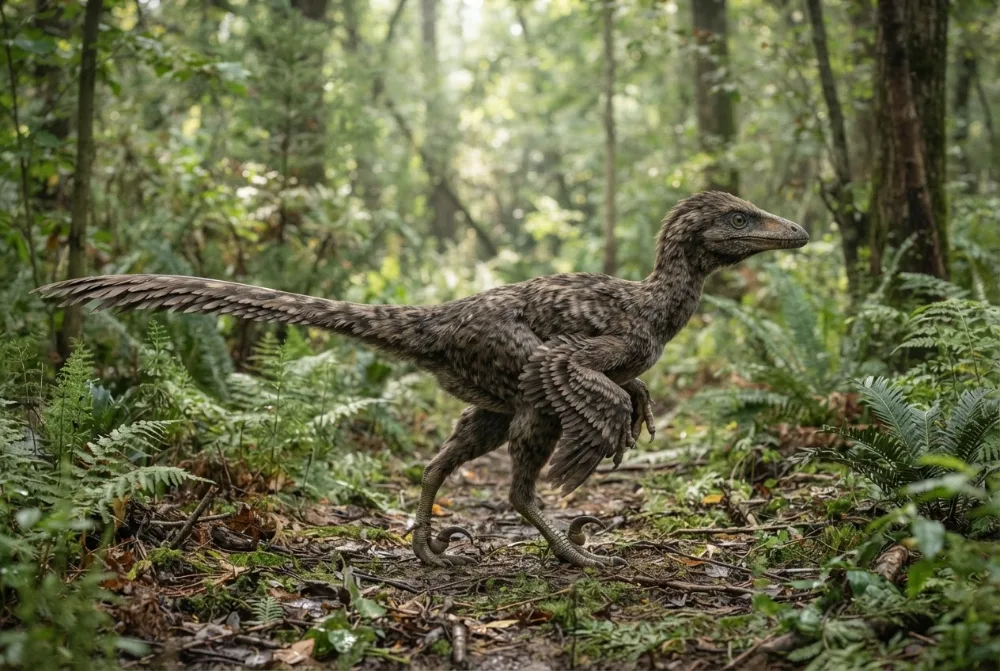
Mei is one of the smallest known troodontid dinosaurs, about the size of a modern pigeon.1
The name Mei means 'sleeping one' in Chinese, because the fossil was found curled up with its head tucked under its arm, just like a sleeping bird.1
Mei lived during the Early Cretaceous period, about 125 to 120 million years ago.2
This dinosaur had feathers and was a close relative of birds.1
The sleeping posture of Mei shows that this behavior, common in modern birds, evolved before birds themselves appeared.1
Ma dino ho animdefoɔ
- Nyansahu din
- Mei
- Obi a ɔtoo din
- Xu and Norell 20043
- Kuo
- Raptɔ
- Abusua / kuo kɛseɛ
- Troodontidae3
- Nkyekyɛmu
- Theropoda > Troodontidae3
- Abotan no mfeɛ
- mfeɛ ɔpepem 126 kɔsi 120 (Barremian / Aptian)3
- Abotan nhyehyɛeɛ
- Yixian3
- Aman
- Kyaena3
- Fɔsil nkyerɛwee
- 2 wɔ The Paleobiology Database mu3
- Nhunumu
- Mei was named in 2004 by paleontologists Xu Xing and Mark Norell. The only known fossil was found in the Yixian Formation in Liaoning, China.13
- Wɔda so gye ho akyinnye
- Scientists are not sure if Mei was a ground dweller or if it could climb trees.2
Baabi a nsɛm no firi
- A new troodontid dinosaur from China with avian-like sleeping posture | Nature (nature.com)
- PBDB Taxon (paleobiodb.org)
- Mei in The Paleobiology Database (CC BY 4.0): mfeɛ, mmeaeɛ, abotan nhyehyɛeɛ, nkyekyɛmu.
Asɛm biara a ɛwɔ krataafa yi so wɔ nɔma a ɛkyerɛ baabi a ɛfiri. Sɛ yɛfom biribi a, kafra, yɛyɛ dino dɔfoɔ, yɛnyɛ nyansahu nsɛmma krataa. Ka kyerɛ yɛn wɔ [email protected] na yɛbɛsiesie.
 Ɔkɔm de Rex! Dino Wiki yɛ agya bi adwuma a ɔyɛɛ maa ne babarima a ɔdɔ dino. Ɛyɛ kwa, dawurubɔ biara nni mu, akyidifoɔ biara nni mu. Mpanimfoɔ bɛtumi ama Rex aduane kakra, na aboa ama Dino Wiki atena intanɛt so.Ma Rex aduane
 Velociraptor
 Microraptor
 Deinonychus
 Asiamericana
 Richardoestesia
 Saurornitholestes
 Stegosaurus
 Iguanodon
 Archaeopteryx
 Giganotosaurus
 Baryonyx
 Paronychodon