 Woyɛ dino bɛn? Nsɛmmisa agoro
 Dino ko
 Dino mmirikatuo
 Dino agodie nketewa
 Stika nwoma
 Dino TOP nhyehyɛeɛ
 Ma me nwanwa!
Metriacanthosaurus
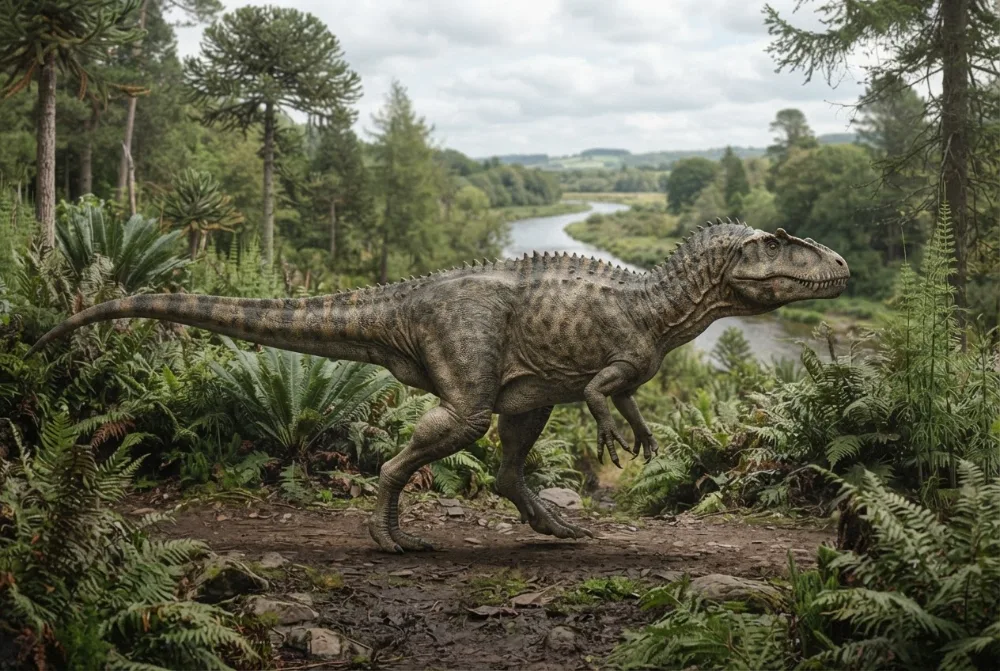
Metriacanthosaurus was a meat-eating dinosaur that lived in England about 160 million years ago. It had moderately tall spines on its backbone, not as high as some other dinosaurs. Scientists only know it from a few bones, so they guess what it looked like based on its relatives.21
Berɛ bɛn na ɛtenaa ase?
Na ne kɛseɛ yɛ sɛn?
Na ne tenten yɛ sɛn?
Na ne korɔn yɛ sɛn?
Na ne mu yɛ duru sɛn?
 ne tenten te sɛ nkraman 8 firi hwene kɔsi dua🍌ne tenten te sɛ kwadu 46 a wɔde abɔ toatoa so🍉ne mu duru te sɛ watamɛlɔn 200🧸ne mu duru te sɛ nkɔkɔaa sukuu mmofra 53🎒ne mu duru te sɛ sukuu mmofra 31🐻❄️ne mu duru te sɛ polar bea 2🏃anka ɔbɛtumi atu mmirika mita 100 wɔ sikɛn 10 mu (onipa a ɔyɛ ntɛm sen biara hia 9.6)
Metriacanthosaurus kɛseɛ yɛ sɛn sɛ wode toto WO ho a?
Akontaa nko ara wɔ wo browser mu. Yɛnkora biribiara so, na yɛmmfa biribiara nkɔ baabiara.
Na ɛyɛ ntɛm sɛn?


Nsɛm a ɛyɛ anigye
Metriacanthosaurus is the only metriacanthosaurid dinosaur named from outside of Asia. All its close relatives are from Asia.2
Its fossils were found in marine sediments. During the Late Jurassic, Europe was a group of islands surrounded by shallow seas.2
The name Metriacanthosaurus means 'moderately-spined lizard' because its backbone spines are taller than Allosaurus but shorter than Acrocanthosaurus.2
The only known specimen includes an incomplete hip, a leg bone, and part of a backbone. No skull has been found.21
Metriacanthosaurus was originally named as a species of Megalosaurus in 1923. It was given its own genus in 1964 by Alick Walker.2
It lived about 160 million years ago during the Oxfordian stage of the Late Jurassic. Other dinosaurs from the same time include the sauropod Cetiosauriscus and the stegosaur Lexovisaurus.2
Nsɛm a wɔbisa bebree fa Metriacanthosaurus ho
?When did Metriacanthosaurus live?
It lived during the Late Jurassic period, about 160 to 154 million years ago.12
?Why is it called Metriacanthosaurus?
The name means 'moderately-spined lizard' because its backbone spines are taller than Allosaurus but shorter than Acrocanthosaurus.21
?Did Metriacanthosaurus have a skull?
No skull has been found. The only known fossils are an incomplete hip, a leg bone, and part of a backbone.21
?Was Metriacanthosaurus related to Allosaurus?
It was a theropod like Allosaurus, but it belongs to a different family called Metriacanthosauridae.21
?How fast could Metriacanthosaurus run?
Scientists don't know for sure, but as a medium-sized theropod it was probably a fast runner.2
Ma dino ho animdefoɔ
- Nyansahu din
- Metriacanthosaurus
- Obi a ɔtoo din
- Walker 19644
- Kuo
- Dino a wɔwe nam
- Abusua / kuo kɛseɛ
- Metriacanthosauridae4
- Nkyekyɛmu
- Theropoda > Allosauroidea4
- Abotan no mfeɛ
- mfeɛ ɔpepem 162 kɔsi 159 (Oxfordian)4
- Abotan nhyehyɛeɛ
- Oxford Clay4
- Aman
- Engiresi4
- Fɔsil nkyerɛwee
- 1 wɔ The Paleobiology Database mu4
- Nhunumu
- The fossils were discovered in 1871 by W. Parker at Jordan's Cliff, near Weymouth, England. Geologist John Phillips briefly mentioned them that same year. In 1923, Friedrich von Huene named it Megalosaurus parkeri, and in 1964 Alick Walker gave it the new genus Metriacanthosaurus.2
- Wɔda so gye ho akyinnye
- Scientists are not sure exactly what Metriacanthosaurus looked like because only a partial skeleton has been found. Reconstructions are guesswork based on similar dinosaurs.1
Baabi a nsɛm no firi
- Metriacanthosaurus | Natural History Museum (nhm.ac.uk)
- Metriacanthosaurus (en.wikipedia.org)
- Metriacanthosaurus Fact Sheet (enchantedlearning.com)
- Metriacanthosaurus in The Paleobiology Database (CC BY 4.0): mfeɛ, mmeaeɛ, abotan nhyehyɛeɛ, nkyekyɛmu.
Asɛm biara a ɛwɔ krataafa yi so wɔ nɔma a ɛkyerɛ baabi a ɛfiri. Sɛ yɛfom biribi a, kafra, yɛyɛ dino dɔfoɔ, yɛnyɛ nyansahu nsɛmma krataa. Ka kyerɛ yɛn wɔ [email protected] na yɛbɛsiesie.
 Ɔkɔm de Rex! Dino Wiki yɛ agya bi adwuma a ɔyɛɛ maa ne babarima a ɔdɔ dino. Ɛyɛ kwa, dawurubɔ biara nni mu, akyidifoɔ biara nni mu. Mpanimfoɔ bɛtumi ama Rex aduane kakra, na aboa ama Dino Wiki atena intanɛt so.Ma Rex aduane
 Allosaurus
 Carnotaurus
 Dilophosaurus
 Giganotosaurus
 Compsognathus
 Paronychodon
 Brachiosaurus
 Diplodocus
 Brontosaurus
 Camarasaurus
 Morosaurus
 Apatosaurus