 Woyɛ dino bɛn? Nsɛmmisa agoro
 Dino ko
 Dino mmirikatuo
 Dino agodie nketewa
 Stika nwoma
 Dino TOP nhyehyɛeɛ
 Ma me nwanwa!
Ornitholestes
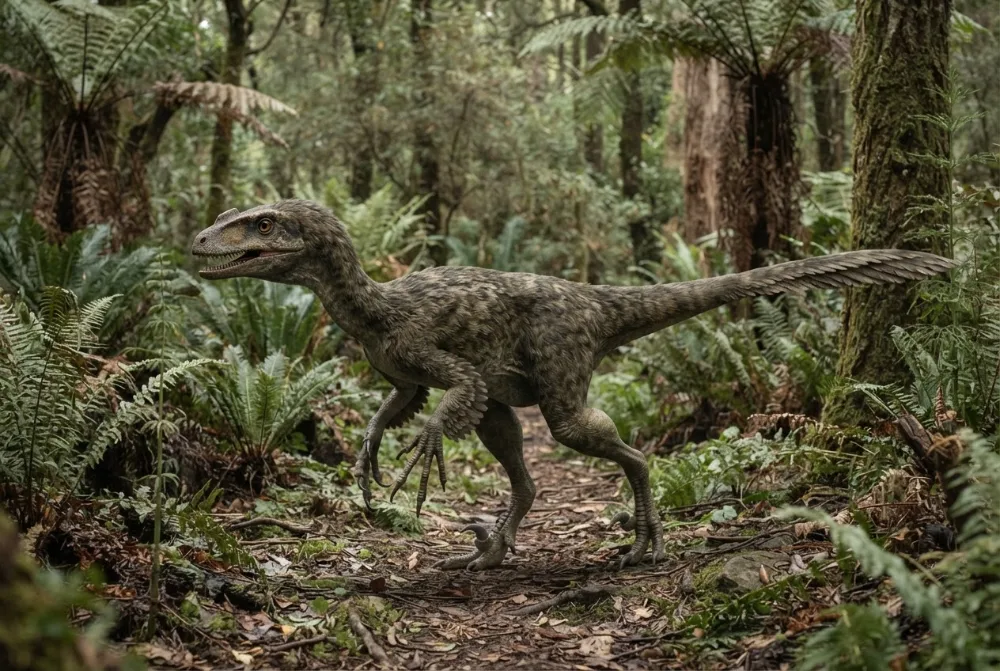
Ornitholestes was a small, fast dinosaur that lived about 154 million years ago. It had long fingers with claws to grab quick prey like lizards and early mammals. Its name means 'bird robber', but scientists think it probably didn't eat many birds.12
Berɛ bɛn na ɛtenaa ase?
Na ne kɛseɛ yɛ sɛn?
Na ne tenten yɛ sɛn?
Na ne korɔn yɛ sɛn?
Na ne mu yɛ duru sɛn?
 ne tenten te sɛ fie agyinamoa 4 firi hwene kɔsi dua🍌ne tenten te sɛ kwadu 12 a wɔde abɔ toatoa so🍌ne mu duru te sɛ kwadu 120🏃anka ɔbɛtumi atu mmirika mita 100 wɔ sikɛn 9 mu (onipa a ɔyɛ ntɛm sen biara hia 9.6)
Ornitholestes kɛseɛ yɛ sɛn sɛ wode toto WO ho a?
Akontaa nko ara wɔ wo browser mu. Yɛnkora biribiara so, na yɛmmfa biribiara nkɔ baabiara.
Na ɛyɛ ntɛm sɛn?


Nsɛm a ɛyɛ anigye
Ornitholestes had big eyes, which were more than one quarter of the length of its skull. This might have helped it see at night.1
Its tail was very long and whiplike, making up more than half of its body length. The tail helped it balance while running.1
The front teeth of Ornitholestes were cone-shaped and not very serrated, but the back teeth were curved and had sharp serrations like steak knives.1
Only one nearly complete skeleton of Ornitholestes has been found. It was discovered in Wyoming in 1900 by a team from the American Museum of Natural History.1
Some scientists once thought Ornitholestes was the same dinosaur as Coelurus, but most now agree they are different genera.12
An early drawing by Charles R. Knight showed Ornitholestes chasing the bird Archaeopteryx, but scientists today think it mostly ate ground animals.1
Nsɛm a wɔbisa bebree fa Ornitholestes ho
?How big was Ornitholestes?
About 2 metres (6.6 feet) long and weighed around 12.6 kilograms (27.8 pounds).12
?What did Ornitholestes eat?
It ate small, speedy animals like lizards, early mammals, and maybe baby dinosaurs. Some scientists think it might have also caught fish or an occasional bird.12
?Could Ornitholestes fly?
No, Ornitholestes was a dinosaur that walked and ran on two legs. It could not fly.12
?When did Ornitholestes live?
It lived during the Late Jurassic Period, about 154 million years ago.12
?How fast could Ornitholestes run?
Scientists do not know its exact speed, but it had strong running muscles and a long tail for balance, so it was probably fast.12
?Did Ornitholestes have feathers?
No fossil feathers have been found with Ornitholestes, but since it was a close relative of feathered dinosaurs, some scientists think it might have had simple feathers.1
Atosɛm sɛefoɔ
Atosɛm: Ornitholestes mainly ate birds.
Nokorɛ: Its name means 'bird robber', but scientists now think it mostly ate small land animals like lizards, mammals, and baby dinosaurs. It may have also eaten fish.1
Ma dino ho animdefoɔ
- Nyansahu din
- Ornitholestes
- Obi a ɔtoo din
- Osborn 19034
- Kuo
- Dino a wɔwe nam
- Abusua / kuo kɛseɛ
- Compsognathidae4
- Nkyekyɛmu
- Theropoda > Compsognathidae4
- Abotan no mfeɛ
- mfeɛ ɔpepem 158 kɔsi 143 ()4
- Abotan nhyehyɛeɛ
- Morrison4
- Aman
- Amerika4
- Fɔsil nkyerɛwee
- 4 wɔ The Paleobiology Database mu4
- Nhunumu
- Ornitholestes was named by Henry Fairfield Osborn in 1903. The skeleton was dug up in July 1900 in Wyoming by a team from the American Museum of Natural History.1
- Wɔda so gye ho akyinnye
- Scientists are not sure if Ornitholestes hunted at night. One researcher suggested its big eyes were for night vision, but there is no proof yet.1
Baabi a nsɛm no firi
- Ornitholestes (en.wikipedia.org)
- Ornitholestes | Small, carnivorous, Jurassic | Britannica (britannica.com)
- Ornitholestes — Grokipedia (grokipedia.com)
- Ornitholestes in The Paleobiology Database (CC BY 4.0): mfeɛ, mmeaeɛ, abotan nhyehyɛeɛ, nkyekyɛmu.
Asɛm biara a ɛwɔ krataafa yi so wɔ nɔma a ɛkyerɛ baabi a ɛfiri. Sɛ yɛfom biribi a, kafra, yɛyɛ dino dɔfoɔ, yɛnyɛ nyansahu nsɛmma krataa. Ka kyerɛ yɛn wɔ [email protected] na yɛbɛsiesie.
 Ɔkɔm de Rex! Dino Wiki yɛ agya bi adwuma a ɔyɛɛ maa ne babarima a ɔdɔ dino. Ɛyɛ kwa, dawurubɔ biara nni mu, akyidifoɔ biara nni mu. Mpanimfoɔ bɛtumi ama Rex aduane kakra, na aboa ama Dino Wiki atena intanɛt so.Ma Rex aduane
 Allosaurus
 Carnotaurus
 Dilophosaurus
 Giganotosaurus
 Compsognathus
 Paronychodon
 Brachiosaurus
 Diplodocus
 Brontosaurus
 Camarasaurus
 Morosaurus
 Apatosaurus