 Woyɛ dino bɛn? Nsɛmmisa agoro
 Dino ko
 Dino mmirikatuo
 Dino agodie nketewa
 Stika nwoma
 Dino TOP nhyehyɛeɛ
 Ma me nwanwa!
Rajasaurus
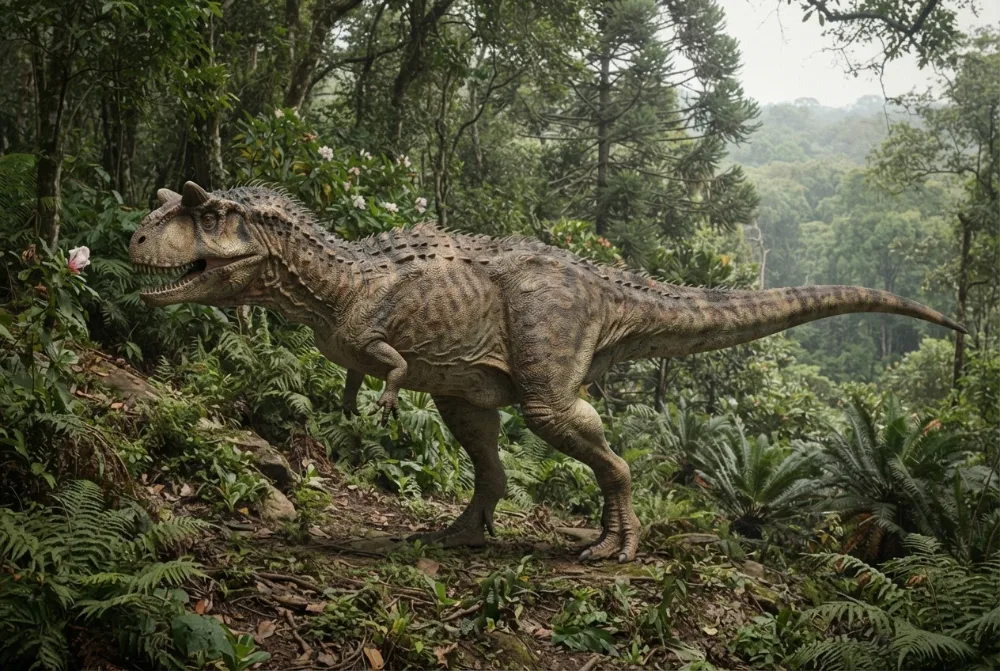
Rajasaurus was a meat-eating dinosaur that lived in India near the end of the Cretaceous Period. It had a single short horn on its forehead and used its strong neck and jaws to catch prey. This dinosaur was an ambush predator, hiding and then pouncing on its food.1
Berɛ bɛn na ɛtenaa ase?
Na ne kɛseɛ yɛ sɛn?
Na ne tenten yɛ sɛn?
Na ne korɔn yɛ sɛn?
Na ne mu yɛ duru sɛn?

 ne tenten te sɛ nkraman 7 firi hwene kɔsi dua🍌ne tenten te sɛ kwadu 37 a wɔde abɔ toatoa sone mu duru te sɛ nkraman 200🍉ne mu duru te sɛ watamɛlɔn 800🎒ne mu duru te sɛ sukuu klaas mũ 5 mu mmofra🐻❄️ne mu duru te sɛ polar bea 9🏃anka ɔbɛtumi atu mmirika mita 100 wɔ sikɛn 14 mu (onipa a ɔyɛ ntɛm sen biara hia 9.6)
Rajasaurus kɛseɛ yɛ sɛn sɛ wode toto WO ho a?
Akontaa nko ara wɔ wo browser mu. Yɛnkora biribiara so, na yɛmmfa biribiara nkɔ baabiara.
Na ɛyɛ ntɛm sɛn?


Nsɛm a ɛyɛ anigye
Rajasaurus had a single low horn on its forehead made mostly of nasal bone, unlike the horn of its relative Majungasaurus.2
It was one of the larger abelisaurids, measuring about 6.6 metres (22 feet) long.1
Rajasaurus lived on the island of India during the Late Cretaceous, when India was isolated from other continents.1
Its fossils were found in the Lameta Formation, which was once a river valley with an arid or semi-arid climate.2
The horn on its head might have been used for display or for head-butting other Rajasaurus during fights.12
Rajasaurus had short arms and four fingers, so it relied on its powerful head and jaws to catch prey.2
It is the first Indian theropod dinosaur to have preserved bones from the spine, hips, legs, and tail.2
Nsɛm a wɔbisa bebree fa Rajasaurus ho
?How big was Rajasaurus?
Rajasaurus was about 6.6 metres (22 feet) long, though one scientist estimated it at 11 metres (36 feet). It weighed around 4 metric tons (4.4 short tons).21
?What did Rajasaurus eat?
Rajasaurus was a carnivore that ate meat. It probably hunted large prey like sauropod dinosaurs and may have also scavenged for food.13
?Did Rajasaurus have feathers?
No one knows for sure. The fossils don't show feathers, and most abelisaurids are not known to have had them, but some scientists think many theropods might have had simple feathers.21
?Was Rajasaurus bigger than T. rex?
No, Rajasaurus was smaller. T. rex could reach about 12 metres (40 feet) long, while Rajasaurus was only about 6.6 metres (22 feet) long.12
?Why did Rajasaurus have a horn?
The horn was probably used for display to attract mates or for head-butting other Rajasaurus during fights. It was made mostly of nasal bone.12
?Could Rajasaurus swim?
Probably not. It was a land dinosaur with strong legs for walking and running, not swimming. It lived near rivers but likely stayed on land.21
Ma dino ho animdefoɔ
- Nyansahu din
- Rajasaurus
- Obi a ɔtoo din
- Wilson et al. 20034
- Kuo
- Dino a wɔwe nam
- Abusua / kuo kɛseɛ
- Abelisauridae4
- Nkyekyɛmu
- Theropoda > Ceratosauria > Abelisauridae4
- Abotan no mfeɛ
- mfeɛ ɔpepem 72 kɔsi 66 (Maastrichtian)4
- Abotan nhyehyɛeɛ
- Lameta4
- Aman
- India4
- Fɔsil nkyerɛwee
- 1 wɔ The Paleobiology Database mu4
- Nhunumu
- Rajasaurus was named in 2003 by Jeffrey A. Wilson and colleagues. The fossils were found in the Lameta Formation of Gujarat, India, after dinosaur eggs were discovered there in 1981.24
- Wɔda so gye ho akyinnye
- Scientists are not sure what the horn on its head was used for. It may have been for display or for head-butting, but no one knows for certain.1
Baabi a nsɛm no firi
- Rajasaurus | Natural History Museum (nhm.ac.uk)
- Rajasaurus (en.wikipedia.org)
- Discoveries | Paul Sereno - Paleontologist | The University of Chicago (paulsereno.uchicago.edu)
- Rajasaurus in The Paleobiology Database (CC BY 4.0): mfeɛ, mmeaeɛ, abotan nhyehyɛeɛ, nkyekyɛmu.
Asɛm biara a ɛwɔ krataafa yi so wɔ nɔma a ɛkyerɛ baabi a ɛfiri. Sɛ yɛfom biribi a, kafra, yɛyɛ dino dɔfoɔ, yɛnyɛ nyansahu nsɛmma krataa. Ka kyerɛ yɛn wɔ [email protected] na yɛbɛsiesie.
 Ɔkɔm de Rex! Dino Wiki yɛ agya bi adwuma a ɔyɛɛ maa ne babarima a ɔdɔ dino. Ɛyɛ kwa, dawurubɔ biara nni mu, akyidifoɔ biara nni mu. Mpanimfoɔ bɛtumi ama Rex aduane kakra, na aboa ama Dino Wiki atena intanɛt so.Ma Rex aduane
 Allosaurus
 Carnotaurus
 Dilophosaurus
 Giganotosaurus
 Compsognathus
 Paronychodon
 Tyrannosaurus
 Triceratops
 Velociraptor
 Spinosaurus
 Ankylosaurus
 Parasaurolophus