 Woyɛ dino bɛn? Nsɛmmisa agoro
 Dino ko
 Dino mmirikatuo
 Dino agodie nketewa
 Stika nwoma
 Dino TOP nhyehyɛeɛ
 Ma me nwanwa!
Berɛ bɛn na ɛtenaa ase?

Na ne kɛseɛ yɛ sɛn?
Na ne tenten yɛ sɛn?
Na ne korɔn yɛ sɛn?
nsusuiɛ
Na ne mu yɛ duru sɛn?
 ne tenten te sɛ fie agyinamoa 3 firi hwene kɔsi dua🍌ne tenten te sɛ kwadu 8 a wɔde abɔ toatoa sone mu duru bɛyɛ sɛ fie agyinamoa🍌ne mu duru te sɛ kwadu 42🏃anka ɔbɛtumi atu mmirika mita 100 wɔ sikɛn 12 mu (onipa a ɔyɛ ntɛm sen biara hia 9.6)
Shanag kɛseɛ yɛ sɛn sɛ wode toto WO ho a?
Akontaa nko ara wɔ wo browser mu. Yɛnkora biribiara so, na yɛmmfa biribiara nkɔ baabiara.
Na ɛyɛ ntɛm sɛn?


Nsɛm a ɛyɛ anigye
Shanag is known from only a partial skull: a right maxilla (upper jaw bone), dentary (lower jaw bone), and part of the splenial (a jaw bone).2
It was a dromaeosaurid, meaning it was a close relative of famous raptors like Velociraptor and Deinonychus.2
Shanag had special air pockets inside its jawbone between the tooth sockets, called interalveolar pneumatic cavities.2
Unlike many other theropods, Shanag lacked a promaxillary fenestra, a small opening in the front of the snout.2
Shanag lived alongside Psittacosaurus, a small horned dinosaur, and large sauropods in the Öösh region.1
The fossils of Shanag were found in rocks that are about 130 million years old, from the Early Cretaceous period.1
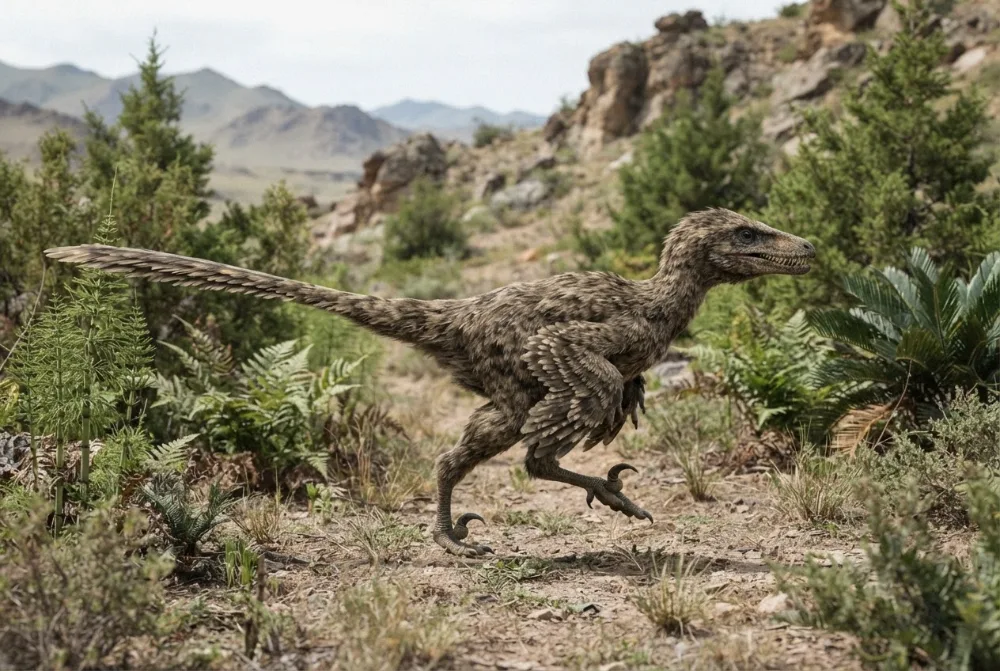
Nsɛm a wɔbisa bebree fa Shanag ho
?How big was Shanag?
Shanag was a small predator, about 1.5 metres (4.9 feet) long and weighing around 5 kilograms (11 pounds).3
?Did Shanag have feathers?
Yes, as a theropod, Shanag had hollow bones and feathers. Its feathers helped with climbing, thermoregulation, and stabilizing while on prey.3
?What did Shanag eat?
Shanag was a meat-eating dinosaur with sharp teeth and claws. It likely used its claws to grip and pin down prey, similar to modern birds of prey.3
?Is Shanag a dromaeosaurid?
It may be a dromaeosaurid, but some researchers are skeptical. It shows a mix of dromaeosaurid, troodontid, and basal avialan traits, so its exact classification is debated.3
Ma dino ho animdefoɔ
- Nyansahu din
- Shanag
- Obi a ɔtoo din
- Turner et al. 20074
- Kuo
- Raptɔ
- Abusua / kuo kɛseɛ
- Dromaeosauridae4
- Nkyekyɛmu
- Theropoda > Dromaeosauridae4
- Abotan no mfeɛ
- mfeɛ ɔpepem 143 kɔsi 100 (Berriasian / Albian)4
- Abotan nhyehyɛeɛ
- Öösh4
- Aman
- Mongolia4
- Fɔsil nkyerɛwee
- 1 wɔ The Paleobiology Database mu4
- Nhunumu
- Shanag was named in 2007 by Alan H. Turner, Sunny H. Hwang, and Mark A. Norell. The only known fossil was found by a Mongolian Academy of Sciences,American Museum of Natural History expedition in 1999 at the Öösh locality in Mongolia.21
- Wɔda so gye ho akyinnye
- Scientists are unsure about the exact size of Shanag because only a partial skull has been found.2
Baabi a nsɛm no firi
- digitallibrary.amnh.org (digitallibrary.amnh.org)
- A small derived theropod from Öösh, early Cretaceous, Baykhangor Mongolia ; American Museum novitates, no. 3557 (digitallibrary.amnh.org)
- Shanag (en.wikipedia.org)
- Shanag in The Paleobiology Database (CC BY 4.0): mfeɛ, mmeaeɛ, abotan nhyehyɛeɛ, nkyekyɛmu.
Asɛm biara a ɛwɔ krataafa yi so wɔ nɔma a ɛkyerɛ baabi a ɛfiri. Sɛ yɛfom biribi a, kafra, yɛyɛ dino dɔfoɔ, yɛnyɛ nyansahu nsɛmma krataa. Ka kyerɛ yɛn wɔ [email protected] na yɛbɛsiesie.
 Ɔkɔm de Rex! Dino Wiki yɛ agya bi adwuma a ɔyɛɛ maa ne babarima a ɔdɔ dino. Ɛyɛ kwa, dawurubɔ biara nni mu, akyidifoɔ biara nni mu. Mpanimfoɔ bɛtumi ama Rex aduane kakra, na aboa ama Dino Wiki atena intanɛt so.Ma Rex aduane
 Velociraptor
 Microraptor
 Deinonychus
 Asiamericana
 Richardoestesia
 Saurornitholestes
 Stegosaurus
 Iguanodon
 Archaeopteryx
 Giganotosaurus
 Baryonyx
 Paronychodon