 Woyɛ dino bɛn? Nsɛmmisa agoro
 Dino ko
 Dino mmirikatuo
 Dino agodie nketewa
 Stika nwoma
 Dino TOP nhyehyɛeɛ
 Ma me nwanwa!
Berɛ bɛn na ɛtenaa ase?

Na ne kɛseɛ yɛ sɛn?
Na ne tenten yɛ sɛn?
Na ne korɔn yɛ sɛn?
Na ne mu yɛ duru sɛn?
 ne tenten te sɛ nkraman 4 firi hwene kɔsi dua🍌ne tenten te sɛ kwadu 22 a wɔde abɔ toatoa so🍉ne mu duru te sɛ watamɛlɔn 180🧸ne mu duru te sɛ nkɔkɔaa sukuu mmofra 48🎒ne mu duru te sɛ sukuu mmofra 28🐻❄️ne mu duru te sɛ polar bea 2🏃anka ɔbɛtumi atu mmirika mita 100 wɔ sikɛn 19 mu (onipa a ɔyɛ ntɛm sen biara hia 9.6)
Silvisaurus kɛseɛ yɛ sɛn sɛ wode toto WO ho a?
Akontaa nko ara wɔ wo browser mu. Yɛnkora biribiara so, na yɛmmfa biribiara nkɔ baabiara.
Na ɛyɛ ntɛm sɛn?


Nsɛm a ɛyɛ anigye
Silvisaurus had teeth at the front of its jaw, which is unusual because most later nodosaurs had a toothless beak.1
Its skull was about 33 centimeters (13 inches) long and 25 centimeters (9.8 inches) wide.1
It had large air passages in its head, which scientists think might have been used for loud calls to communicate.1
The only known fossil was found at the bottom of a dry riverbed, and the bones were weathered and trampled by cattle before they were collected.1
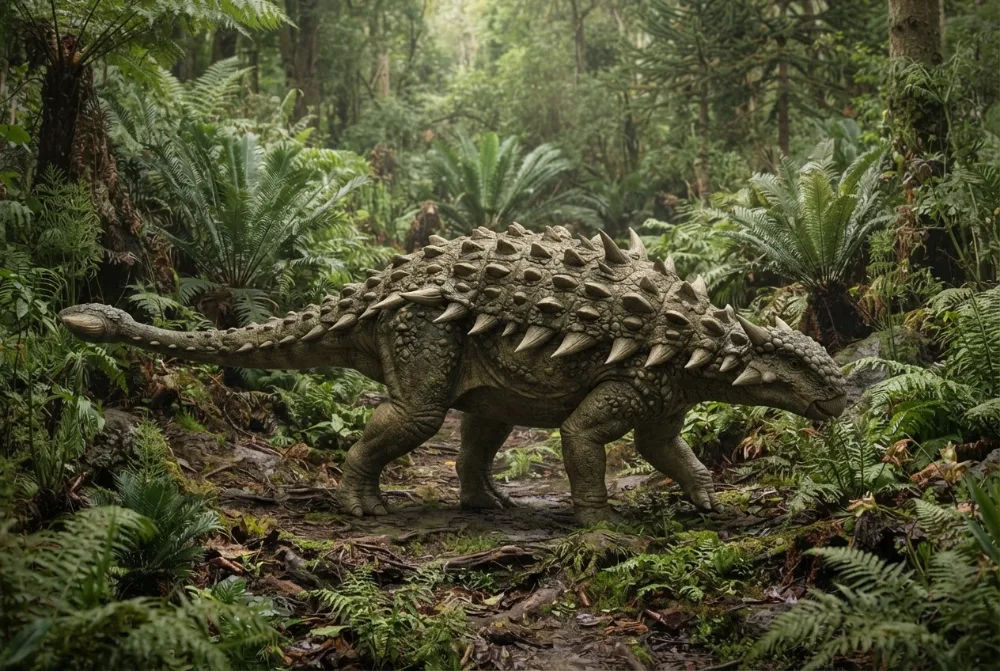
Fossil leaves found in the same rock layer show that Silvisaurus lived in a warm, temperate forest.2
Silvisaurus was named the official state land fossil of Kansas in 2023.1
Nsɛm a wɔbisa bebree fa Silvisaurus ho
?How big was Silvisaurus?
Silvisaurus was about 4 metres (13 feet) long. That is roughly the length of a small car.15
?What did Silvisaurus eat?
Silvisaurus was a plant-eater (herbivore). It ate plants like the ferns and leaves that grew in its warm forest home.52
Ma dino ho animdefoɔ
- Nyansahu din
- Silvisaurus
- Obi a ɔtoo din
- Eaton 19606
- Kuo
- Dino a wɔwɔ akyɛm
- Abusua / kuo kɛseɛ
- Nodosauridae6
- Nkyekyɛmu
- Ornithischia > Ankylosauria > Nodosauridae > Thyreophora6
- Abotan no mfeɛ
- mfeɛ ɔpepem 106 kɔsi 100 (Albian)6
- Abotan nhyehyɛeɛ
- Dakota6
- Aman
- Amerika6
- Fɔsil nkyerɛwee
- 2 wɔ The Paleobiology Database mu6
- Nhunumu
- Rancher Warren W. Condray found the fossil in the 1950s in Kansas. He told Senator Frank Carlson, who contacted the University of Kansas, and in 1960 Theodore H. Eaton Jr. named it Silvisaurus condrayi.1
- Wɔda so gye ho akyinnye
- Scientists are still debating exactly how Silvisaurus is related to other nodosaurs, and whether it had spikes on its shoulders and tail.1
Baabi a nsɛm no firi
- Silvisaurus (en.wikipedia.org)
- Silvisaurus | GeoKansas (geokansas.ku.edu)
- Kansas Designates Silvisaurus Condrayi the Official State Land Fossil | KU Biodiversity Institute and Natural History Museum (biodiversity.ku.edu)
- SENATE BILL No. 3 (kslegislature.gov)
- Silvisaurus | Natural History Museum (nhm.ac.uk)
- Silvisaurus in The Paleobiology Database (CC BY 4.0): mfeɛ, mmeaeɛ, abotan nhyehyɛeɛ, nkyekyɛmu.
Asɛm biara a ɛwɔ krataafa yi so wɔ nɔma a ɛkyerɛ baabi a ɛfiri. Sɛ yɛfom biribi a, kafra, yɛyɛ dino dɔfoɔ, yɛnyɛ nyansahu nsɛmma krataa. Ka kyerɛ yɛn wɔ [email protected] na yɛbɛsiesie.
 Ɔkɔm de Rex! Dino Wiki yɛ agya bi adwuma a ɔyɛɛ maa ne babarima a ɔdɔ dino. Ɛyɛ kwa, dawurubɔ biara nni mu, akyidifoɔ biara nni mu. Mpanimfoɔ bɛtumi ama Rex aduane kakra, na aboa ama Dino Wiki atena intanɛt so.Ma Rex aduane
 Ankylosaurus
 Sauropelta
 Pinacosaurus
 Scutellosaurus
 Struthiosaurus
 Euoplocephalus
 Stegosaurus
 Iguanodon
 Archaeopteryx
 Giganotosaurus
 Microraptor
 Deinonychus