 Woyɛ dino bɛn? Nsɛmmisa agoro
 Dino ko
 Dino mmirikatuo
 Dino agodie nketewa
 Stika nwoma
 Dino TOP nhyehyɛeɛ
 Ma me nwanwa!
Taniwhasaurus
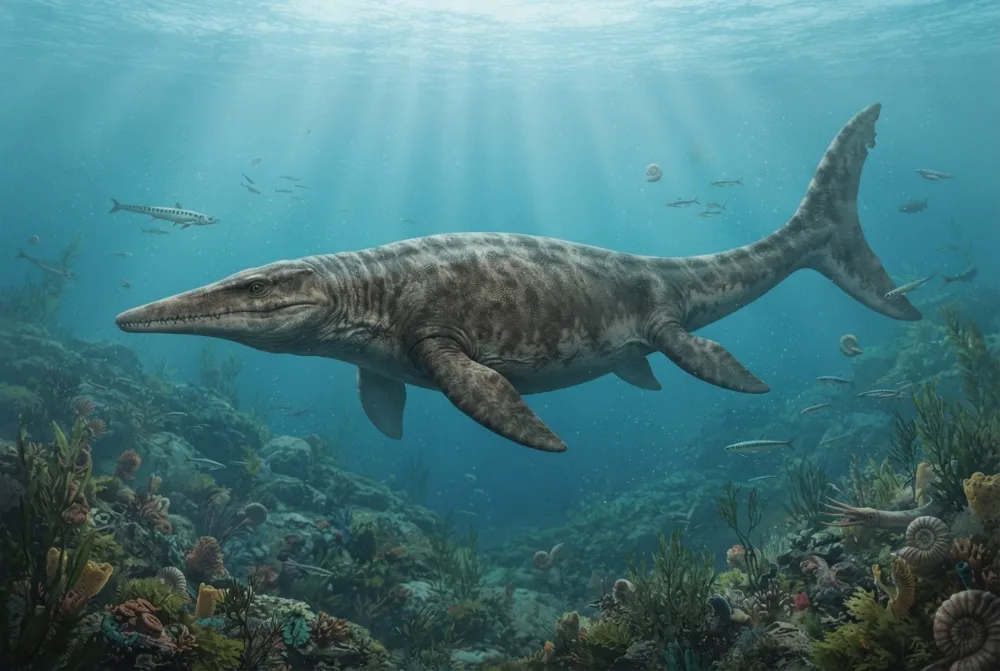
Taniwhasaurus was a fierce marine lizard that swam in the oceans during the time of dinosaurs. It had a long, toothless snout like a spear and used it to hunt fish and other sea creatures. This mosasaur lived near New Zealand, Antarctica, Japan, and South Africa.12
Berɛ bɛn na ɛtenaa ase?
Na ne kɛseɛ yɛ sɛn?
Na ne tenten yɛ sɛn?
 ne tenten te sɛ nkraman 7 firi hwene kɔsi dua🍌ne tenten te sɛ kwadu 37 a wɔde abɔ toatoa so🏊anka ɔbɛtumi aguare nsuguarebea kɛseɛ (50 m) tenten wɔ sikɛn 4.9 mu
Taniwhasaurus kɛseɛ yɛ sɛn sɛ wode toto WO ho a?
Akontaa nko ara wɔ wo browser mu. Yɛnkora biribiara so, na yɛmmfa biribiara nkɔ baabiara.
Na ɛyɛ ntɛm sɛn?


Nsɛm a ɛyɛ anigye
Taniwhasaurus belongs to a group called tylosaurines, which had a long, toothless tip on their upper jaw like a bony spear.1
The first fossils of Taniwhasaurus were found in the 1860s at Haumuri Bluff in New Zealand, and named by James Hector in 1874.1
One species, Taniwhasaurus antarcticus, was originally named Lakumasaurus after a sea spirit from the mythology of the Yahgan people of South America.1
A nearly complete skull of Taniwhasaurus antarcticus was discovered on James Ross Island in Antarctica in 2000, measuring 72 centimeters (28 inches) long.1
Taniwhasaurus lived between about 86 and 66 million years ago, during the Late Cretaceous period.2
The species Taniwhasaurus oweni was named in honor of the famous paleontologist Richard Owen, who first described marine reptiles from New Zealand.1
Taniwhasaurus fossils have been found in marine rocks that were once part of ancient seabeds, alongside ammonites, sharks, and other mosasaurs.1
Nsɛm a wɔbisa bebree fa Taniwhasaurus ho
?How big was Taniwhasaurus?
It was a medium-sized mosasaur, reaching about 6.7 metres (22 feet) long.1
?Could Taniwhasaurus swim?
Yes. Its powerful paddles and flexible spine helped it swim, and its tail gave the main push forward.1
?What did Taniwhasaurus eat?
It hunted fish and other sea creatures. It may have used an electro-sensitive snout to find prey.1
?Is Taniwhasaurus a dinosaur?
No, it is a mosasaur, which is a group of extinct marine lizards that lived alongside dinosaurs.1
?When did Taniwhasaurus go extinct?
It lived during the Late Cretaceous period and died out about 66 million years ago.1
Atosɛm sɛefoɔ
Atosɛm: Some people think Taniwhasaurus was a dinosaur.
Nokorɛ: Taniwhasaurus was a mosasaur, a type of marine lizard, not a dinosaur. Mosasaurs are reptiles that lived in the sea and are more closely related to modern snakes and monitor lizards.1
Ma dino ho animdefoɔ
- Nyansahu din
- Taniwhasaurus
- Obi a ɔtoo din
- Hector 18743
- Kuo
- Mosasɔɔ
- Abusua / kuo kɛseɛ
- Mosasauridae3
- Nkyekyɛmu
- Mosasauroidea3
- Abotan no mfeɛ
- mfeɛ ɔpepem 86 kɔsi 66 (Coniacian / Maastrichtian)3
- Abotan nhyehyɛeɛ
- Conway, Snow Hill Island, Conway Siltstone3
- Aman
- New Zealand, Antaatika, Gyapan, Afrika Anaafoɔ3
- Fɔsil nkyerɛwee
- 11 wɔ The Paleobiology Database mu3
- Nhunumu
- The first fossils of Taniwhasaurus were found in the 1860s at Haumuri Bluff, New Zealand. Scottish naturalist James Hector named the genus in 1874, calling it Taniwhasaurus oweni after the Māori taniwha and honoring Richard Owen.1
- Wɔda so gye ho akyinnye
- Scientists are not sure if the species Taniwhasaurus mikasaensis from Japan is really a separate species, because its fossils are very incomplete.1
Baabi a nsɛm no firi
- Taniwhasaurus (en.wikipedia.org)
- PBDB Taxon (paleobiodb.org)
- Taniwhasaurus in The Paleobiology Database (CC BY 4.0): mfeɛ, mmeaeɛ, abotan nhyehyɛeɛ, nkyekyɛmu.
Asɛm biara a ɛwɔ krataafa yi so wɔ nɔma a ɛkyerɛ baabi a ɛfiri. Sɛ yɛfom biribi a, kafra, yɛyɛ dino dɔfoɔ, yɛnyɛ nyansahu nsɛmma krataa. Ka kyerɛ yɛn wɔ [email protected] na yɛbɛsiesie.
 Ɔkɔm de Rex! Dino Wiki yɛ agya bi adwuma a ɔyɛɛ maa ne babarima a ɔdɔ dino. Ɛyɛ kwa, dawurubɔ biara nni mu, akyidifoɔ biara nni mu. Mpanimfoɔ bɛtumi ama Rex aduane kakra, na aboa ama Dino Wiki atena intanɛt so.Ma Rex aduane
 Mosasaurus
 Prognathodon
 Tylosaurus
 Platecarpus
 Clidastes
 Globidens
 Tyrannosaurus
 Triceratops
 Velociraptor
 Spinosaurus
 Ankylosaurus
 Parasaurolophus