 Woyɛ dino bɛn? Nsɛmmisa agoro
 Dino ko
 Dino mmirikatuo
 Dino agodie nketewa
 Stika nwoma
 Dino TOP nhyehyɛeɛ
 Ma me nwanwa!
Berɛ bɛn na ɛtenaa ase?

Na ne kɛseɛ yɛ sɛn?
Na ne tenten yɛ sɛn?
Na ne korɔn yɛ sɛn?
nsusuiɛ
Na ne mu yɛ duru sɛn?
 ne tenten te sɛ nkraman 5 firi hwene kɔsi dua🍌ne tenten te sɛ kwadu 28 a wɔde abɔ toatoa so🍉ne mu duru te sɛ watamɛlɔn 270🧸ne mu duru te sɛ nkɔkɔaa sukuu mmofra 71🎒ne mu duru te sɛ sukuu mmofra 42🐻❄️ne mu duru te sɛ polar bea 3🏃anka ɔbɛtumi atu mmirika mita 100 wɔ sikɛn 21 mu (onipa a ɔyɛ ntɛm sen biara hia 9.6)
Vectipelta kɛseɛ yɛ sɛn sɛ wode toto WO ho a?
Akontaa nko ara wɔ wo browser mu. Yɛnkora biribiara so, na yɛmmfa biribiara nkɔ baabiara.
Na ɛyɛ ntɛm sɛn?


Nsɛm a ɛyɛ anigye
Its fossils were found near Chilton Chine on the Isle of Wight, first by Gavin Leng in 1993 and then by Lin Spearpoint in 1994.1
Scientists used to think these bones belonged to another dinosaur called Polacanthus, but now they know Vectipelta is a different species.12
Vectipelta is more closely related to armoured dinosaurs from China than to other English ankylosaurs like Polacanthus.2
This dinosaur was named after Paul Barrett, a palaeontologist at the Natural History Museum in London.12
Vectipelta lived about 139 to 137 million years ago, during the Early Cretaceous period.6
The site where Vectipelta was found, the Wessex Formation, is a very important place for learning about how dinosaurs went extinct.2
Nsɛm a wɔbisa bebree fa Vectipelta ho
?How big was Vectipelta?
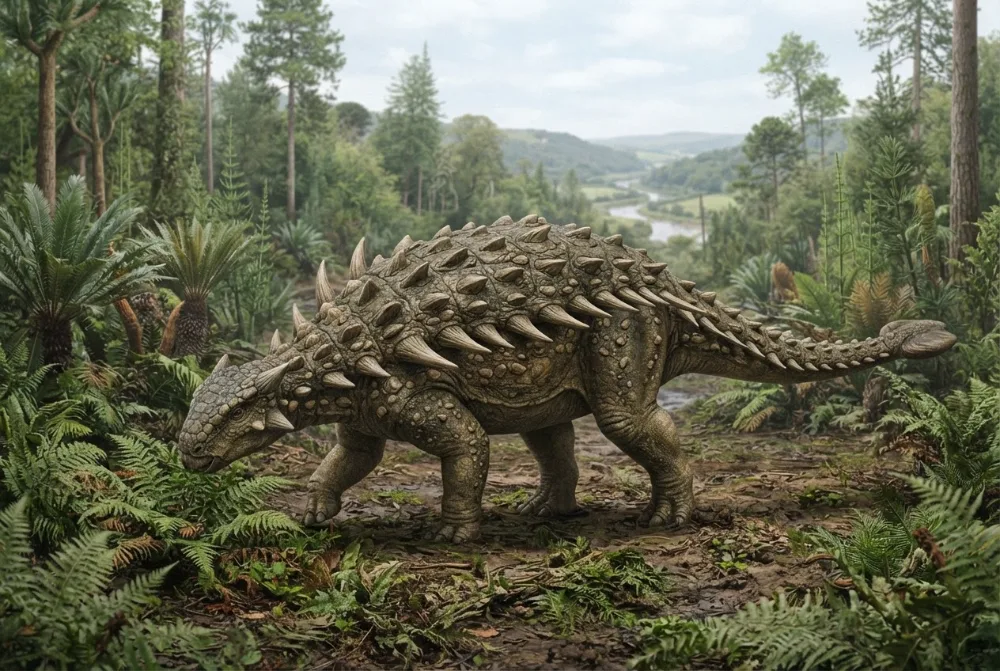
Scientists do not know exactly, but it was a medium-sized ankylosaur with short legs and a wide, flat body, similar to other armoured dinosaurs.4
?What did Vectipelta eat?
It was a plant-eater, eating ferns and other plants that grew in the humid forests of the Early Cretaceous.4
?When did Vectipelta live?
Vectipelta lived about 125 million years ago, during the Early Cretaceous period.4
Ma dino ho animdefoɔ
- Nyansahu din
- Vectipelta
- Obi a ɔtoo din
- Pond et al. 20236
- Kuo
- Dino a wɔwɔ akyɛm
- Abusua / kuo kɛseɛ
- Ankylosauria6
- Nkyekyɛmu
- Ornithischia > Ankylosauria > Thyreophora6
- Abotan no mfeɛ
- mfeɛ ɔpepem 139 kɔsi 137 (Berriasian)6
- Abotan nhyehyɛeɛ
- Wessex6
- Aman
- Engiresi6
- Fɔsil nkyerɛwee
- 1 wɔ The Paleobiology Database mu6
- Nhunumu
- Vectipelta was named in 2023 by Stuart Pond and colleagues. The fossils were found in 1993 and 1994 on the Isle of Wight, England, and were first thought to be from a different dinosaur, Polacanthus.16
- Wɔda so gye ho akyinnye
- Scientists aren't sure exactly how long Vectipelta was, because only a partial skeleton has been found.1
Baabi a nsɛm no firi
- Vectipelta (en.wikipedia.org)
- Isle of Wight: New dinosaur species discovered (bbc.com)
- Vectipelta barretti | Dinosaur Database by DinoAnimals.com (dinoanimals.com)
- New species of dinosaur named after Museum scientist Paul Barrett | Natural History Museum (nhm.ac.uk)
- New dinosaur named for Natural History Museum Professor | Natural History Museum (nhm.ac.uk)
- Vectipelta in The Paleobiology Database (CC BY 4.0): mfeɛ, mmeaeɛ, abotan nhyehyɛeɛ, nkyekyɛmu.
Asɛm biara a ɛwɔ krataafa yi so wɔ nɔma a ɛkyerɛ baabi a ɛfiri. Sɛ yɛfom biribi a, kafra, yɛyɛ dino dɔfoɔ, yɛnyɛ nyansahu nsɛmma krataa. Ka kyerɛ yɛn wɔ [email protected] na yɛbɛsiesie.
 Ɔkɔm de Rex! Dino Wiki yɛ agya bi adwuma a ɔyɛɛ maa ne babarima a ɔdɔ dino. Ɛyɛ kwa, dawurubɔ biara nni mu, akyidifoɔ biara nni mu. Mpanimfoɔ bɛtumi ama Rex aduane kakra, na aboa ama Dino Wiki atena intanɛt so.Ma Rex aduane
 Ankylosaurus
 Sauropelta
 Pinacosaurus
 Scutellosaurus
 Struthiosaurus
 Euoplocephalus
 Stegosaurus
 Iguanodon
 Archaeopteryx
 Giganotosaurus
 Microraptor
 Deinonychus