 Woyɛ dino bɛn? Nsɛmmisa agoro
 Dino ko
 Dino mmirikatuo
 Dino agodie nketewa
 Stika nwoma
 Dino TOP nhyehyɛeɛ
 Ma me nwanwa!
Berɛ bɛn na ɛtenaa ase?

Na ne kɛseɛ yɛ sɛn?
Na ne tenten yɛ sɛn?
Na ne korɔn yɛ sɛn?
nsusuiɛ
Na ne mu yɛ duru sɛn?
 ne tenten te sɛ nkraman 6 firi hwene kɔsi dua🍌ne tenten te sɛ kwadu 31 a wɔde abɔ toatoa so🍉ne mu duru te sɛ watamɛlɔn 140🧸ne mu duru te sɛ nkɔkɔaa sukuu mmofra 37🎒ne mu duru te sɛ sukuu mmofra 22🏃anka ɔbɛtumi atu mmirika mita 100 wɔ sikɛn 9.2 mu (onipa a ɔyɛ ntɛm sen biara hia 9.6)
Viavenator kɛseɛ yɛ sɛn sɛ wode toto WO ho a?
Akontaa nko ara wɔ wo browser mu. Yɛnkora biribiara so, na yɛmmfa biribiara nkɔ baabiara.
Na ɛyɛ ntɛm sɛn?


Nsɛm a ɛyɛ anigye
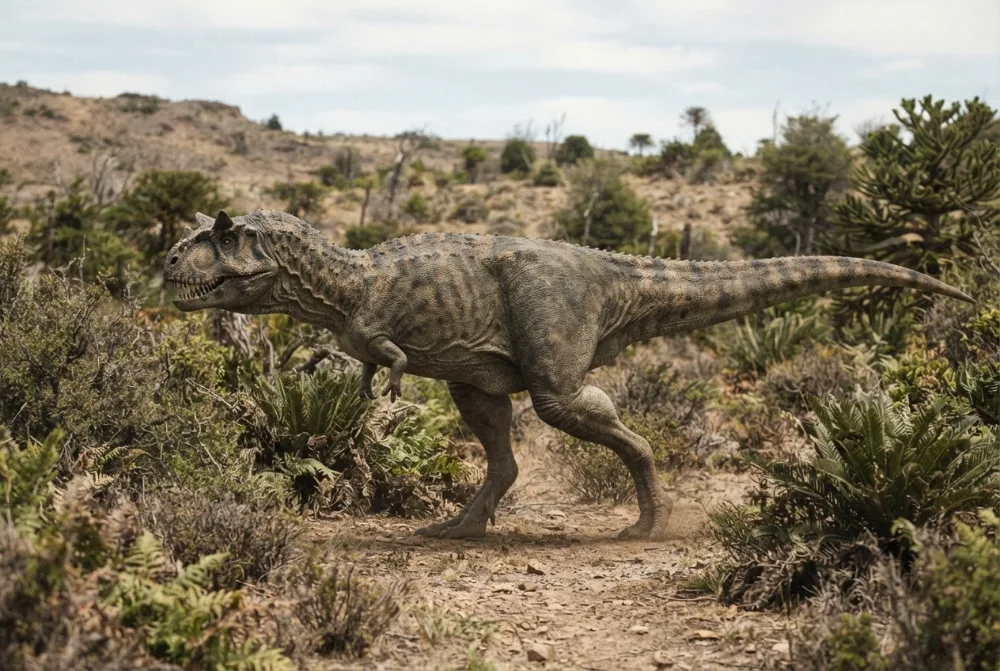
Viavenator belongs to a group called Furileusauria, which means 'stiff back lizard' in the Mapudungun language, because their backbones were very rigid.2
It lived during the Santonian age, about 85.7 to 83.6 million years ago, filling a gap in the fossil record between earlier and later abelisaurids.32
The only known species is Viavenator exxoni, named after ExxonMobil for helping preserve fossils in the La Invernada area.12
Its skeleton shows special features like a deep notch in the skull bones and a downturned crest on the shin bone, which helped scientists identify it as a new species.2
Viavenator had a very stiff backbone with extra connections between the vertebrae, making its spine almost like a single rod.2
It was a medium to big sized theropod, part of the abelisaurid family that lived in the southern continents during the Cretaceous.2
Nsɛm a wɔbisa bebree fa Viavenator ho
?How big was Viavenator?
About 5.6 metres (18 feet) long.1
?What did Viavenator eat?
It was a carnivore, so it ate meat.1
?Why did Viavenator have a stiff back?
Its backbone was very rigid, with extra connections between vertebrae, which helped it move like a seesaw pivoting on its hips.2
?When did Viavenator live?
It lived during the Santonian age of the Late Cretaceous, about 85.7 to 83.6 million years ago.1
Ma dino ho animdefoɔ
- Nyansahu din
- Viavenator
- Obi a ɔtoo din
- Filippi et al. 20165
- Kuo
- Dino a wɔwe nam
- Abusua / kuo kɛseɛ
- Abelisauridae5
- Nkyekyɛmu
- Theropoda > Ceratosauria > Abelisauridae5
- Abotan no mfeɛ
- mfeɛ ɔpepem 86 kɔsi 84 (Santonian)5
- Abotan nhyehyɛeɛ
- Bajo de la Carpa5
- Aman
- Argentina5
- Fɔsil nkyerɛwee
- 1 wɔ The Paleobiology Database mu5
- Nhunumu
- Viavenator was named and described in 2016 by Filippi and colleagues based on a partial skeleton found in the Bajo de la Carpa Formation of Argentina.13
- Wɔda so gye ho akyinnye
- Scientists are still debating exactly how Viavenator is related to other abelisaurids, as it seems to be a transitional form between earlier and later species.2
Baabi a nsɛm no firi
- Viavenator (en.wikipedia.org)
- A new brachyrostran with hypertrophied axial structures reveals an unexpected radiation of latest Cretaceous abelisaurids (corporate.exxonmobil.com)
- PBDB Taxon (paleobiodb.org)
- Viavenator exxoni | Dinosaur Database by DinoAnimals.com (dinoanimals.com)
- Viavenator in The Paleobiology Database (CC BY 4.0): mfeɛ, mmeaeɛ, abotan nhyehyɛeɛ, nkyekyɛmu.
Asɛm biara a ɛwɔ krataafa yi so wɔ nɔma a ɛkyerɛ baabi a ɛfiri. Sɛ yɛfom biribi a, kafra, yɛyɛ dino dɔfoɔ, yɛnyɛ nyansahu nsɛmma krataa. Ka kyerɛ yɛn wɔ [email protected] na yɛbɛsiesie.
 Ɔkɔm de Rex! Dino Wiki yɛ agya bi adwuma a ɔyɛɛ maa ne babarima a ɔdɔ dino. Ɛyɛ kwa, dawurubɔ biara nni mu, akyidifoɔ biara nni mu. Mpanimfoɔ bɛtumi ama Rex aduane kakra, na aboa ama Dino Wiki atena intanɛt so.Ma Rex aduane
 Allosaurus
 Carnotaurus
 Dilophosaurus
 Giganotosaurus
 Compsognathus
 Paronychodon
 Tyrannosaurus
 Triceratops
 Velociraptor
 Spinosaurus
 Ankylosaurus
 Parasaurolophus