 Home
 All dinos
 Dino groups
 Explore
 Dinos by country
 Dino vs dino
 How big were they?
 Dinos A to Z
 Who ate what?
 What dino are you? Quiz
 Dino games
 Dino battle
 Dino race
 Dino mini-games
 Sticker album
 Dino TOP lists
 Timeline
 Surprise me!
 Language: English

Bagaraatan
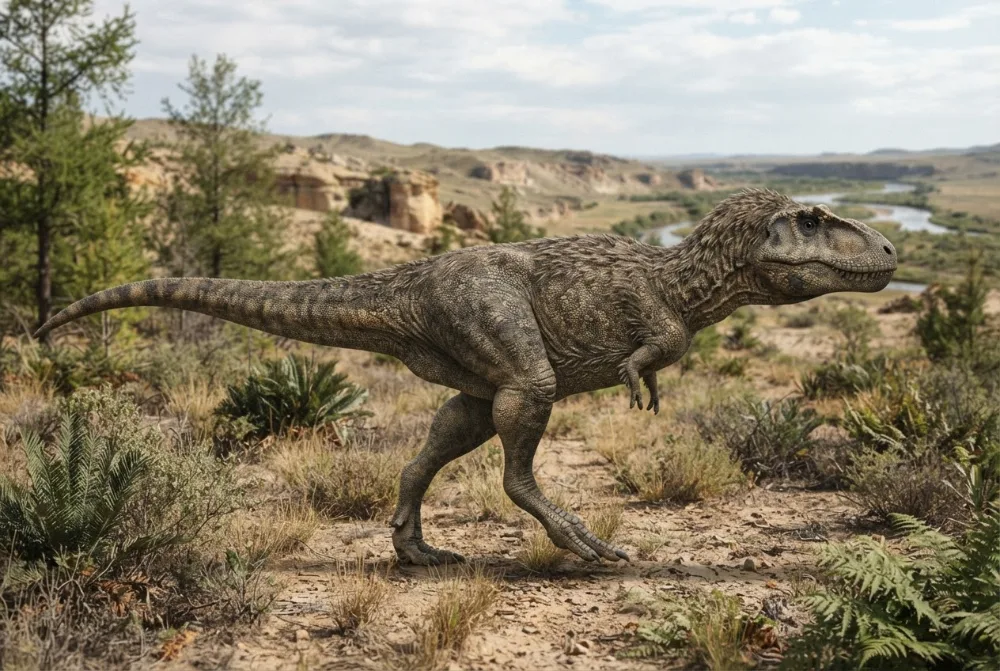
Bagaraatan was a small, fast meat-eating dinosaur that lived in what is now Mongolia. It had a strong jaw with sharp teeth and long, slender legs for chasing prey. Scientists think it was about as long as a car!2
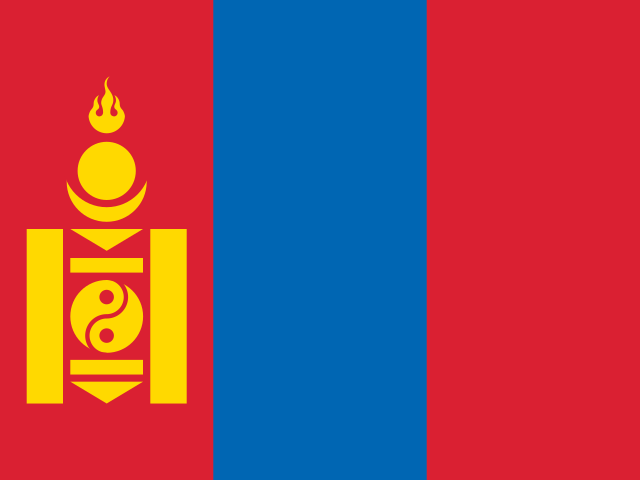 Mongolia
When did it live?
Bagaraatan: 72 to 66 million years ago
How big was it?
How long was it?
How tall was it?
at the hips
 as long as 4 dogs nose to tail🍌as long as 19 bananas end to end🏃could run 100 metres in 7.2 seconds (the fastest human needs 9.6)
How big was Bagaraatan compared to YOU?
Just maths in your browser. Nothing is saved or sent anywhere.
How fast was it?


Fun facts
Bagaraatan had a tail that was not very flexible near the body, because many bones in the tail were locked together.2
The first fossil of Bagaraatan was found in 1970 by Zofia Kielan-Jaworowska during a Polish-Mongolian expedition.2
At first, scientists thought all the bones came from one animal, but later studies showed they came from two different dinosaurs. The main fossil is likely a small relative of Tyrannosaurus.1
Bagaraatan was about 3 to 3.5 meters long, which is similar to a large Deinonychus.2
The shin and ankle bones of Bagaraatan were fused together, giving it a strong lower leg.2
Bagaraatan had two holes in the back part of its lower jaw, which is unusual among theropod dinosaurs.2
Most asked questions about Bagaraatan
?How big was Bagaraatan?
About 3 to 3.5 metres (10 to 11.5 feet) long, which is about as long as a small car. It stood less than 1 metre (3.3 feet) tall at the hips.12
?What did Bagaraatan eat?
It was a meat-eater. It had strong jaws with sharp teeth and long legs for chasing prey, so it was probably an active predator or scavenger.2
?Was Bagaraatan a dinosaur?
Yes, it was a theropod dinosaur from the Late Cretaceous period. It lived in what is now Mongolia.1
For dino experts
- Scientific name
- Bagaraatan
- Named by
- Osmólska 19965
- Group
- Tyrannosaurs
- Family / clade
- Tyrannosauridae5
- Classification
- Theropoda > Tyrannosauroidea > Tyrannosauridae5
- Age of the rocks
- 72 to 66 million years (Maastrichtian)5
- Rock formations
- Nemegt5
- Countries
- Mongolia5
- Fossil records
- 1 in the Paleobiology Database5
- Discovery
- Bagaraatan was named in 1996 by Halszka Osmólska based on a partial skeleton found in Mongolia. The skeleton was discovered by Zofia Kielan-Jaworowska in 1970.52
- Still debated
- Scientists are still debating whether Bagaraatan is a true tyrannosaurid or a close relative, and whether the fossils include bones from more than one animal.1
Where the facts come from
- Bagaraatan (en.wikipedia.org)
- An unusual theropod dinosaur from the Late Cretaceous Nemegt Formation of Mongolia (app.pan.pl)
- en.wikipedia.org Dilong paradoxus (en.wikipedia.org)
- Reassessment of the enigmatic Late Cretaceous theropod dinosaur, Bagaraatan ostromi | Zoological Journal of the Linnean Society | Oxford Academic (academic.oup.com)
- Bagaraatan in The Paleobiology Database (CC BY 4.0): age, places, rock formations, classification.
Every fact on this page has a number that points to its source. If we got something wrong, sorry, we are dino fans, not a science journal. Tell us at hello@dinowiki.app and we will fix it.
 Rex is hungry! Dino Wiki is a dad's project for his dino-loving son, free with no ads and no cookies. Grown-ups can feed Rex a snack to help keep it online.Feed Rex
 Tyrannosaurus
 Tarbosaurus
 Albertosaurus
 Daspletosaurus
 Gorgosaurus
 Alectrosaurus
 Triceratops
 Velociraptor
 Spinosaurus
 Ankylosaurus
 Parasaurolophus
 Pteranodon