
Cardiodon
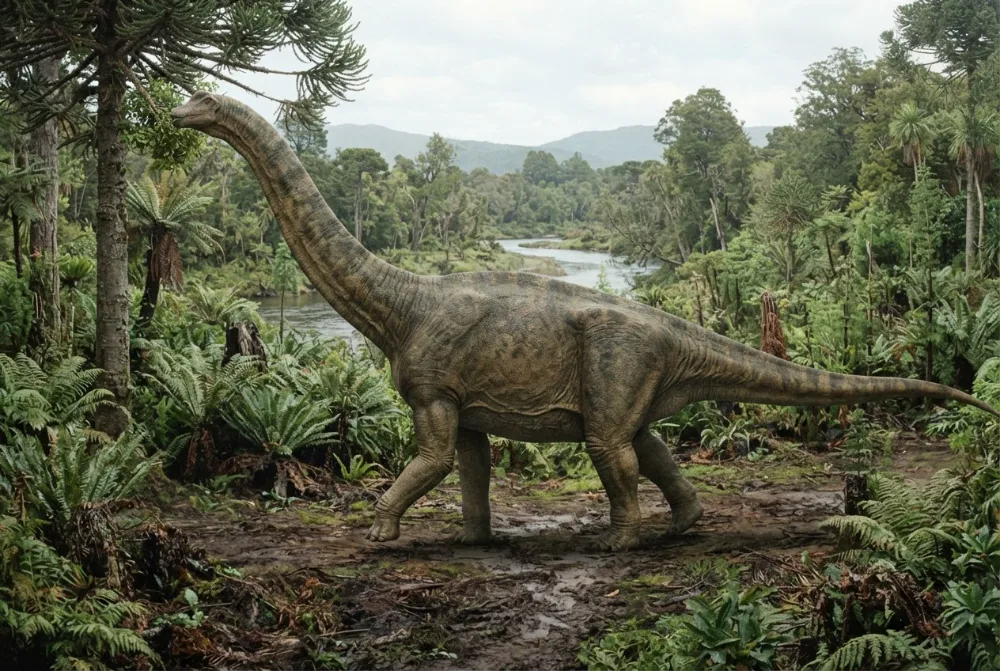
Cardiodon was a huge, long-necked plant-eater that lived in what is now England about 167 million years ago. It is one of the very first sauropod dinosaurs ever given a scientific name!12
When did it live?
Fun facts
Cardiodon was the first sauropod dinosaur ever given a formal scientific name, though scientists at the time did not yet know it was a sauropod.1
Its name means 'heart tooth' because its tooth was shaped like a heart.1
The only known fossil of Cardiodon is a single tooth, which is now lost.1
The tooth had a short, wide crown with a slightly convex inner side and a shallow groove on the outer side.1
Cardiodon lived during the late Bathonian stage of the Jurassic Period, about 167 million years ago.12
Some scientists think Cardiodon might be related to the giant Spanish sauropod Turiasaurus.1
Most asked questions about Cardiodon
?How big was Cardiodon?
Nobody knows for sure. Only a single tooth has been found, so scientists cannot estimate its size.1
?What did Cardiodon eat?
Cardiodon was a herbivore, meaning it ate plants. As a sauropod, it would have been a large, quadrupedal plant-eater.12
?Why is Cardiodon only known from a tooth?
The only fossil ever found of Cardiodon is a single tooth, which is now lost. No other bones have been discovered.1
Ask Rex about Cardiodon
Rex only answers questions about this page. 3 questions a day.
Rex is an AI and can make mistakes. He runs on servers in the EU and questions are never saved. Never type your name or other personal things.
Myth buster
Myth: Cardiodon is just a synonym of Cetiosaurus.
Truth: Recent studies show Cardiodon is a distinct genus, not the same as Cetiosaurus.1
For dino experts
- Scientific name
- Cardiodon
- Named by
- Owen 18412
- Group
- Long-necks
- Family / clade
- Eusauropoda2
- Classification
- Sauropodomorpha > Sauropoda2
- Age of the rocks
- 168 to 165 million years (Bathonian)2
- Rock formations
- Forest Marble2
- Countries
- United Kingdom2
- Fossil records
- 1 in the Paleobiology Database2
- Discovery
- Richard Owen named Cardiodon in 1841 based on a tooth found near Bradford-on-Avon, England, by naturalist Joseph Chaning Pearce. He added the species name rugulosus in 1844.12
- Still debated
- Scientists are not sure exactly how big Cardiodon was, because only a single tooth has been found.1
Where the facts come from
- Cardiodon (en.wikipedia.org)
- Cardiodon in The Paleobiology Database (CC BY 4.0): age, places, rock formations, classification.
Every fact on this page has a number that points to its source. If we got something wrong, sorry, we are dino fans, not a science journal. Tell us at [email protected] and we will fix it.
 Rex is hungry! Dino Wiki is a dad's project for his dino-loving son, free with no ads. Grown-ups can feed Rex a snack to help keep it online.Feed Rex
 Brachiosaurus
 Diplodocus
 Brontosaurus
 Argentinosaurus
 Camarasaurus
 Morosaurus
 Ichthyosaurus
 Khudiakovia
 Ophthalmosaurus
 Pterodactylus
 Peloneustes
 Rhamphocephalus