
Coloradisaurus
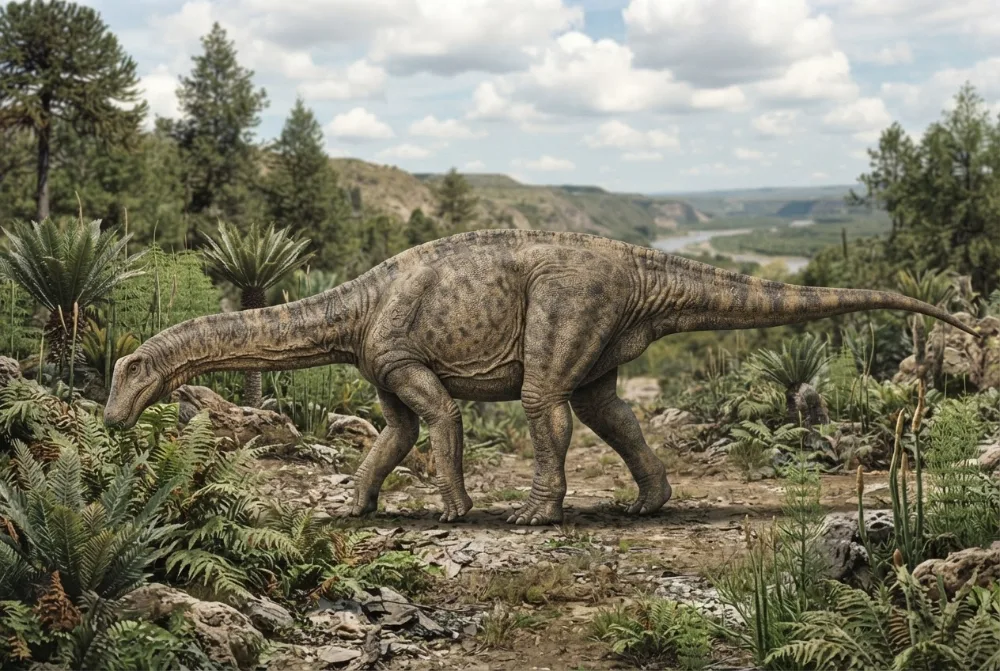
Coloradisaurus was a long-necked plant-eater that lived in Argentina during the Late Triassic. It was about as long as a small car and weighed as much as a grown-up person.21
When did it live?
How big was it?
How long was it?
How heavy was it?
How big was Coloradisaurus compared to YOU?
Just maths in your browser. Nothing is saved or sent anywhere.
Fun facts
Coloradisaurus was first named Coloradia in 1979, but that name was already used for a moth, so it got a new name.2
The only known skull of Coloradisaurus is mostly complete on the right side, but the left side is squashed and missing bones.2
Coloradisaurus lived about 213 million years ago, during the Norian stage of the Late Triassic.2
Scientists think Coloradisaurus was closely related to Lufengosaurus and Glacialisaurus, based on shared leg bone features.2
The fossils of Coloradisaurus were found in the Los Colorados Formation, which is named after the red rocks of the area.2
Most asked questions about Coloradisaurus
?What did Coloradisaurus eat?
It was a herbivore, meaning it ate plants.1
?How long ago did Coloradisaurus live?
It lived during the Late Triassic period, about 221 to 210 million years ago.1
?Where was Coloradisaurus found?
Its fossils were found in the Los Colorados Formation in La Rioja Province, Argentina.2
?Was Coloradisaurus a dinosaur?
Yes, it was a dinosaur. It belonged to the group Sauropodomorpha, which includes long-necked dinosaurs.2

Ask Rex about Coloradisaurus
Rex only answers questions about this page. 10 questions a month.
Rex is an AI and can make mistakes. He runs on servers in the EU and questions are never saved. Never type your name or other personal things.
For dino experts
- Scientific name
- Coloradisaurus
- Named by
- Lambert 19833
- Group
- Long-necks
- Family / clade
- Massospondylidae3
- Classification
- Sauropodomorpha3
- Age of the rocks
- 227 to 206 million years (Norian)3
- Rock formations
- Los Colorados3
- Countries
- Argentina3
- Fossil records
- 2 in the Paleobiology Database3
- Discovery
- The fossils were found in 1971 at La Esquina in Argentina. José Bonaparte first named it Coloradia in 1979, but David Lambert gave it the name Coloradisaurus in 1983.2
- Still debated
- Scientists are not sure whether Coloradisaurus was a plateosaurid or a massospondylid, because different studies place it in different groups.2
Where the facts come from
- Coloradisaurus | Natural History Museum (nhm.ac.uk)
- Coloradisaurus (en.wikipedia.org)
- Coloradisaurus in The Paleobiology Database (CC BY 4.0): age, places, rock formations, classification.
Every fact on this page has a number that points to its source. If we got something wrong, sorry, we are dino fans, not a science journal. Tell us at [email protected] and we will fix it.
 Rex is hungry! Dino Wiki is a dad's project for his dino-loving son, free with no ads. Grown-ups can feed Rex a snack to help keep it online.Feed Rex
 Brachiosaurus
 Diplodocus
 Brontosaurus
 Argentinosaurus
 Camarasaurus
 Morosaurus
 Nothosaurus
 Coelophysis
 Podokesaurus
 Simosaurus
 Eudimorphodon
 Herrerasaurus