
Microvenator
Microvenator was a tiny, fast-running dinosaur that lived in North America during the Early Cretaceous. It had long legs and was probably covered in feathers, making it look a bit like a small, speedy bird.1
When did it live?
How big was it?
How big was Microvenator compared to YOU?
Just maths in your browser. Nothing is saved or sent anywhere.
Fun facts
Microvenator means 'small hunter', and its species name 'celer' means 'swift' because of its long, fast legs.1
The only known Microvenator fossil is a partial skeleton of a juvenile, so scientists are not sure how big the adults grew.1
Microvenator lived alongside famous dinosaurs like Deinonychus, Sauropelta, and Acrocanthosaurus in the Cloverly Formation.1
It is one of the earliest oviraptorosaurs known from North America, a group of bird-like dinosaurs that often had beaks and feathers.1
Microvenator fossils are very rare, probably because its bones were fragile and it had no teeth, making them harder to preserve.1
The first Microvenator fossil was collected in 1933 by Barnum Brown, but it was not named until 1970 by John Ostrom.1
Brown originally called it 'Megadontosaurus' (big-toothed lizard) because he mistakenly thought Deinonychus teeth belonged to it.1
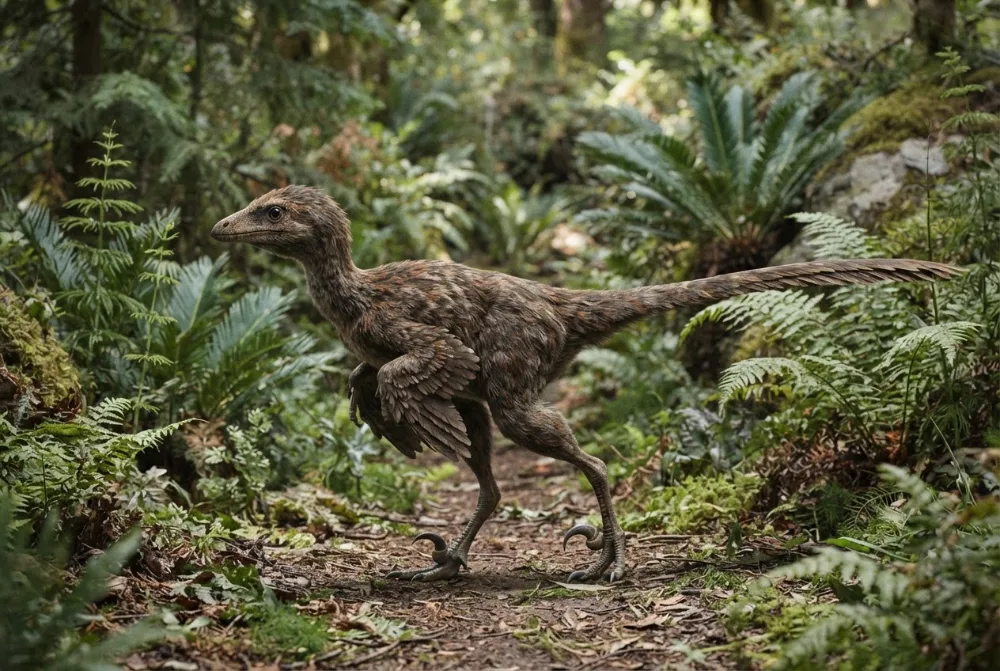
Most asked questions about Microvenator
?How big was Microvenator?
The only known fossil is a juvenile about 1.3 metres (4.3 feet) long. Adults may have been larger, but their size is unknown.1
?Did Microvenator have feathers?
Yes, it was an oviraptorosaur, a group of bird-like dinosaurs that often had feathers. It probably looked like a small, speedy bird.1
?What did Microvenator eat?
It was an omnivore, meaning it ate both plants and meat. Its lack of teeth suggests it may have used a beak.3
?When did Microvenator live?
It lived during the Early Cretaceous period, about 110 million years ago.1

Ask Rex about Microvenator
Rex only answers questions about this page. 3 questions a day.
Rex is an AI and can make mistakes. He runs on servers in the EU and questions are never saved. Never type your name or other personal things.
For dino experts
- Scientific name
- Microvenator
- Named by
- Ostrom 19703
- Group
- Odd feathered dinos
- Family / clade
- Caenagnathidae3
- Classification
- Theropoda > Oviraptorosauria3
- Age of the rocks
- 121 to 94 million years (Aptian / Cenomanian)3
- Rock formations
- Cloverly3
- Countries
- USA3
- Fossil records
- 4 in the Paleobiology Database3
- Discovery
- Barnum Brown collected the first Microvenator fossil in 1933 in Montana, but it was not named until 1970 by John Ostrom, who called it Microvenator celer.1
- Still debated
- Scientists are still unsure how big adult Microvenator grew, because the only known skeleton is from a juvenile.1
Where the facts come from
- Microvenator (en.wikipedia.org)
- PBDB Taxon (paleobiodb.org)
- Microvenator in The Paleobiology Database (CC BY 4.0): age, places, rock formations, classification.
Every fact on this page has a number that points to its source. If we got something wrong, sorry, we are dino fans, not a science journal. Tell us at [email protected] and we will fix it.
Rex is hungry! Dino Wiki is a dad's project for his dino-loving son, free with no ads. Grown-ups can feed Rex a snack to help keep it online.Feed Rex Therizinosaurus
 Oviraptor
 Chirostenotes
 Citipes
 Leptorhynchos
 Avimimus
 Stegosaurus
 Iguanodon
 Archaeopteryx
 Giganotosaurus
 Microraptor
 Deinonychus