
Neobohaiornis
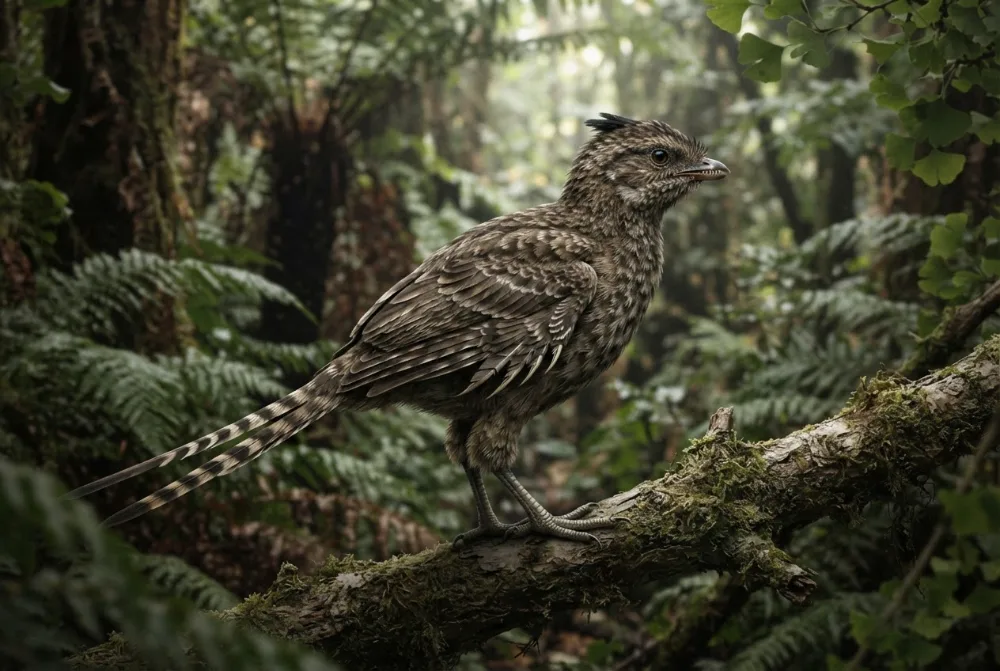
Neobohaiornis was a tiny bird that lived about 119 million years ago in what is now China. It was only as big as a modern icterid bird, weighing about 55 grams. This little bird was a type of enantiornithine, an early group of birds that lived alongside the dinosaurs.1
When did it live?
Fun facts
Neobohaiornis was about half the size of its relative Bohaiornis, making it the smallest known bohaiornithid.1
Its bones were fully fused, showing it was a grown-up bird, not a baby.1
Neobohaiornis had a reduced alular digit (a small finger-like bone in the wing), which suggests it was a good flyer.1
It had more sacral vertebrae than other bohaiornithids, which may have helped with flight.1
Fossil feathers show that Neobohaiornis had rounded wing feathers and short leg feathers.1
Neobohaiornis lived in the Jehol Biota, a famous fossil site in China that preserved many early birds and dinosaurs.1

Ask Rex about Neobohaiornis
Rex only answers questions about this page. 3 questions a day.
Rex is an AI and can make mistakes. He runs on servers in the EU and questions are never saved. Never type your name or other personal things.
For dino experts
- Scientific name
- Neobohaiornis
- Named by
- Shen et al. 20243
- Group
- Early birds
- Family / clade
- Bohaiornithidae3
- Classification
- Theropoda > Avialae3
- Age of the rocks
- 121 to 113 million years (Aptian)3
- Rock formations
- Jiufotang3
- Countries
- China3
- Fossil records
- 1 in the Paleobiology Database3
- Discovery
- Neobohaiornis was named by Shen and colleagues in 2024 based on a nearly complete skeleton found near Lamadong, China. The fossil is stored at the Museum of Hebei GEO University.1
- Still debated
- Scientists are not sure what Neobohaiornis ate or what its exact ecological role was.1
Where the facts come from
- A new diminutive species of bohaiornithid enantiornithine (Aves: Ornithothoraces) from the Lower Cretaceous Jehol Group, northern China | Scientific Reports (nature.com)
- PBDB Taxon (paleobiodb.org)
- Neobohaiornis in The Paleobiology Database (CC BY 4.0): age, places, rock formations, classification.
Every fact on this page has a number that points to its source. If we got something wrong, sorry, we are dino fans, not a science journal. Tell us at [email protected] and we will fix it.
Rex is hungry! Dino Wiki is a dad's project for his dino-loving son, free with no ads. Grown-ups can feed Rex a snack to help keep it online.Feed Rex Archaeopteryx
 Hesperornis
 Ichthyornis
 Baptornis
 Jurapteryx
 Gobipteryx
 Stegosaurus
 Iguanodon
 Giganotosaurus
 Microraptor
 Deinonychus
 Baryonyx