When did it live?

Fun facts
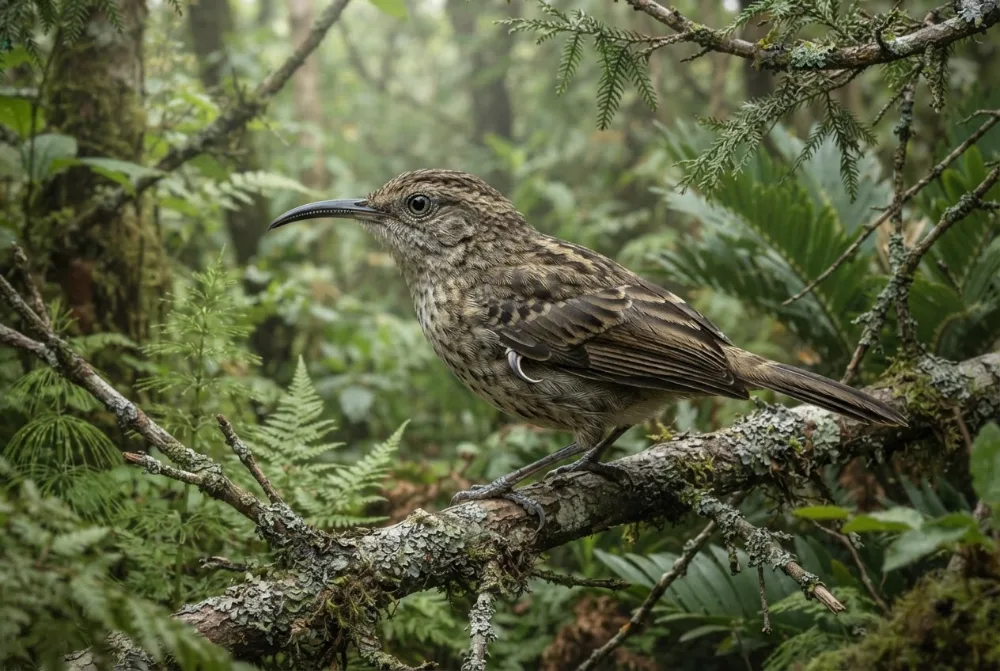
Rapaxavis had teeth only in the front of its upper and lower jaws, unlike many other birds.2
Its feet were perfectly adapted for grasping branches, making it one of the first birds known to be strongly arboreal (tree-living).2
The fossil of Rapaxavis was so well preserved that scientists could see the keratin sheaths on its toe claws.2
Rapaxavis lived about 113 million years ago, during the Early Cretaceous period.1
The holotype (main specimen) was a subadult, meaning it was not fully grown when it died.1
Its name comes from the Latin word 'rapax' meaning grasping, because of its strong feet.1

Ask Rex about Rapaxavis
Rex only answers questions about this page. 3 questions a day.
Rex is an AI and can make mistakes. He runs on servers in the EU and questions are never saved. Never type your name or other personal things.
For dino experts
- Scientific name
- Rapaxavis
- Named by
- Morschhauser et al. 20093
- Group
- Early birds
- Family / clade
- Longipterygidae3
- Classification
- Theropoda > Avialae3
- Age of the rocks
- 121 to 113 million years (Aptian)3
- Rock formations
- Jiufotang3
- Countries
- China3
- Fossil records
- 1 in the Paleobiology Database3
- Discovery
- Rapaxavis was named in 2009 by Eric Morschhauser and colleagues. The fossil was found by Pan Lijun at Xiaioyugou, China, and was first thought to be a different bird called Longirostravis.1
- Still debated
- Scientists are not sure if Rapaxavis was fully grown when it died, because its bones were not completely fused.2
Where the facts come from
- Rapaxavis (en.wikipedia.org)
- Anatomy of the Early Cretaceous bird Rapaxavis pani, a new species from Liaoning Province, China: Journal of Vertebrate Paleontology: Vol 29, No 2 (tandfonline.com)
- Rapaxavis in The Paleobiology Database (CC BY 4.0): age, places, rock formations, classification.
Every fact on this page has a number that points to its source. If we got something wrong, sorry, we are dino fans, not a science journal. Tell us at [email protected] and we will fix it.
 Rex is hungry! Dino Wiki is a dad's project for his dino-loving son, free with no ads. Grown-ups can feed Rex a snack to help keep it online.Feed Rex
 Archaeopteryx
 Hesperornis
 Ichthyornis
 Baptornis
 Jurapteryx
 Gobipteryx
 Stegosaurus
 Iguanodon
 Giganotosaurus
 Microraptor
 Deinonychus
 Baryonyx