 Zer dino zara? Galdetegia
 Dino borroka
 Dino lasterketa
 Dino minijokoak
 Pegatina-albuma
 Dino TOP zerrendak
 Harritu nazazu!
Brighstoneus
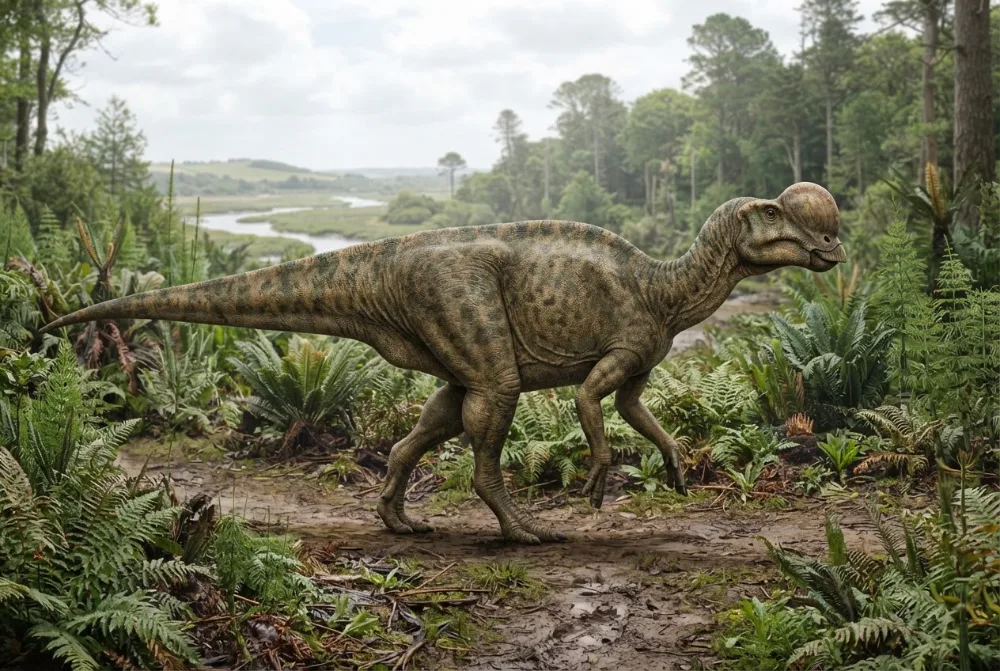
Brighstoneus was a big, plant-eating dinosaur that lived on the Isle of Wight in England about 125 million years ago. It had a strange, bulbous nose that made it look different from its relatives. Scientists think it used its big nose to show off to other dinosaurs or to scare away rivals.12
Noiz bizi izan zen?
Zein handia zen?
Zein luzea zen?
Zein altua zen?
kalkulua
Zein astuna zen?
 6 txakur bezain luze, sudurretik buztanera🍌bata bestearen atzean jarritako 33 banana bezain luze🍉200 angurria bezain astun🧸haur-eskolako 53 haur bezain astun🎒31 eskolaume bezain astun🐻❄️2 hartz zuri bezain astun🏃100 metro 11 segundotan egin zitzakeen korrika (gizakirik azkarrenak 9,6 behar ditu)
Zein handia zen Brighstoneus ZUREKIN alderatuta?
Zure nabigatzaileko kalkulu hutsak. Ez da ezer gordetzen ez inora bidaltzen.
Zein azkarra zen?


Datu dibertigarriak
Brighstoneus had a bulbous bump on its nose, called a nasal bulla, which made its snout look S-shaped from the side.1
Its fossils were found mixed up with the bones of a meat-eating dinosaur called Neovenator after a storm in 1978.1
The dinosaur was named by a retired doctor, Jeremy Lockwood, who spent years studying old bones in museum collections.2
Brighstoneus lived in a floodplain environment that had rivers, lakes, and frequent wildfires.1
Its teeth were different from other similar dinosaurs because they had ridges on both sides.2
The name Brighstoneus honors the village of Brighstone, where a famous Victorian fossil collector named Reverend William Fox once lived.1
Brighstoneus: gehien egindako galderak
?How big was Brighstoneus?
Brighstoneus was probably about 6 metres long and weighed around 1 tonne.1
?What did Brighstoneus eat?
Brighstoneus was a plant-eater. It had a beak and teeth with ridges to chew tough plants.1
?Why did Brighstoneus have a bulbous nose?
Scientists think the bulbous nose, called a nasal bulla, was used to show off to attract mates or scare away rivals.2
?When did Brighstoneus live?
Brighstoneus lived about 125 million years ago, during the Early Cretaceous period.1
Mito-hauslea
Mitoa: Some people think Brighstoneus was just another Iguanodon.
Egia: Scientists proved it is a separate species because of its unique bulbous nose and different teeth.2
Dino adituentzat
- Izen zientifikoa
- Brighstoneus
- Izendatzailea:
- Lockwood et al. 20213
- Taldea
- Landarejale mokodunak
- Familia / klada
- Hadrosauriformes3
- Sailkapena
- Ornithischia > Ornithopoda > Iguanodontia3
- Arroken adina
- 126 eta 121 milioi urte artean (Barremian)3
- Arroka-formazioak
- Wessex3
- Herrialdeak
- Erresuma Batua3
- Fosil-erregistroak
- 1 The Paleobiology Database datu-basean3
- Aurkikuntza
- Brighstoneus was discovered in 1978 after a storm on the Isle of Wight, but it was not named until 2021. Jeremy Lockwood, a retired doctor and PhD student, studied the bones and realized they belonged to a new species.12
- Oraindik eztabaidagai
- Scientists are not sure exactly what the bulbous nose was used for. It might have been for attracting mates or for fighting rivals.2
Datuak nondik datozen
- Brighstoneus (en.wikipedia.org)
- New bulbous nosed dinosaur discovered (csd.docstore.port.ac.uk)
- Brighstoneus in The Paleobiology Database (CC BY 4.0): adina, tokiak, arroka-formazioak, sailkapena.
Orrialde honetako datu bakoitzak zenbaki bat du, bere iturrira eramaten zaituena. Zerbait gaizki badugu, barkatu, dino-zaleak gara, ez zientzia-aldizkari bat. Idatzi [email protected] helbidera eta konponduko dugu.
 Rex gose da! Dino Wiki aita baten proiektua da, dinosauroak maite dituen bere semearentzat, doakoa, iragarkirik eta jarraitzailerik gabe. Helduek mokadutxo bat eman diezaiokete Rexi, sarean jarraitzen laguntzeko.Eman jaten Rexi
 Iguanodon
 Tenontosaurus
 Thescelosaurus
 Zalmoxes
 Camptosaurus
 Rhabdodon
 Stegosaurus
 Archaeopteryx
 Giganotosaurus
 Microraptor
 Deinonychus
 Baryonyx