 Zer dino zara? Galdetegia
 Dino borroka
 Dino lasterketa
 Dino minijokoak
 Pegatina-albuma
 Dino TOP zerrendak
 Harritu nazazu!
Ctenochasma
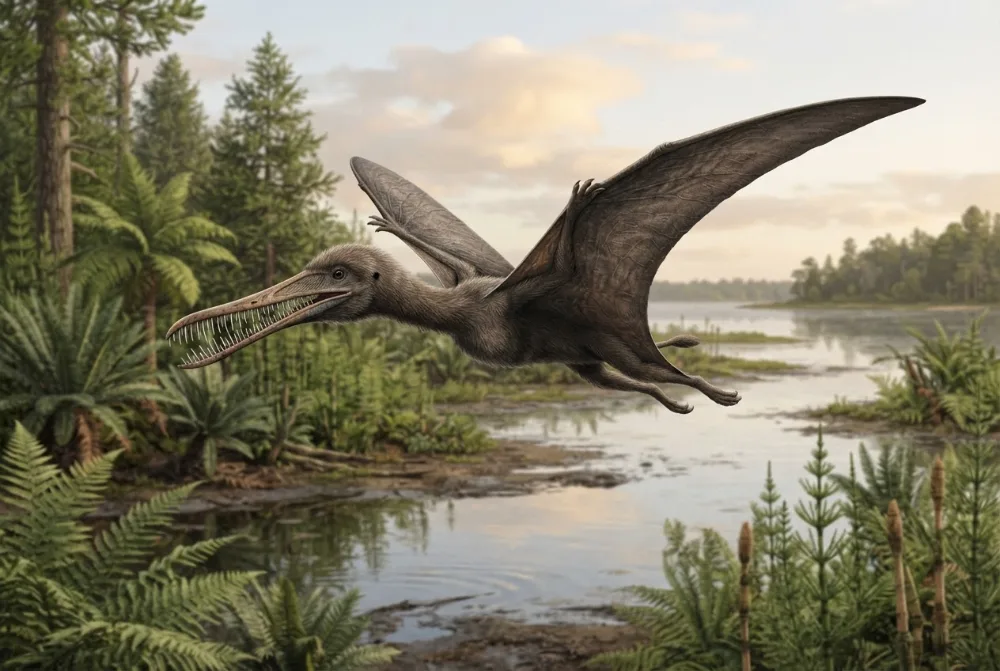
Ctenochasma was a flying reptile with a mouth full of hundreds of long, thin teeth that stuck out like a comb. It used its special beak to scoop up tiny animals from the water, like a spoonbill bird today.1
Noiz bizi izan zen?
Zein handia zen?
Zein zabalak ziren bere hegoak?
 4 etxeko katu bezain luze, sudurretik buztanera⚽futbol zelai oso bat zeharkatu zezakeen hegan 8 segundotan
Zein handia zen Ctenochasma ZUREKIN alderatuta?
Zure nabigatzaileko kalkulu hutsak. Ez da ezer gordetzen ez inora bidaltzen.
Zein azkarra zen?


Datu dibertigarriak
Ctenochasma had over 400 teeth in adults, all long, thin, and tightly packed together.1
Its teeth stuck outward from the jaws, forming a basket-like shape that helped catch small prey.1
Adult Ctenochasma had a bony crest on top of their skull, but young ones did not.1
Scientists think Ctenochasma was nocturnal, like some seabirds today, based on its eye bones.1
The smallest species, Ctenochasma elegans, had a wingspan of about 1.9 metres (6.2 feet) as an adult.1
Ctenochasma lived during the Late Jurassic period, around 150 to 145 million years ago.1
Ctenochasma: gehien egindako galderak
?Was Ctenochasma a dinosaur?
No, Ctenochasma was a pterosaur, which is a flying reptile and not a dinosaur.1
?How big was Ctenochasma?
The smallest species, Ctenochasma elegans, had a maximum wingspan of about 1.9 metres (6.2 feet) as an adult.1
?What did Ctenochasma eat?
It used its comb-like teeth to strain small invertebrates from the water, similar to how a spoonbill bird feeds today.1
?Did Ctenochasma have a crest?
Yes, adult Ctenochasma had a bony crest along the skull, but young ones did not.1
Dino adituentzat
- Izen zientifikoa
- Ctenochasma
- Izendatzailea:
- Meyer 18512
- Taldea
- Narrasti hegalariak
- Familia / klada
- Lophocratia2
- Sailkapena
- Pterosauria > Pterodactyloidea2
- Arroken adina
- 149 eta 137 milioi urte artean (Tithonian / Berriasian)2
- Arroka-formazioak
- Solnhofen, Solnhofener Plattenkalk, Calcaires tâchetés2
- Herrialdeak
- Alemania, Frantzia2
- Fosil-erregistroak
- 7 The Paleobiology Database datu-basean2
- Aurkikuntza
- German paleontologist Hermann von Meyer named Ctenochasma in 1851, based on a lower jaw full of teeth. He first thought it was a crocodilian, not a pterosaur.1
- Oraindik eztabaidagai
- Scientists debate whether all the different species of Ctenochasma are really just growth stages of one species, but a 2007 study showed three distinct species based on tooth number and shape.1
Datuak nondik datozen
- Ctenochasma (en.wikipedia.org)
- Ctenochasma in The Paleobiology Database (CC BY 4.0): adina, tokiak, arroka-formazioak, sailkapena.
Orrialde honetako datu bakoitzak zenbaki bat du, bere iturrira eramaten zaituena. Zerbait gaizki badugu, barkatu, dino-zaleak gara, ez zientzia-aldizkari bat. Idatzi [email protected] helbidera eta konponduko dugu.
 Rex gose da! Dino Wiki aita baten proiektua da, dinosauroak maite dituen bere semearentzat, doakoa, iragarkirik eta jarraitzailerik gabe. Helduek mokadutxo bat eman diezaiokete Rexi, sarean jarraitzen laguntzeko.Eman jaten Rexi
 Pteranodon
 Quetzalcoatlus
 Dorygnathus
 Rhamphorhynchus
 Anhanguera
 Pterodactylus
 Stegosaurus
 Iguanodon
 Archaeopteryx
 Giganotosaurus
 Microraptor
 Deinonychus