 Zer dino zara? Galdetegia
 Dino borroka
 Dino lasterketa
 Dino minijokoak
 Pegatina-albuma
 Dino TOP zerrendak
 Harritu nazazu!
Duriavenator
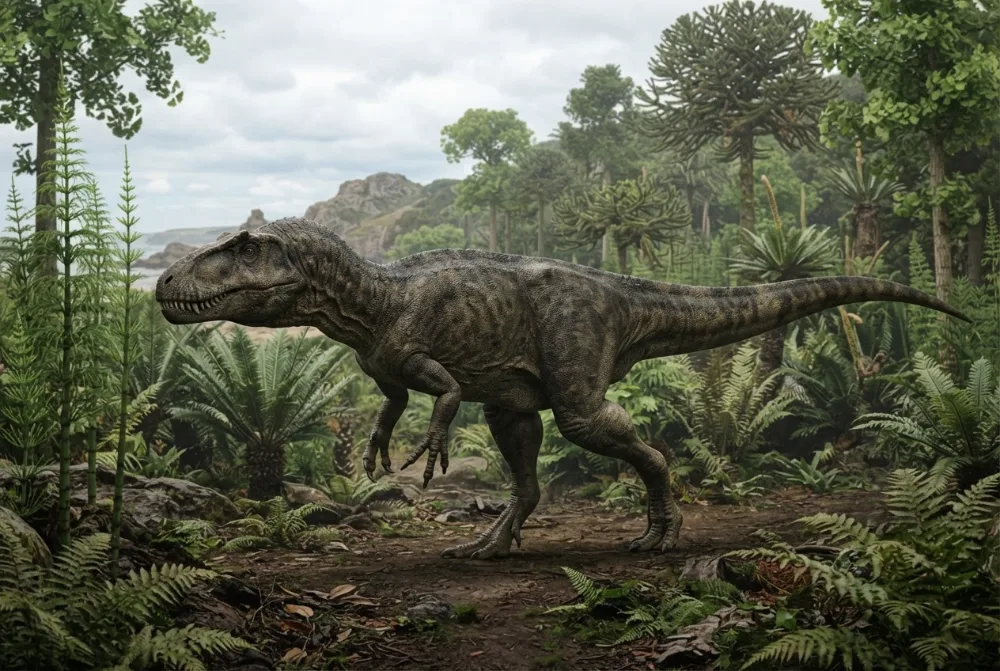
Duriavenator was a meat-eating dinosaur that lived in what is now England about 168 million years ago. It was a medium-sized predator with a big head and strong arms. Scientists think it hunted other dinosaurs like a sneaky ambush predator.1
Noiz bizi izan zen?
Zein handia zen?
Zein luzea zen?
Zein altua zen?
kalkulua
Zein astuna zen?
 7 txakur bezain luze, sudurretik buztanera🍌bata bestearen atzean jarritako 39 banana bezain luze🍉200 angurria bezain astun🧸haur-eskolako 53 haur bezain astun🎒31 eskolaume bezain astun🐻❄️2 hartz zuri bezain astun🏃100 metro 10 segundotan egin zitzakeen korrika (gizakirik azkarrenak 9,6 behar ditu)
Zein handia zen Duriavenator ZUREKIN alderatuta?
Zure nabigatzaileko kalkulu hutsak. Ez da ezer gordetzen ez inora bidaltzen.
Zein azkarra zen?


Datu dibertigarriak
Duriavenator was first thought to be a Megalosaurus, but scientists later gave it its own name in 2008.1
The only known fossils of Duriavenator are parts of its skull and jaws, found in a quarry in 1882.1
Duriavenator had a deep groove on its upper jaw bone with many air-filled holes, which is a unique feature.1
It had about 4 teeth in the front of its upper jaw, 14 to 16 in the back of the upper jaw, and 14 to 15 in the lower jaw.1
The front teeth of Duriavenator were longer and pointed forward, which may have helped it grab food.1
Duriavenator lived during the Middle Jurassic period, about 168 million years ago, making it one of the oldest known tetanuran theropods.1
Duriavenator: gehien egindako galderak
?How big was Duriavenator?
It was about 5 to 7 metres long (16 to 23 feet) and weighed around 1 tonne (2,200 pounds). That is about as heavy as a small car.1
?What did Duriavenator eat?
It was a meat-eater that probably hunted other dinosaurs, like sauropods and stegosaurs. Scientists think it was an ambush predator.1
?When did Duriavenator live?
It lived about 168 million years ago, during the Middle Jurassic period. That is long before T. rex appeared.1
?Where was Duriavenator found?
Its only known fossils were discovered in a quarry near Sherborne in Dorset, England, in 1882. They are now at the Natural History Museum in London.1
Dino adituentzat
- Izen zientifikoa
- Duriavenator
- Izendatzailea:
- Benson 20082
- Taldea
- Dino haragijaleak
- Familia / klada
- Megalosauridae2
- Sailkapena
- Theropoda2
- Arroken adina
- 169 eta 168 milioi urte artean (Bajocian)2
- Arroka-formazioak
- Upper Inferior Oolite2
- Herrialdeak
- Erresuma Batua2
- Fosil-erregistroak
- 1 The Paleobiology Database datu-basean2
- Aurkikuntza
- In 1882, Edward Cleminshaw found skull bones near Sherborne, England. The fossils were first called Megalosaurus, but in 2008 Roger Benson renamed them Duriavenator.1
- Oraindik eztabaidagai
- Scientists are not sure exactly how big Duriavenator was because only a few skull bones have been found. The size estimates are based on related dinosaurs.1
Datuak nondik datozen
- Duriavenator (en.wikipedia.org)
- Duriavenator in The Paleobiology Database (CC BY 4.0): adina, tokiak, arroka-formazioak, sailkapena.
Orrialde honetako datu bakoitzak zenbaki bat du, bere iturrira eramaten zaituena. Zerbait gaizki badugu, barkatu, dino-zaleak gara, ez zientzia-aldizkari bat. Idatzi [email protected] helbidera eta konponduko dugu.
 Rex gose da! Dino Wiki aita baten proiektua da, dinosauroak maite dituen bere semearentzat, doakoa, iragarkirik eta jarraitzailerik gabe. Helduek mokadutxo bat eman diezaiokete Rexi, sarean jarraitzen laguntzeko.Eman jaten Rexi
 Allosaurus
 Carnotaurus
 Dilophosaurus
 Giganotosaurus
 Compsognathus
 Paronychodon
 Ichthyosaurus
 Khudiakovia
 Ophthalmosaurus
 Pterodactylus
 Peloneustes
 Rhamphocephalus