 Zer dino zara? Galdetegia
 Dino borroka
 Dino lasterketa
 Dino minijokoak
 Pegatina-albuma
 Dino TOP zerrendak
 Harritu nazazu!
Foskeia
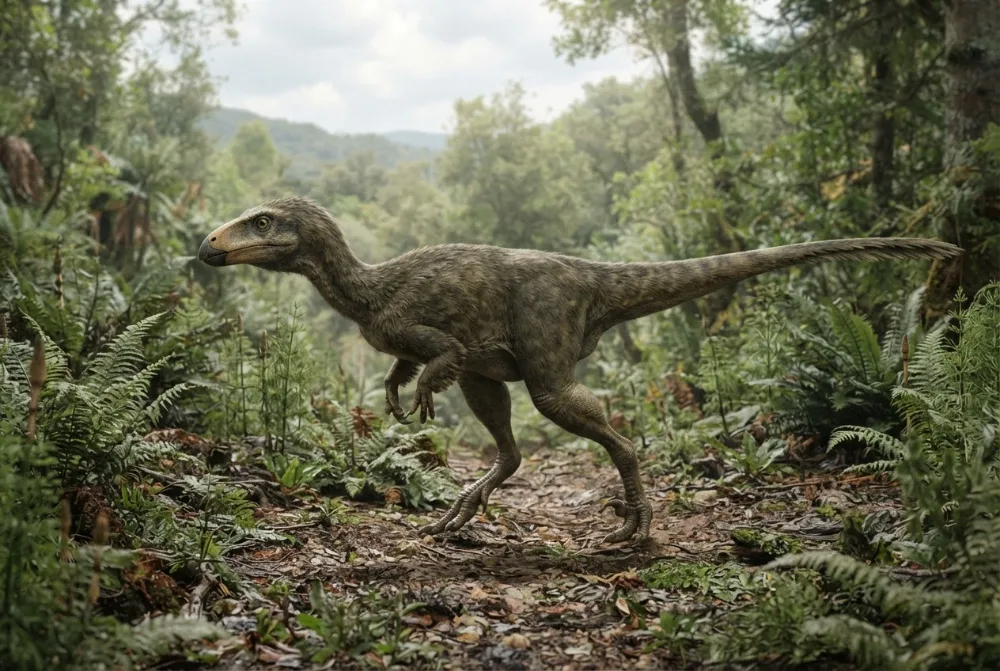
Foskeia was a small, two-legged plant-eater that lived in what is now Spain. It had a beak and a very special skull, and it was one of the earliest members of its dinosaur group.1
Noiz bizi izan zen?
Zein handia zen?
Zein luzea zen?
Zein altua zen?
kalkulua
 4 etxeko katu bezain luze, sudurretik buztanera🍌bata bestearen atzean jarritako 11 banana bezain luze🏃100 metro 8,8 segundotan egin zitzakeen korrika (gizakirik azkarrenak 9,6 behar ditu)
Zein handia zen Foskeia ZUREKIN alderatuta?
Zure nabigatzaileko kalkulu hutsak. Ez da ezer gordetzen ez inora bidaltzen.
Zein azkarra zen?


Datu dibertigarriak
Foskeia had a beak made of fused premaxillae bones, which is very unusual for an ornithopod dinosaur.1
Its front teeth stuck out forward (procumbent) and the crowns extended beyond the edge of the beak.1
The first tooth in its lower jaw was shaped like a thin thread (filiform), which is a unique feature.1
Foskeia had a very high jaw joint, which helped it bite with extra force.1
Scientists used CT scans to see inside the skull fossils and build a 3D model of the head.1
Foskeia lived about 125 to 119 million years ago, during the Early Cretaceous period.2
This dinosaur is the earliest known member of a group called Rhabdodontia, which lived only in Europe.1
Foskeia: gehien egindako galderak
?How big was Foskeia?
Foskeia was very small, about 0.5 metres (1.6 feet) long, making it one of the smallest ornithopods known.31
?What did Foskeia eat?
Foskeia was a plant-eater (herbivore). Its name means 'light forager', referring to its small size and presumed herbivorous habits.3
?Could Foskeia walk on two legs?
Yes, adults were bipedal. Juveniles started out walking on all fours, but switched to two legs early in life.3
?Why did Foskeia have a beak?
Foskeia had a beak made of fused premaxillae bones, which is unusual for an ornithopod. It likely used it to bite off plant material.3
?When did Foskeia live?
Foskeia lived during the Early Cretaceous, about 125 to 119 million years ago, in what is now Spain.3
Dino adituentzat
- Izen zientifikoa
- Foskeia
- Izendatzailea:
- Dieudonné et al. 20264
- Taldea
- Landarejale mokodunak
- Familia / klada
- Rhabdodontia4
- Sailkapena
- Ornithischia > Ornithopoda > Iguanodontia4
- Arroken adina
- 126 eta 120 milioi urte artean (Barremian / Aptian)4
- Arroka-formazioak
- Castrillo de la Reina4
- Herrialdeak
- Espainia4
- Fosil-erregistroak
- 1 The Paleobiology Database datu-basean4
- Aurkikuntza
- Foskeia was named in 2026 by a team of scientists led by Dieudonné, based on fossils found at the Vegagete site in Burgos, Spain. The remains were first thought to belong to a different dinosaur, but new skull bones showed it was a new species.12
- Oraindik eztabaidagai
- Scientists are not sure exactly how big Foskeia grew, because only a few bones have been found so far.1
Datuak nondik datozen
- Foskeia pelendonum, a new rhabdodontomorph from the Lower Cretaceous of Salas de los Infantes (Burgos Province, Spain), and a new phylogeny of ornithischian dinosaurs (riull.ull.es)
- PBDB Taxon (paleobiodb.org)
- Foskeia (en.wikipedia.org)
- Foskeia in The Paleobiology Database (CC BY 4.0): adina, tokiak, arroka-formazioak, sailkapena.
Orrialde honetako datu bakoitzak zenbaki bat du, bere iturrira eramaten zaituena. Zerbait gaizki badugu, barkatu, dino-zaleak gara, ez zientzia-aldizkari bat. Idatzi [email protected] helbidera eta konponduko dugu.
 Rex gose da! Dino Wiki aita baten proiektua da, dinosauroak maite dituen bere semearentzat, doakoa, iragarkirik eta jarraitzailerik gabe. Helduek mokadutxo bat eman diezaiokete Rexi, sarean jarraitzen laguntzeko.Eman jaten Rexi
 Iguanodon
 Tenontosaurus
 Thescelosaurus
 Zalmoxes
 Camptosaurus
 Rhabdodon
 Stegosaurus
 Archaeopteryx
 Giganotosaurus
 Microraptor
 Deinonychus
 Baryonyx