 Zer dino zara? Galdetegia
 Dino borroka
 Dino lasterketa
 Dino minijokoak
 Pegatina-albuma
 Dino TOP zerrendak
 Harritu nazazu!
Fukuivenator
Fukuivenator was a small, fast dinosaur that lived in what is now Japan. It had a strange mix of features from different dinosaur groups, making it a real puzzle for scientists. This dinosaur might have eaten both plants and meat, like a modern raccoon.12
Noiz bizi izan zen?
Zein handia zen?
Zein luzea zen?
Zein altua zen?
kalkulua
Zein astuna zen?
 5 etxeko katu bezain luze, sudurretik buztanera🍌bata bestearen atzean jarritako 14 banana bezain luze🍉5 angurria bezain astun🏃100 metro 13 segundotan egin zitzakeen korrika (gizakirik azkarrenak 9,6 behar ditu)
Zein handia zen Fukuivenator ZUREKIN alderatuta?
Zure nabigatzaileko kalkulu hutsak. Ez da ezer gordetzen ez inora bidaltzen.
Zein azkarra zen?


Datu dibertigarriak
Fukuivenator is known from a nearly complete skeleton, making it the most complete non-bird dinosaur ever found in Japan.12
Its inner ear was shaped like a mix between those of birds and other dinosaurs, showing a step in the evolution of bird hearing.12
Fukuivenator had a very large nostril opening, almost as tall as another hole in its skull called the antorbital fenestra.1
This dinosaur had different kinds of teeth in its mouth, a feature called heterodonty. Some teeth were small and spatula-shaped, while others were large and curved.1
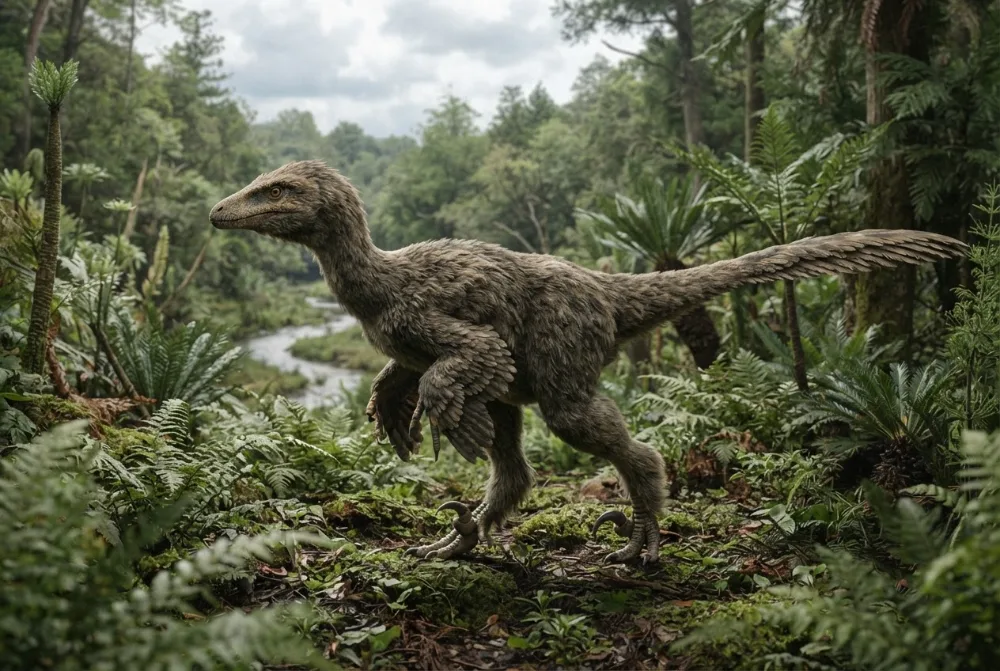
Fukuivenator: gehien egindako galderak
?How big was Fukuivenator?
Fukuivenator was about 2.45 metres (8.0 feet) long and weighed around 25 kilograms (55 pounds).41
?What did Fukuivenator eat?
Fukuivenator probably ate both plants and meat, like a modern raccoon. Its teeth and long neck suggest it was at least omnivorous, maybe even mostly herbivorous.41
?Where was Fukuivenator found?
Fukuivenator was found in 2007 in a quarry near the Sugiyama River in Katsuyama, Japan. The skeleton is the most complete non-bird dinosaur fossil ever found in Japan.41
?When did Fukuivenator live?
Fukuivenator lived during the Early Cretaceous, about 127 to 115 million years ago. That's based on radiometric dating of nearby rocks.4
Dino adituentzat
- Izen zientifikoa
- Fukuivenator
- Izendatzailea:
- Azuma et al. 20165
- Taldea
- Dino lumadun bitxiak
- Familia / klada
- Therizinosauria5
- Sailkapena
- Theropoda > Therizinosauria5
- Arroken adina
- 121 eta 113 milioi urte artean (Aptian)5
- Arroka-formazioak
- Kitadani5
- Herrialdeak
- Japonia5
- Fosil-erregistroak
- 1 The Paleobiology Database datu-basean5
- Aurkikuntza
- Fukuivenator was named in 2016 by a team led by Yoichi Azuma. The fossil was found in the summer of 2007 in the Kitadani Dinosaur Quarry in Fukui, Japan. It was a nearly complete skeleton, the most complete non-bird dinosaur from Japan.13
- Oraindik eztabaidagai
- Scientists are not sure which dinosaur group Fukuivenator belongs to. It has features of dromaeosaurids, therizinosaurs, and other groups, but its exact family tree is still debated.12
Datuak nondik datozen
- A bizarre theropod from the Early Cretaceous of Japan highlighting mosaic evolution among coelurosaurians | Scientific Reports (nature.com)
- A bizarre theropod from the Early Cretaceous of Japan highlighting mosaic evolution among coelurosaurians (pmc.ncbi.nlm.nih.gov)
- PBDB Taxon (paleobiodb.org)
- Fukuivenator (en.wikipedia.org)
- Fukuivenator in The Paleobiology Database (CC BY 4.0): adina, tokiak, arroka-formazioak, sailkapena.
Orrialde honetako datu bakoitzak zenbaki bat du, bere iturrira eramaten zaituena. Zerbait gaizki badugu, barkatu, dino-zaleak gara, ez zientzia-aldizkari bat. Idatzi [email protected] helbidera eta konponduko dugu.
 Rex gose da! Dino Wiki aita baten proiektua da, dinosauroak maite dituen bere semearentzat, doakoa, iragarkirik eta jarraitzailerik gabe. Helduek mokadutxo bat eman diezaiokete Rexi, sarean jarraitzen laguntzeko.Eman jaten Rexi
 Therizinosaurus
 Oviraptor
 Chirostenotes
 Citipes
 Leptorhynchos
 Avimimus
 Stegosaurus
 Iguanodon
 Archaeopteryx
 Giganotosaurus
 Microraptor
 Deinonychus