 Zer dino zara? Galdetegia
 Dino borroka
 Dino lasterketa
 Dino minijokoak
 Pegatina-albuma
 Dino TOP zerrendak
 Harritu nazazu!
Irritator
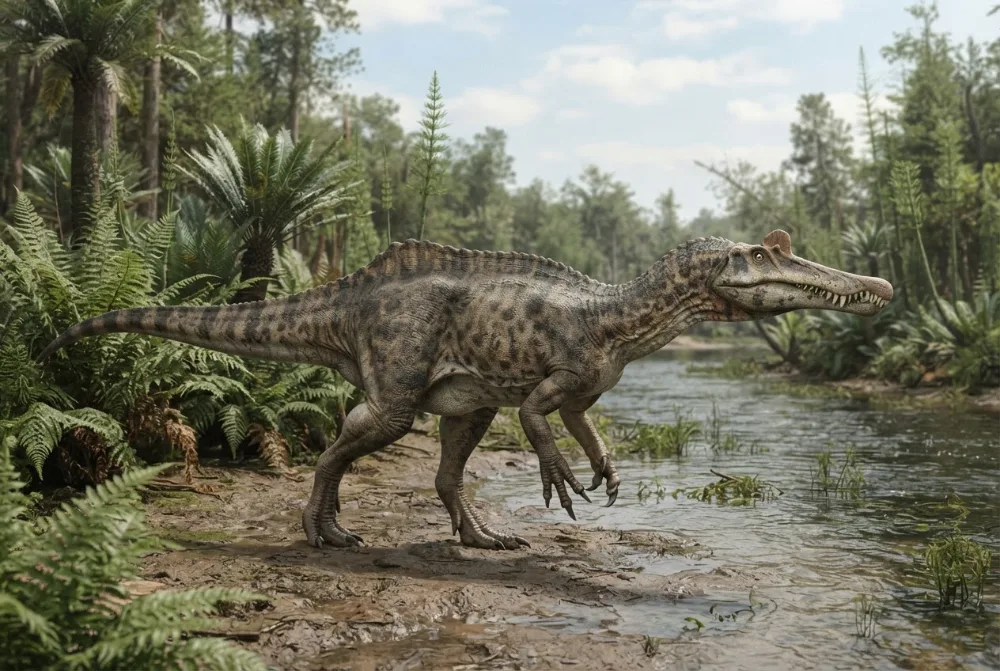
Irritator was a meat-eating dinosaur with a long, narrow snout and a small crest on its head. It lived in what is now Brazil about 110 million years ago. It is one of the smallest spinosaurs known.1
Noiz bizi izan zen?
Zein handia zen?
Zein luzea zen?
Zein altua zen?
Zein astuna zen?
 8 txakur bezain luze, sudurretik buztanera🍌bata bestearen atzean jarritako 44 banana bezain luze🍉200 angurria bezain astun🧸haur-eskolako 53 haur bezain astun🎒31 eskolaume bezain astun🐻❄️2 hartz zuri bezain astun🏃100 metro 12 segundotan egin zitzakeen korrika (gizakirik azkarrenak 9,6 behar ditu)
Zein handia zen Irritator ZUREKIN alderatuta?
Zure nabigatzaileko kalkulu hutsak. Ez da ezer gordetzen ez inora bidaltzen.
Zein azkarra zen?


Datu dibertigarriak
Irritator's skull is the most complete skull of any spinosaurid dinosaur ever found.1
Its name comes from the irritation scientists felt because fossil collectors had damaged and altered the skull before it was studied.1
A tooth from Irritator was found stuck in the neck bone of a pterosaur, showing that it ate pterosaurs, either by hunting or scavenging.1
Irritator had a thin crest on top of its head, and strong neck muscles were probably attached there.1
Its nostrils were positioned far back on its snout, not at the tip like in many other dinosaurs.1
Irritator lived in a coastal lagoon environment that was surrounded by dry areas.1
The fossil was originally thought to be from a pterosaur, then a maniraptoran dinosaur, before being identified as a spinosaurid in 1996.1
Irritator: gehien egindako galderak
?How big was Irritator?
About 6 to 8 metres (20 to 26 feet) long and weighed around 1 tonne (1.1 short tons). It was one of the smallest spinosaurids.1
?What did Irritator eat?
It ate fish and other small animals, like today's crocodiles. A tooth was found stuck in a pterosaur neck bone, so it also ate pterosaurs, either by hunting or scavenging.1
?Why is it called Irritator?
Its name comes from the word 'irritation' because scientists were annoyed that fossil collectors had damaged and altered the skull before they could study it.1
?Did Irritator have feathers?
Nobody knows for sure. No fossil feathers have been found with Irritator, and most spinosaurids are not known to have had feathers.1
?Could Irritator swim?
It may have been semiaquatic, meaning it spent time in water. It lived in a coastal lagoon and probably hunted fish, like today's crocodiles.1
?Was Irritator bigger than T. rex?
No, it was much smaller. Irritator was about 6 to 8 metres long, while T. rex could be over 12 metres long.1
?Did Irritator have a sail on its back?
One possible skeleton suggests it had a sail, like other spinosaurids, but since only a skull has been found, the sail is a guess.2
?When did Irritator live?
It lived during the Early Cretaceous Period, about 113 to 110 million years ago.1
Mito-hauslea
Mitoa: Some people think Irritator was a fully aquatic dinosaur that only ate fish.
Egia: Scientists think Irritator was a generalist eater, catching fish and other small prey, and it may have also scavenged. It probably lived both on land and in water.1
Dino adituentzat
- Izen zientifikoa
- Irritator
- Izendatzailea:
- Martill et al. 19963
- Taldea
- Espinosauroak
- Familia / klada
- Spinosauridae3
- Sailkapena
- Theropoda > Spinosauridae3
- Arroken adina
- 120 eta 113 milioi urte artean (Aptian)3
- Arroka-formazioak
- Romualdo3
- Herrialdeak
- Brasil3
- Fosil-erregistroak
- 1 The Paleobiology Database datu-basean3
- Aurkikuntza
- The skull was found by fossil dealers in Brazil and sold to a museum in Germany. It was described by Martill and colleagues in 1996, and the species was named Irritator challengeri.13
- Oraindik eztabaidagai
- Scientists are still unsure whether Irritator actively hunted pterosaurs or just ate their remains.1
Datuak nondik datozen
- Irritator (en.wikipedia.org)
- Irritator | Natural History Museum (nhm.ac.uk)
- Irritator in The Paleobiology Database (CC BY 4.0): adina, tokiak, arroka-formazioak, sailkapena.
Orrialde honetako datu bakoitzak zenbaki bat du, bere iturrira eramaten zaituena. Zerbait gaizki badugu, barkatu, dino-zaleak gara, ez zientzia-aldizkari bat. Idatzi [email protected] helbidera eta konponduko dugu.
 Rex gose da! Dino Wiki aita baten proiektua da, dinosauroak maite dituen bere semearentzat, doakoa, iragarkirik eta jarraitzailerik gabe. Helduek mokadutxo bat eman diezaiokete Rexi, sarean jarraitzen laguntzeko.Eman jaten Rexi
 Spinosaurus
 Baryonyx
 Suchomimus
 Angaturama
 Camarillasaurus
 Ceratosuchops
 Stegosaurus
 Iguanodon
 Archaeopteryx
 Giganotosaurus
 Microraptor
 Deinonychus