 Zer dino zara? Galdetegia
 Dino borroka
 Dino lasterketa
 Dino minijokoak
 Pegatina-albuma
 Dino TOP zerrendak
 Harritu nazazu!
Istiorachis
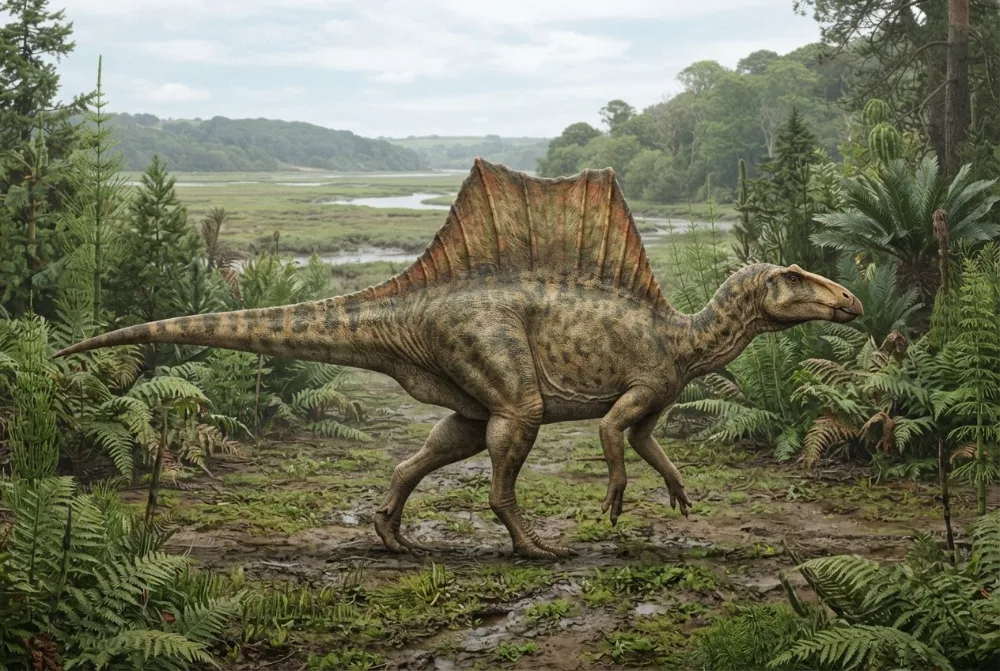
Istiorachis was a plant-eating dinosaur that lived on the Isle of Wight over 120 million years ago. It had a tall sail on its back made of long spines, which might have helped it show off to other dinosaurs. It was about the size of an American bison and weighed as much as a small car.2
Noiz bizi izan zen?
Zein handia zen?
Zein altua zen?
Zein astuna zen?

Zein handia zen Istiorachis ZUREKIN alderatuta?
Zure nabigatzaileko kalkulu hutsak. Ez da ezer gordetzen ez inora bidaltzen.
Zein azkarra zen?


Datu dibertigarriak
Istiorachis had very long spines on its back and tail bones, making a sail-like structure that was probably used for showing off to mates or scaring predators.1
Its name honors Dame Ellen MacArthur, a famous sailor from the Isle of Wight who sailed solo around the world.1
The only known fossil of Istiorachis was found in a plant debris bed near Grange Chine on the Isle of Wight.1
Some of the skeleton was stolen by poachers before scientists could collect it.1
Istiorachis belonged to a group of dinosaurs called iguanodontians, which were common in the Early Cretaceous.2
The sail of Istiorachis was made of neural spines that were over four times taller than the main part of the backbone.1
Istiorachis: gehien egindako galderak
?How big was Istiorachis?
It was about the size of an American bison, stood around two metres tall, and weighed about one tonne (1,000 kilograms).2
?What did Istiorachis eat?
It was a plant-eating dinosaur, so it ate plants like ferns, cycads and conifers that grew in its warm, forested environment.3
Dino adituentzat
- Izen zientifikoa
- Istiorachis
- Izendatzailea:
- Lockwood et al. 20254
- Taldea
- Landarejale mokodunak
- Familia / klada
- Styracosterna4
- Sailkapena
- Ornithischia > Ornithopoda > Iguanodontia4
- Arroken adina
- 133 eta 121 milioi urte artean (Hauterivian / Barremian)4
- Arroka-formazioak
- Wessex4
- Herrialdeak
- Erresuma Batua4
- Fosil-erregistroak
- 1 The Paleobiology Database datu-basean4
- Aurkikuntza
- Istiorachis was named in 2025 by Jeremy Lockwood, David Martill, and Susannah Maidment. The fossil was dug up by Nicholas Chase from the Wessex Formation on the Isle of Wight.1
- Oraindik eztabaidagai
- Scientists are not sure exactly what the sail was used for. It might have helped with walking on four legs, or it might have been for showing off to other dinosaurs.1
Datuak nondik datozen
- The origins of neural spine elongation in iguanodontian dinosaurs and the osteology of a new sail-back styracosternan (Dinosauria, Ornithischia) from the Lower Cretaceous Wealden Group of England (onlinelibrary.wiley.com)
- New sail-backed dinosaur species unearthed on the Isle of Wight | Natural History Museum (nhm.ac.uk)
- Istiorachis (en.wikipedia.org)
- Istiorachis in The Paleobiology Database (CC BY 4.0): adina, tokiak, arroka-formazioak, sailkapena.
Orrialde honetako datu bakoitzak zenbaki bat du, bere iturrira eramaten zaituena. Zerbait gaizki badugu, barkatu, dino-zaleak gara, ez zientzia-aldizkari bat. Idatzi [email protected] helbidera eta konponduko dugu.
 Rex gose da! Dino Wiki aita baten proiektua da, dinosauroak maite dituen bere semearentzat, doakoa, iragarkirik eta jarraitzailerik gabe. Helduek mokadutxo bat eman diezaiokete Rexi, sarean jarraitzen laguntzeko.Eman jaten Rexi
 Iguanodon
 Tenontosaurus
 Thescelosaurus
 Zalmoxes
 Camptosaurus
 Rhabdodon
 Stegosaurus
 Archaeopteryx
 Giganotosaurus
 Microraptor
 Deinonychus
 Baryonyx