 Zer dino zara? Galdetegia
 Dino borroka
 Dino lasterketa
 Dino minijokoak
 Pegatina-albuma
 Dino TOP zerrendak
 Harritu nazazu!
Iyuku
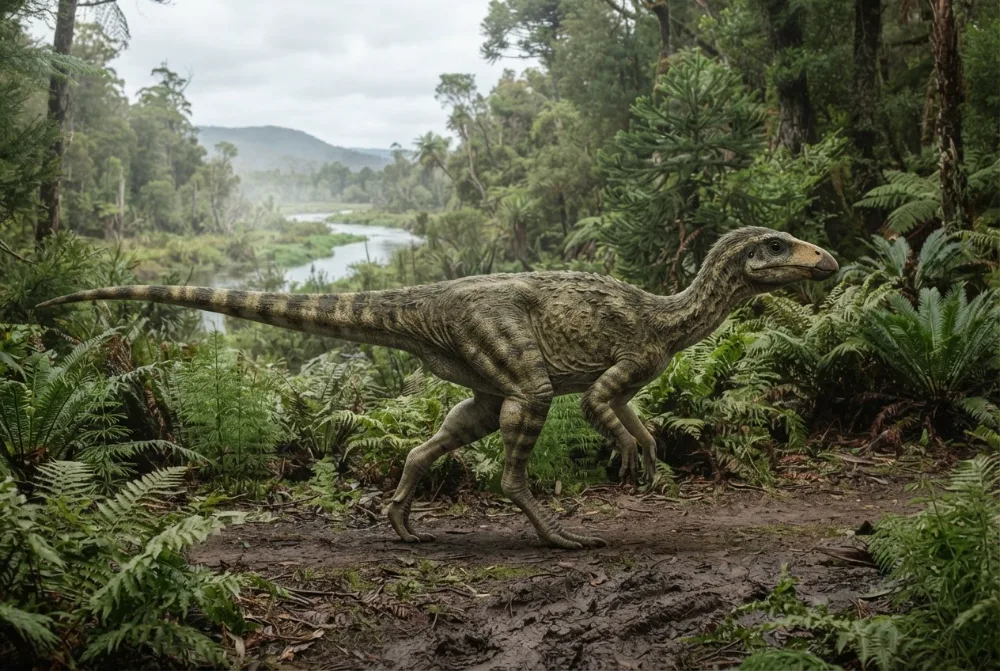
Iyuku was a small, plant-eating dinosaur that lived in what is now South Africa. What makes it really special is that almost all the fossils found are from babies and very young dinosaurs! Scientists think a whole group of Iyuku hatchlings died together during a dry season.21
Noiz bizi izan zen?
Zein azkarra zen?


Datu dibertigarriak
All the juvenile Iyuku bones were found in a single, small bonebed, suggesting a group of hatchlings died together.21
The name Iyuku comes from the Xhosa language and means 'hatchling', because almost all the fossils are from very young animals.1
Iyuku lived during the Early Cretaceous period, about 137 to 132 million years ago.4
The bonebed where Iyuku was found also contained rare theropod teeth, crocodile teeth, turtle shell fragments, and fish bones.1
Iyuku: gehien egindako galderak
?How big was Iyuku?
Iyuku was a small dinosaur. A subadult's shin bone was about 35 to 42 centimetres long, so the whole animal was probably the size of a large dog.3
?What did Iyuku eat?
Iyuku was a plant-eating dinosaur. It ate plants like ferns and leaves.3
?Why is Iyuku called a hatchling?
Its name comes from the Xhosa word for 'hatchling' because almost all the fossils found are from babies and very young dinosaurs.3
?When did Iyuku live?
Iyuku lived during the Early Cretaceous period, about 137 to 132 million years ago.3
Dino adituentzat
- Izen zientifikoa
- Iyuku
- Izendatzailea:
- Forster et al. 20224
- Taldea
- Landarejale mokodunak
- Familia / klada
- Euiguanodontia4
- Sailkapena
- Ornithischia > Ornithopoda > Iguanodontia4
- Arroken adina
- 137 eta 133 milioi urte artean (Valanginian)4
- Arroka-formazioak
- Kirkwood4
- Herrialdeak
- Hegoafrika4
- Fosil-erregistroak
- 1 The Paleobiology Database datu-basean4
- Aurkikuntza
- Iyuku was named in 2022 by Catherine Forster and her team based on fossils collected from 1995 to 1999 in the Kirkwood Formation, South Africa. The species name honors Dr. Michael Raath for his work on southern African fossils.1
- Oraindik eztabaidagai
- Scientists are not sure exactly how big Iyuku grew, because almost all the fossils are from babies and juveniles, not adults.1
Datuak nondik datozen
- Iyuku raathi , a new iguanodontian dinosaur from the Early Cretaceous Kirkwood Formation, South Africa (anatomypubs.onlinelibrary.wiley.com)
- Iyuku raathi, a new iguanodontian dinosaur from the Early Cretaceous Kirkwood Formation, South Africa (pubmed.ncbi.nlm.nih.gov)
- Iyuku (en.wikipedia.org)
- Iyuku in The Paleobiology Database (CC BY 4.0): adina, tokiak, arroka-formazioak, sailkapena.
Orrialde honetako datu bakoitzak zenbaki bat du, bere iturrira eramaten zaituena. Zerbait gaizki badugu, barkatu, dino-zaleak gara, ez zientzia-aldizkari bat. Idatzi [email protected] helbidera eta konponduko dugu.
 Rex gose da! Dino Wiki aita baten proiektua da, dinosauroak maite dituen bere semearentzat, doakoa, iragarkirik eta jarraitzailerik gabe. Helduek mokadutxo bat eman diezaiokete Rexi, sarean jarraitzen laguntzeko.Eman jaten Rexi
 Iguanodon
 Tenontosaurus
 Thescelosaurus
 Zalmoxes
 Camptosaurus
 Rhabdodon
 Stegosaurus
 Archaeopteryx
 Giganotosaurus
 Microraptor
 Deinonychus
 Baryonyx