 Zer dino zara? Galdetegia
 Dino borroka
 Dino lasterketa
 Dino minijokoak
 Pegatina-albuma
 Dino TOP zerrendak
 Harritu nazazu!
Magnamanus
Magnamanus was a big, plant-eating dinosaur that lived in what is now Spain about 130 million years ago. It had huge hands with a thumb spike and a fifth finger, which helped it grab plants. This dinosaur was as long as a bus and weighed as much as a small car.1
Noiz bizi izan zen?
Zein handia zen?
Zein luzea zen?
Zein altua zen?
kalkulua
Zein astuna zen?
 ilaran aparkatutako 2 auto bezain luze🍌bata bestearen atzean jarritako 56 banana bezain luze
 150 txakur bezain astun🍉600 angurria bezain astun🎒haurrez betetako 4 ikasgela oso bezain astun🐻❄️7 hartz zuri bezain astun🏃100 metro 15 segundotan egin zitzakeen korrika (gizakirik azkarrenak 9,6 behar ditu)
Zein handia zen Magnamanus ZUREKIN alderatuta?
Zure nabigatzaileko kalkulu hutsak. Ez da ezer gordetzen ez inora bidaltzen.
Zein azkarra zen?


Datu dibertigarriak
Magnamanus had a hand that was very wide, with the wrist making up 70% of the hand's length.1
Its thumb had a sharp spike, similar to the famous Iguanodon, which might have been used for defense or digging.1
The name Magnamanus means 'large hand' in Latin, because its hands were big compared to its body.1
This dinosaur lived during the Early Cretaceous period, about 130 million years ago, in a warm, wet environment with rivers and lakes.1
The skeleton of Magnamanus was found scattered over an area of eight square meters, but all bones belonged to one old adult.1
Magnamanus is a styracosternan, a group of plant-eating dinosaurs that includes Iguanodon and its close relatives.1
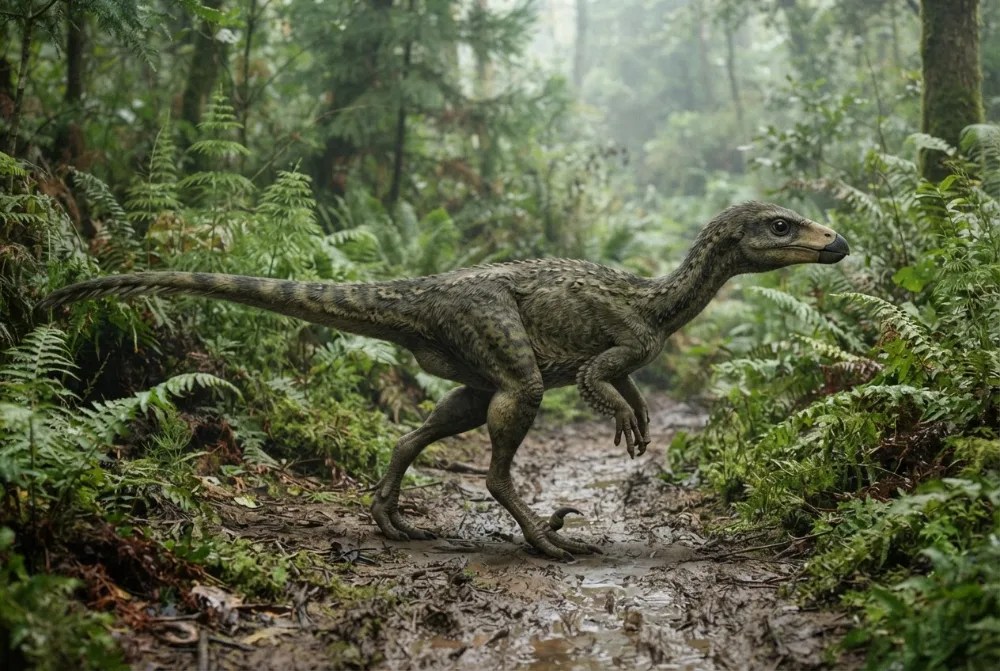
Magnamanus: gehien egindako galderak
?How big was Magnamanus?
Magnamanus was about 9 to 10 metres long and weighed around 3 tonnes, about the size of a bus and as heavy as a large elephant.1
?What did Magnamanus eat?
Magnamanus was a herbivore, meaning it ate plants. It used its big hands and thumb spike to grab and pull plants.1
?Why is it called Magnamanus?
The name Magnamanus means 'large hand' in Latin, because its hands were big compared to its body.1
?Where was Magnamanus found?
Magnamanus was found in the Golmayo Formation near Soria, Spain. Its skeleton was discovered in a marsh area called Zorralbo I.1
Dino adituentzat
- Izen zientifikoa
- Magnamanus
- Izendatzailea:
- Fuentes Vidarte et al. 20162
- Taldea
- Landarejale mokodunak
- Familia / klada
- Styracosterna2
- Sailkapena
- Ornithischia > Ornithopoda > Iguanodontia2
- Arroken adina
- 133 eta 121 milioi urte artean (Hauterivian / Barremian)2
- Arroka-formazioak
- Golmayo2
- Herrialdeak
- Espainia2
- Fosil-erregistroak
- 1 The Paleobiology Database datu-basean2
- Aurkikuntza
- Magnamanus was discovered between 2000 and 2004 by Carolina Fuentes and Manuel Meijide, along with their children, at the Zorralbo I site near Soria, Spain. It was named and described in 2016 by Fuentes Vidarte and colleagues.1
- Oraindik eztabaidagai
- Scientists are still debating exactly where Magnamanus fits on the family tree of iguanodontian dinosaurs, as it has some unique features in its hands and wrists.1
Datuak nondik datozen
- Magnamanus (en.wikipedia.org)
- Magnamanus in The Paleobiology Database (CC BY 4.0): adina, tokiak, arroka-formazioak, sailkapena.
Orrialde honetako datu bakoitzak zenbaki bat du, bere iturrira eramaten zaituena. Zerbait gaizki badugu, barkatu, dino-zaleak gara, ez zientzia-aldizkari bat. Idatzi [email protected] helbidera eta konponduko dugu.
 Rex gose da! Dino Wiki aita baten proiektua da, dinosauroak maite dituen bere semearentzat, doakoa, iragarkirik eta jarraitzailerik gabe. Helduek mokadutxo bat eman diezaiokete Rexi, sarean jarraitzen laguntzeko.Eman jaten Rexi
 Iguanodon
 Tenontosaurus
 Thescelosaurus
 Zalmoxes
 Camptosaurus
 Rhabdodon
 Stegosaurus
 Archaeopteryx
 Giganotosaurus
 Microraptor
 Deinonychus
 Baryonyx