 Zer dino zara? Galdetegia
 Dino borroka
 Dino lasterketa
 Dino minijokoak
 Pegatina-albuma
 Dino TOP zerrendak
 Harritu nazazu!
Mythunga
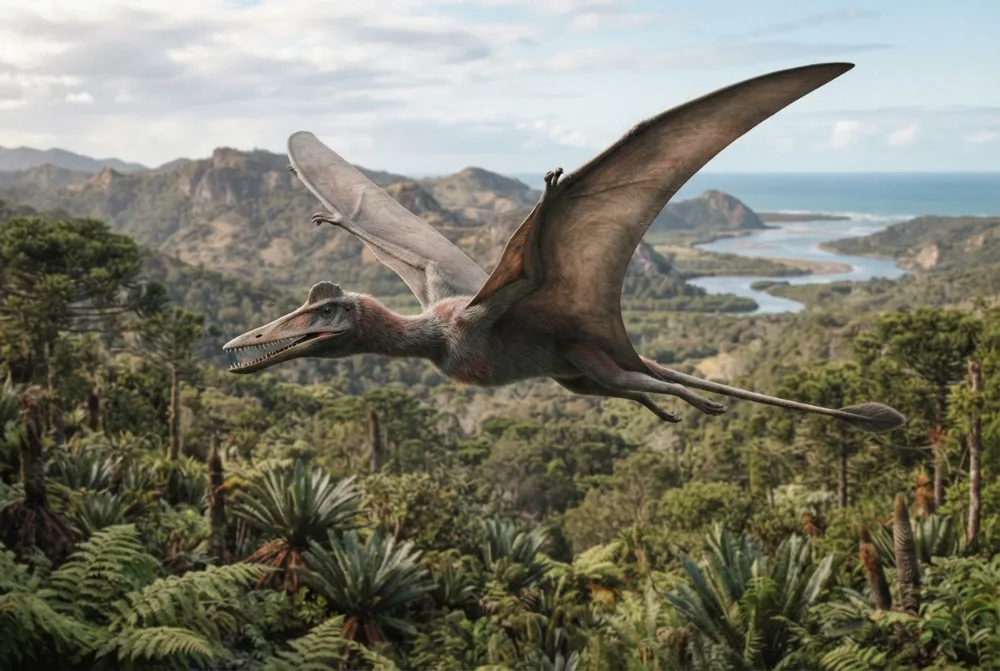
Mythunga was a big flying reptile that soared over an ancient sea in Australia. It had a long, hollow snout and sharp teeth for catching fish. It was one of the largest pterosaurs from its region!1
Noiz bizi izan zen?
Zein handia zen?
Zein zabalak ziren bere hegoak?
 ilaran jarritako 2,5 bizikleta bezain zabalak diren hegoak⚽futbol zelai oso bat zeharkatu zezakeen hegan 5,6 segundotan
Zein handia zen Mythunga ZUREKIN alderatuta?
Zure nabigatzaileko kalkulu hutsak. Ez da ezer gordetzen ez inora bidaltzen.
Zein azkarra zen?


Datu dibertigarriak
Mythunga is the most complete pterosaur skull known from Australasia, even though only part of the skull and jaws are preserved.1
Its snout was hollow and box-like inside, with thin-walled chambers separated by struts, which made the skull light for flying.1
Mythunga had only three teeth between the last enlarged tooth and the opening in its snout, and these teeth were spaced widely apart.1
The fossil was found in 1991 by Philip Gilmore, and it may be from a young animal, so adults could have been even larger.1
Mythunga lived near the coast of the Eromanga Sea, a shallow inland sea that covered central Australia during the Early Cretaceous.1
Its teeth interlocked in a way typical of fish-eating pterosaurs, and the wide spacing may have helped it catch large fish.1
Mythunga: gehien egindako galderak
?How big was Mythunga?
Its wingspan was between 4 and 6 metres (13 to 20 ft). Its skull was about 80 centimetres to 1 metre (2.6 to 3.3 ft) long.21
?What did Mythunga eat?
It ate fish. Its interlocking teeth were typical of fish-eating pterosaurs, and the wide spacing may have helped it catch large fish.1
Mito-hauslea
Mitoa: Some people think Mythunga was a dinosaur.
Egia: Mythunga was a pterosaur, a flying reptile that is not a dinosaur. Pterosaurs are a separate group of reptiles that evolved flight independently.1
Dino adituentzat
- Izen zientifikoa
- Mythunga
- Izendatzailea:
- Molnar and Thulborn 20073
- Taldea
- Narrasti hegalariak
- Familia / klada
- Anhangueridae3
- Sailkapena
- Pterosauria > Pterodactyloidea3
- Arroken adina
- 106 eta 100 milioi urte artean (Albian)3
- Arroka-formazioak
- Toolebuc3
- Herrialdeak
- Australia3
- Fosil-erregistroak
- 1 The Paleobiology Database datu-basean3
- Aurkikuntza
- The partial skull was discovered in 1991 by Philip Gilmore on Dunluce Station in Queensland, Australia. It was named by Molnar and Thulborn in 2007.13
- Oraindik eztabaidagai
- Scientists are not sure if Mythunga had a crest on its head, because the top of the snout is missing from the fossil.1
Datuak nondik datozen
- Mythunga camara - The Australian Museum (australian.museum)
- Mythunga (en.wikipedia.org)
- Mythunga in The Paleobiology Database (CC BY 4.0): adina, tokiak, arroka-formazioak, sailkapena.
Orrialde honetako datu bakoitzak zenbaki bat du, bere iturrira eramaten zaituena. Zerbait gaizki badugu, barkatu, dino-zaleak gara, ez zientzia-aldizkari bat. Idatzi [email protected] helbidera eta konponduko dugu.
 Rex gose da! Dino Wiki aita baten proiektua da, dinosauroak maite dituen bere semearentzat, doakoa, iragarkirik eta jarraitzailerik gabe. Helduek mokadutxo bat eman diezaiokete Rexi, sarean jarraitzen laguntzeko.Eman jaten Rexi
 Pteranodon
 Quetzalcoatlus
 Dorygnathus
 Rhamphorhynchus
 Anhanguera
 Pterodactylus
 Stegosaurus
 Iguanodon
 Archaeopteryx
 Giganotosaurus
 Microraptor
 Deinonychus