 Zer dino zara? Galdetegia
 Dino borroka
 Dino lasterketa
 Dino minijokoak
 Pegatina-albuma
 Dino TOP zerrendak
 Harritu nazazu!
Neovenator
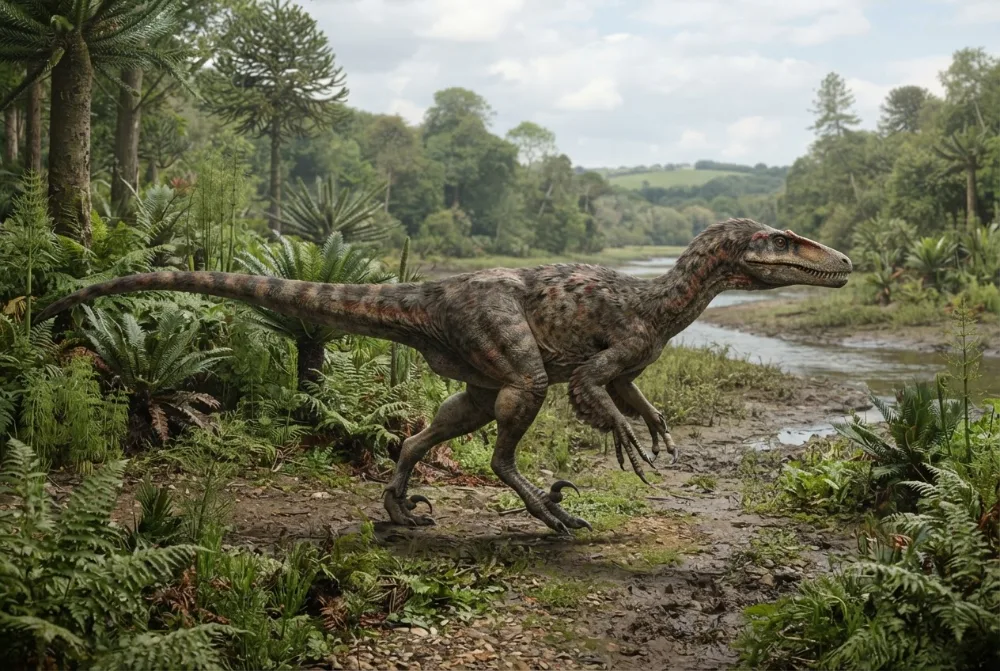
Neovenator was a big, meat-eating dinosaur that lived in what is now England. It was a fast and slender hunter, with sharp teeth and claws. Scientists found about 70% of its skeleton, making it one of the most complete theropod dinosaurs from Europe.2
Noiz bizi izan zen?
Zein handia zen?
Zein luzea zen?
Zein altua zen?
Zein astuna zen?
 8 txakur bezain luze, sudurretik buztanera🍌bata bestearen atzean jarritako 42 banana bezain luze🍉200 angurria bezain astun🧸haur-eskolako 53 haur bezain astun🎒31 eskolaume bezain astun🐻❄️2 hartz zuri bezain astun🏃100 metro 10 segundotan egin zitzakeen korrika (gizakirik azkarrenak 9,6 behar ditu)
Zein handia zen Neovenator ZUREKIN alderatuta?
Zure nabigatzaileko kalkulu hutsak. Ez da ezer gordetzen ez inora bidaltzen.
Zein azkarra zen?


Datu dibertigarriak
Neovenator lived during the Early Cretaceous period, about 127 to 121 million years ago.1
It was a close relative of Allosaurus from North America and Sinraptor from Asia.2
Neovenator was a gracile (slender and lightly built) dinosaur, unlike some other big theropods.2
Its fossils were found in the Wessex Formation on the Isle of Wight, a famous spot for dinosaur discoveries.42
The name Neovenator means 'new hunter' in Latin.1
Neovenator: gehien egindako galderak
?How big was Neovenator?
Neovenator was about 7 to 7.5 metres (23 to 25 feet) long and weighed around 1 metric ton (1.1 short tons). One possible specimen might have been 10 metres (33 feet) long, but that is uncertain.31
?What did Neovenator eat?
Neovenator was a carnivore that ate other dinosaurs. Bite marks on a fossil of the plant-eater Mantellisaurus show that Neovenator hunted or scavenged it.3
?When did Neovenator live?
Neovenator lived during the Early Cretaceous period, about 127 to 121 million years ago.1
?Where was Neovenator found?
Neovenator fossils were found on the Isle of Wight in England, in the Wessex Formation. Some teeth possibly from Neovenator have also been found in France.31
?Was Neovenator bigger than T. rex?
No, Neovenator was much smaller than T. rex. Neovenator was about 7 metres long, while T. rex could be over 12 metres long.3
?Did Neovenator have feathers?
Nobody knows for sure. No feathers have been found with Neovenator fossils, and it is not clear if this dinosaur had them.3
?How fast could Neovenator run?
Scientists do not know its exact speed, but Neovenator was lightly built and probably a fast runner, like its relative Allosaurus.3
Dino adituentzat
- Izen zientifikoa
- Neovenator
- Izendatzailea:
- Hutt et al. 19964
- Taldea
- Dino haragijaleak
- Familia / klada
- Neovenatoridae4
- Sailkapena
- Theropoda > Allosauroidea4
- Arroken adina
- 126 eta 121 milioi urte artean (Barremian)4
- Arroka-formazioak
- Wessex4
- Herrialdeak
- Erresuma Batua4
- Fosil-erregistroak
- 1 The Paleobiology Database datu-basean4
- Aurkikuntza
- Neovenator was named by scientists Steve Hutt, David M. Martill, and Michael J. Barker in 1996. They described it from a partial skull and skeleton found on the Isle of Wight, England.41
- Oraindik eztabaidagai
- Scientists are not sure exactly which group of theropod dinosaurs Neovenator belongs to. Some place it in Carcharodontosauridae, while others put it in its own family Neovenatoridae.14
Datuak nondik datozen
- Neovenator (nhm.ac.uk)
- The first European allosaurid dinosaur (Lower Cretaceous, Wealden Group, England) - Neues Jahrbuch für Geologie und Paläontologie - Monatshefte Jg. 1996 Heft 10, Schweizerbart science publishers (schweizerbart.de)
- Neovenator (en.wikipedia.org)
- Neovenator in The Paleobiology Database (CC BY 4.0): adina, tokiak, arroka-formazioak, sailkapena.
Orrialde honetako datu bakoitzak zenbaki bat du, bere iturrira eramaten zaituena. Zerbait gaizki badugu, barkatu, dino-zaleak gara, ez zientzia-aldizkari bat. Idatzi [email protected] helbidera eta konponduko dugu.
 Rex gose da! Dino Wiki aita baten proiektua da, dinosauroak maite dituen bere semearentzat, doakoa, iragarkirik eta jarraitzailerik gabe. Helduek mokadutxo bat eman diezaiokete Rexi, sarean jarraitzen laguntzeko.Eman jaten Rexi
 Allosaurus
 Carnotaurus
 Dilophosaurus
 Giganotosaurus
 Compsognathus
 Paronychodon
 Stegosaurus
 Iguanodon
 Archaeopteryx
 Microraptor
 Deinonychus
 Baryonyx