 Zer dino zara? Galdetegia
 Dino borroka
 Dino lasterketa
 Dino minijokoak
 Pegatina-albuma
 Dino TOP zerrendak
 Harritu nazazu!
Utahraptor
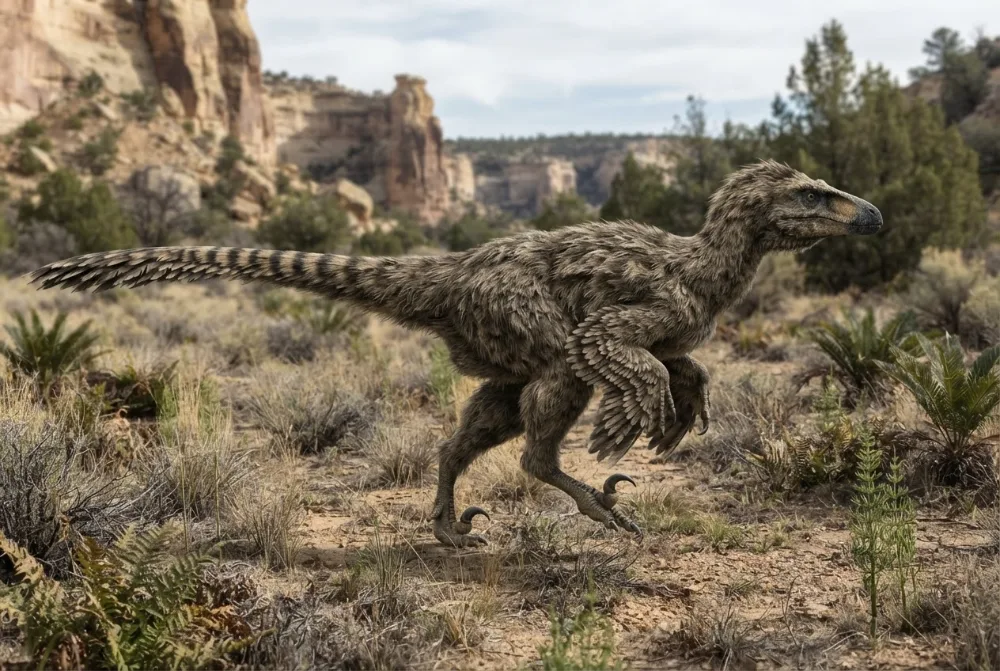
Utahraptor was a huge, feathered hunter that lived in what is now Utah, USA. It was the biggest member of the raptor family, much larger than the Velociraptor you see in movies. With a giant sickle claw on each foot, it was a fierce predator that could take down big plant-eaters.12
Noiz bizi izan zen?
Zein handia zen?
Zein luzea zen?
Zein altua zen?
Zein astuna zen?
 6 txakur bezain luze, sudurretik buztanera🍌bata bestearen atzean jarritako 34 banana bezain luze🍉70 angurria bezain astun🧸haur-eskolako 18 haur bezain astun🎒11 eskolaume bezain astun🏃100 metro 8 segundotan egin zitzakeen korrika (gizakirik azkarrenak 9,6 behar ditu)
Zein handia zen Utahraptor ZUREKIN alderatuta?
Zure nabigatzaileko kalkulu hutsak. Ez da ezer gordetzen ez inora bidaltzen.
Zein azkarra zen?


Datu dibertigarriak
Utahraptor's sickle claw was 24 centimeters (9.5 inches) long, perfect for slashing at prey.2
It lived during the Early Cretaceous period, about 139 to 135 million years ago, making it one of the oldest known dromaeosaurs.12
Utahraptor was the inspiration for the Velociraptors in the movie Jurassic Park, even though real Velociraptor was much smaller.2
In 2018, Utahraptor became the official state dinosaur of Utah after a 10-year-old student asked the state senate.1
Scientists think Utahraptor was not very fast and may have ambushed its prey, using its bulk and claws.1
Although no direct fossils of feathers have been found, scientists believe Utahraptor almost certainly had feathers, like other dromaeosaurs.1
Utahraptor: gehien egindako galderak
?How big was Utahraptor?
Utahraptor was about 6 to 7 metres (20 to 23 feet) long and weighed around 500 kilograms (1,100 pounds), about the size of a polar bear.31
?Did Utahraptor have feathers?
Yes, scientists believe Utahraptor almost certainly had feathers, because other dromaeosaurs had them, even though no direct feather fossils have been found yet.31
?What did Utahraptor eat?
Utahraptor was a carnivore that ate other animals, including large plant-eating dinosaurs like iguanodonts and ankylosaurs.31
?How fast could Utahraptor run?
Utahraptor was not very fast. It was an ambush hunter that used its bulk and claws to surprise prey, not speed.31
?Was Utahraptor bigger than Velociraptor?
Yes, Utahraptor was much bigger than Velociraptor. It was the largest known member of the raptor family, while Velociraptor was only about the size of a turkey.31
?When did Utahraptor live?
Utahraptor lived during the Early Cretaceous period, about 139 to 135 million years ago.31
?Where was Utahraptor found?
All known Utahraptor fossils come from Utah in the United States, especially from the Cedar Mountain Formation near Arches National Park.31
?How long was Utahraptor's claw?
Utahraptor's sickle claw on its second toe was about 24 centimetres (9.4 inches) long.31
Mito-hauslea
Mitoa: Utahraptor was a fast runner like smaller raptors.
Egia: Utahraptor was heavy and bulky, and scientists think it was not very fast. It probably used ambush hunting instead of chasing prey.1
Dino adituentzat
- Izen zientifikoa
- Utahraptor
- Izendatzailea:
- Kirkland et al. 19935
- Taldea
- Raptoreak
- Familia / klada
- Dromaeosauridae5
- Sailkapena
- Theropoda > Dromaeosauridae5
- Arroken adina
- 137 eta 133 milioi urte artean (Valanginian)5
- Arroka-formazioak
- Cedar Mountain5
- Herrialdeak
- AEB5
- Fosil-erregistroak
- 4 The Paleobiology Database datu-basean5
- Aurkikuntza
- The first Utahraptor fossils were found by Jim Jensen in 1975, but the dinosaur was not studied until 1991 when James Kirkland, Robert Gaston and Donald Burge found more remains. It was named in 1993.1
- Oraindik eztabaidagai
- Scientists are not sure if Utahraptor had feathers, because no direct feather fossils have been found, but most think it did.1
Datuak nondik datozen
- Utahraptor | Natural History Museum (nhm.ac.uk)
- Utahraptor ostrommaysorum (nhmu.utah.edu)
- Utahraptor (en.wikipedia.org)
- Utahraptor Megablock Fossil Project - Utah Geological Survey (geology.utah.gov)
- Utahraptor in The Paleobiology Database (CC BY 4.0): adina, tokiak, arroka-formazioak, sailkapena.
Orrialde honetako datu bakoitzak zenbaki bat du, bere iturrira eramaten zaituena. Zerbait gaizki badugu, barkatu, dino-zaleak gara, ez zientzia-aldizkari bat. Idatzi [email protected] helbidera eta konponduko dugu.
 Rex gose da! Dino Wiki aita baten proiektua da, dinosauroak maite dituen bere semearentzat, doakoa, iragarkirik eta jarraitzailerik gabe. Helduek mokadutxo bat eman diezaiokete Rexi, sarean jarraitzen laguntzeko.Eman jaten Rexi
 Velociraptor
 Microraptor
 Deinonychus
 Asiamericana
 Richardoestesia
 Saurornitholestes
 Stegosaurus
 Iguanodon
 Archaeopteryx
 Giganotosaurus
 Baryonyx
 Paronychodon