 Que dino es ti? O test
 Batalla de dinos
 Carreira de dinos
 Minixogos de dinos
 Álbum de cromos
 Listas TOP de dinos
 Sorpréndeme!
Livyatan
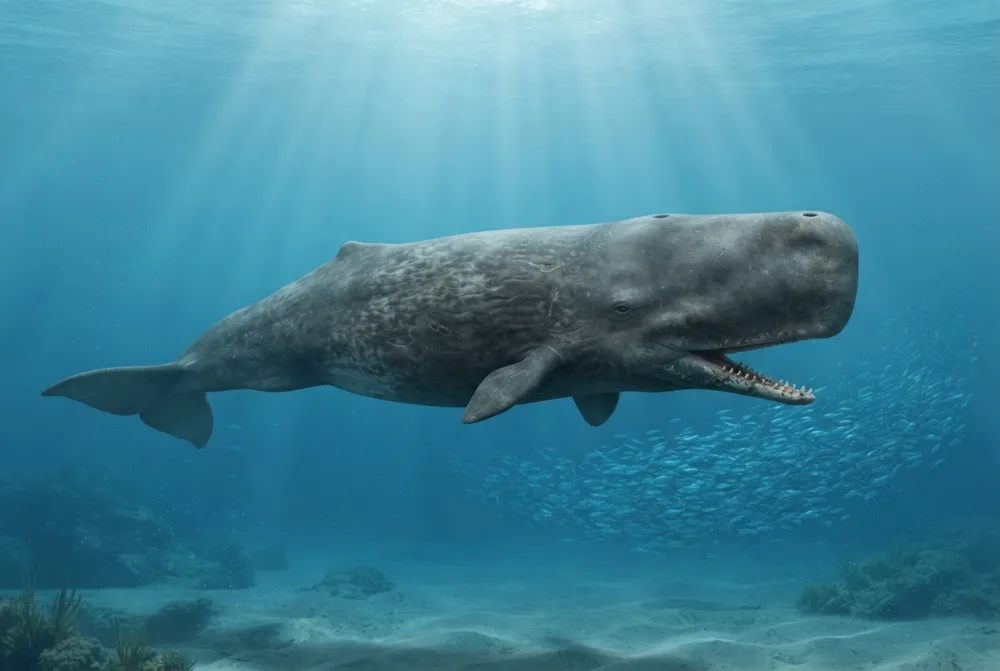
Livyatan was a giant sperm whale that lived in the ocean millions of years ago. It had huge teeth and was one of the biggest hunters in the sea. It was not a dinosaur, but a mammal like whales today.1
Cando viviu?
Como era de grande?
Canto medía de longo?
Canto pesaba?

 tan longo coma 4 coches aparcados en fila🍌tan longo coma 97 plátanos postos un tras outro🍉tan pesado coma 11000 sandías🎒tan pesado coma 71 clases enteiras de nenos🐻❄️tan pesado coma 130 osos polares🏊podería nadar o longo dunha piscina grande (50 m) en 5,1 segundos
Como era de grande Livyatan comparado CONTIGO?
Só son contas no teu navegador. Non se garda nin se envía nada.
Que velocidade alcanzaba?


Datos curiosos
Livyatan had teeth up to 36 centimeters (over 14 inches) long, bigger than any other sperm whale.1
Its skull was about 3 meters (10 feet) long, making it the largest fossil sperm whale skull known.1
Livyatan lived at the same time as the giant shark Carcharocles megalodon, and both were top predators.1
Scientists think Livyatan could bite harder than any other four-legged animal ever found.1
Unlike modern sperm whales that suck in food, Livyatan used its teeth to hunt and tear large prey.1
The name Livyatan comes from a Hebrew word for a sea monster, and the species name melvillei honors the author of Moby-Dick.1
As preguntas máis frecuentes sobre Livyatan
?How big was Livyatan?
About 13.5 to 17.5 meters (44 to 57 feet) long, similar to a modern sperm whale.2
?What did Livyatan eat?
It hunted large prey like medium-sized baleen whales, using its huge teeth to bite and tear flesh.12
?Did Livyatan live at the same time as megalodon?
Yes, Livyatan and the giant shark megalodon lived in the same oceans and may have competed for food.23
?Why did Livyatan go extinct?
It probably died out because of a cooling event at the end of the Miocene that reduced its food supply.2
?Is Livyatan a dinosaur?
No, Livyatan was a mammal, a giant sperm whale, not a dinosaur.2
?How long were Livyatan's teeth?
Its teeth were up to 36.2 centimeters (14.3 inches) long, the largest biting teeth of any known animal.21
?Where was Livyatan discovered?
Its fossil skull was found in the Pisco Formation of Peru, in a coastal desert near Ica.21
Cazamitos
Mito: Some people think Livyatan was a dinosaur.
Verdade: Livyatan was a whale, a mammal, not a dinosaur.1
Para expertos en dinos
- Nome científico
- Livyatan
- Bautizado por
- Lambert et al. 20104
- Grupo
- Lendas prehistóricas
- Familia / clado
- Physeteroidea4
- Clasificación
- Mammalia > Cetacea > Physeteroidea4
- Idade das rochas
- de 23 a 3,6 millóns de anos (Aquitanian / Zanclean)4
- Formacións rochosas
- Pisco4
- Países
- Suráfrica, Perú, Arxentina, Chile, EUA4
- Rexistros fósiles
- 6 na Paleobiology Database4
- Descubrimento
- Scientists found a skull with teeth in the Pisco desert of Peru, and they named it Livyatan melvillei in 2010.1
- Aínda en debate
- Scientists are still debating what the big basin on its head was for, like echolocation or display.1
De onde veñen os datos
- The giant bite of a new raptorial sperm whale from the Miocene epoch of Peru (nature.com)
- Livyatan (en.wikipedia.org)
- Behold Livyatan: the sperm whale that killed other whales | National Geographic (nationalgeographic.com)
- Livyatan in The Paleobiology Database (CC BY 4.0): idade, lugares, formacións rochosas, clasificación.
Cada dato desta páxina ten un número que leva á súa fonte. Se nos equivocamos nalgo, sentímolo, somos fans dos dinos, non unha revista científica. Escríbenos a [email protected] e arranxámolo.
 Rex ten fame! Dino Wiki é o proxecto dun pai para o seu fillo, que adora os dinosauros, gratis, sen anuncios e sen rastrexadores. Os adultos poden darlle un petisco a Rex para mantelo en liña.Dálle de comer a Rex
 Megalodon
 Sabre-toothed cat
 Dimetrodon
 Woolly mammoth
 Arthropleura
 Helicoprion