 Que dino es ti? O test
 Batalla de dinos
 Carreira de dinos
 Minixogos de dinos
 Álbum de cromos
 Listas TOP de dinos
 Sorpréndeme!
Titanoboa
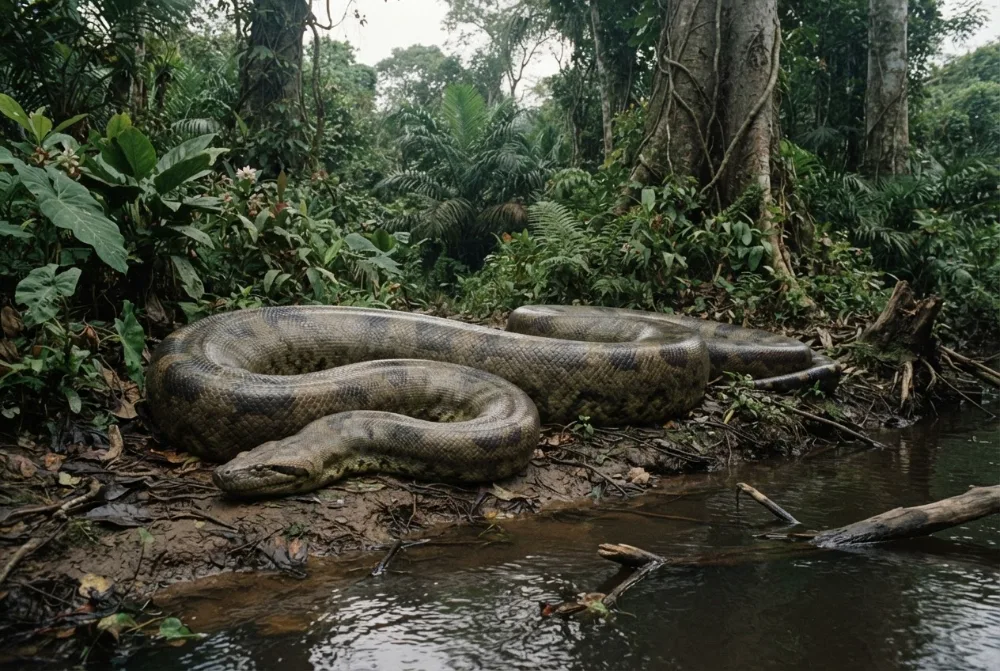
Titanoboa was the biggest snake that ever lived. It was longer than a school bus and heavier than a car. This giant snake lived in hot, swampy rainforests in what is now Colombia.12
Cando viviu?
Como era de grande?
Canto medía de longo?
Canto pesaba?
 tan longo coma 3 coches aparcados en fila🍌tan longo coma 79 plátanos postos un tras outro
 tan pesado coma 91 cans🍉tan pesado coma 360 sandías🧸tan pesado coma 96 nenos de infantil🎒tan pesado coma 57 nenos de primaria🐻❄️tan pesado coma 4 osos polares🏊podería nadar o longo dunha piscina grande (50 m) en 12 segundos
Como era de grande Titanoboa comparado CONTIGO?
Só son contas no teu navegador. Non se garda nin se envía nada.
Que velocidade alcanzaba?


Datos curiosos
Titanoboa was so big that it needed a very warm climate to survive. Scientists think the temperature had to be at least 30 to 34 °C (86 to 93 °F) all year round.2
The first Titanoboa fossils were found in 2002 by students from the University of Florida and the Smithsonian Tropical Research Institute. At first, scientists thought the bones belonged to crocodiles.1
Titanoboa lived right after the dinosaurs went extinct, about 58 to 60 million years ago. It was one of the biggest reptiles on Earth at that time.12
Scientists found bones from at least 30 different Titanoboa individuals in the same coal mine. This shows that many of these giant snakes lived together in the same area.1
Titanoboa had a skull and teeth that were good for eating fish. Its mouth was shaped like the mouths of modern fish-eating snakes.1
As preguntas máis frecuentes sobre Titanoboa
?How big was Titanoboa?
Titanoboa was about 12.8 to 14.3 meters long and weighed around 730 to 1,135 kilograms. That is longer than a school bus and heavier than a car.13
?What did Titanoboa eat?
Titanoboa was an apex predator that likely ate fish, turtles, and crocodiles. Its skull and teeth were good for eating fish, similar to modern fish-eating snakes.14
?When did Titanoboa live?
Titanoboa lived about 58 to 60 million years ago, right after the dinosaurs went extinct. That was during the Paleocene epoch.13
?Where was Titanoboa found?
Titanoboa fossils were found in the Cerrejon coal mine in Colombia. This area was a hot, swampy rainforest when Titanoboa was alive.13
?Is Titanoboa a dinosaur?
No, Titanoboa is not a dinosaur. It is a giant snake from the boid family, which includes boas and anacondas. It lived after the dinosaurs went extinct.1
?Could Titanoboa swim?
Yes, scientists think Titanoboa was semi-aquatic, like modern anacondas. It lived in rivers and swamps and likely hunted in the water.14
?How did Titanoboa become extinct?
Nobody knows for sure why Titanoboa died out. It likely went extinct due to climate change as the Earth cooled and its warm rainforest home shrank.3
?What would happen if Titanoboa was alive today?
If Titanoboa were alive today, it would need a very warm climate, at least 30 to 34 degrees Celsius all year. It would be the biggest snake on Earth and could eat large prey like crocodiles.13
?How fast could Titanoboa move?
Scientists do not know exactly how fast Titanoboa could move. As a large, heavy snake, it was probably slow on land but faster in water, like modern anacondas.1
?Was Titanoboa bigger than a T. rex?
Titanoboa was longer than a T. rex, but not as heavy. T. rex was about 12 meters long and weighed up to 8,000 kilograms, while Titanoboa weighed only about 1,135 kilograms.1
Cazamitos
Mito: Some people think Titanoboa was a dinosaur.
Verdade: Titanoboa was not a dinosaur. It was a giant snake, a reptile that lived after the dinosaurs were gone.1
Para expertos en dinos
- Nome científico
- Titanoboa
- Bautizado por
- Head et al. 20095
- Grupo
- Lendas prehistóricas
- Familia / clado
- Boidae5
- Clasificación
- Reptilia > Squamata > Boidae5
- Idade das rochas
- de 62 a 56 millóns de anos (Selandian / Thanetian)5
- Formacións rochosas
- Cerrejón5
- Países
- Colombia5
- Rexistros fósiles
- 1 na Paleobiology Database5
- Descubrimento
- Titanoboa was discovered in 2002 by students from the University of Florida and the Smithsonian Tropical Research Institute in a coal mine in Colombia. It was named and described in 2009 by a team led by Jason J. Head.15
- Aínda en debate
- Scientists are not sure exactly how big Titanoboa could grow. Some estimates say it might have reached 14.3 meters (47 feet) long, but others think it was closer to 12.8 meters (42 feet).12
De onde veñen os datos
- Titanoboa (en.wikipedia.org)
- Giant boid snake from the Palaeocene neotropics reveals hotter past equatorial temperatures (stri-apps.si.edu)
- si.edu (si.edu)
- Titanoboa – thirteen metres, one tonne, largest snake ever. | National Geographic (nationalgeographic.com)
- Titanoboa in The Paleobiology Database (CC BY 4.0): idade, lugares, formacións rochosas, clasificación.
Cada dato desta páxina ten un número que leva á súa fonte. Se nos equivocamos nalgo, sentímolo, somos fans dos dinos, non unha revista científica. Escríbenos a [email protected] e arranxámolo.
 Rex ten fame! Dino Wiki é o proxecto dun pai para o seu fillo, que adora os dinosauros, gratis, sen anuncios e sen rastrexadores. Os adultos poden darlle un petisco a Rex para mantelo en liña.Dálle de comer a Rex
 Megalodon
 Sabre-toothed cat
 Dimetrodon
 Woolly mammoth
 Arthropleura
 Helicoprion