 Kwizi: Oli dayinoso ki?
 Olutalo lwa dayinoso
 Empaka z'emisinde gya dayinoso
 Emizannyo emitono egya dayinoso
 Alubaamu ya sitika
 Enkalala za dayinoso eza TOP
 Mpa ekyewuunyisa!
Yabeerawo ddi?

Yali munene atya?
Yali muwanvu kwenkana wa?
Yali muzito kwenkana wa?

 obuwanvu nga kkapa 4 ab'awaka, ennyindo ku mukira🍌obuwanvu ng'amenvu 10 nga gaddiriŋŋanaobuzito ng'obwa kkapa 10 ab'awaka🍉obuzito ng'obwa wotamerooni 8🧸obuzito ng'obw'abaana 2 ab'omu nnasale🎒obuzito ng'obw'abaana b'essomero 1🏃yandidduse mita 100 mu sikonda 8.2 (omuntu asinga embiro yeetaaga 9.6)
Acrotholus yali munene atya bw'ogeraageranya ku GGWE?
Kubala kwokka mu browser yo. Tewali kiterekebwa wadde okusindikibwa wonna.
Yali wa mbiro kwenkana wa?


Ebyewuunyisa
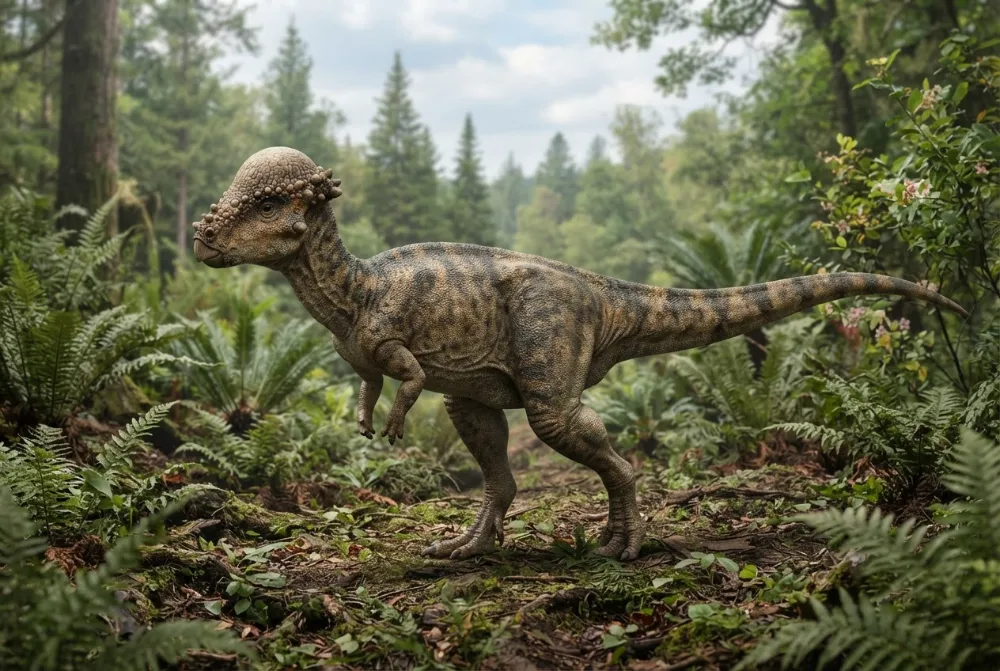
Acrotholus is the oldest known pachycephalosaur from North America, and possibly the world.2
Its dome was very thick, up to 55 millimetres (about 2 inches) above the brain, which is almost half the total length of the dome.2
The dome was fully developed even though Acrotholus lived earlier than other pachycephalosaurs, showing that this feature evolved earlier than scientists thought.2
The name Acrotholus means 'highest dome' in Greek, referring to its thick skull roof.1
The species name audeti honors Roy Audet, a rancher who allowed scientists to dig on his land where the first skull was found.12
Acrotholus had a smooth dome without the bumps or grooves seen in some other pachycephalosaurs, which suggests the known fossils are from adults.2
Ebibuuzo ebisinga okubuuzibwa ku Acrotholus
?How big was Acrotholus?
Acrotholus was a small dinosaur, weighing 40 kg (88 lb) or less. Its skull dome was about 55 mm (2.2 in) thick.12
?What did Acrotholus eat?
Acrotholus was a plant-eating dinosaur, like other pachycephalosaurs.1
?Why did Acrotholus have a dome on its head?
The dome was probably used for head-butting contests between rivals, though scientists debate exactly how they used it.1
?When did Acrotholus live?
Acrotholus lived about 84 to 83.5 million years ago, during the Late Cretaceous period.1
Omumenyi w'enfumo
Enfumo: Some people think Acrotholus used its dome to butt heads like bighorn sheep.
Amazima: Scientists are not sure. The dome might have been for display or for fighting, but there is no direct evidence of head-butting in Acrotholus.1
Eri abakugu mu dayinoso
- Erinnya lya ssaayansi
- Acrotholus
- Yatuumibwa
- Evans et al. 20134
- Ekibinja
- Ez'emitwe egy'enkulungo
- Ekika / ekibinja
- Pachycephalosauridae4
- Engabanya
- Ornithischia > Pachycephalosauria4
- Emyaka gy'enjazi
- emyaka obukadde 86 okutuuka ku 84 (Santonian)4
- Ensengeka z'enjazi
- Milk River4
- Ensi
- Kanada4
- Ebisigalira ebyazuulibwa
- 1 mu The Paleobiology Database4
- Okuzuulibwa
- The first fossil, a nearly complete skull dome, was found on Roy Audet's ranch in Alberta, Canada, and was named by David Evans and colleagues in 2013.12
- Kikyakubaganyizibwako ebirowoozo
- Scientists still debate whether the dome was used for fighting between males or for showing off to mates, since no complete skeleton has been found.1
Ebituufu gye biva
- Acrotholus (en.wikipedia.org)
- The oldest North American pachycephalosaurid and the hidden diversity of small-bodied ornithischian dinosaurs | Nature Communications (nature.com)
- Study of new 'bone-head' hints at higher diversity of small dinosaurs | EurekAlert! (eurekalert.org)
- Acrotholus in The Paleobiology Database (CC BY 4.0): emyaka, ebifo, ensengeka z'enjazi, engabanya.
Buli kituufu ku lupapula luno kirina ennamba eraga ensibuko yaakyo. Bwe tuba nga tukoze ensobi, tusonyiwe, ffe tuli bawagizi ba dayinoso, so si magazini ya ssaayansi. Tubuulire ku [email protected] tujja kugitereeza.
 Rex alumwa enjala! Dino Wiki pulojekiti ya taata eri mutabani we ayagala ennyo dayinoso, ya bwereere, tewali bulango era tewali bikulondoola. Abakulu basobola okuwa Rex akantu ak'okulya okuyamba okugikuuma ku mutimbagano.Liisa Rex
 Pachycephalosaurus
 Stegoceras
 Prenocephale
 Sphaerotholus
 Foraminacephale
 Brontotholus
 Tyrannosaurus
 Triceratops
 Velociraptor
 Spinosaurus
 Ankylosaurus
 Parasaurolophus