 Kwizi: Oli dayinoso ki?
 Olutalo lwa dayinoso
 Empaka z'emisinde gya dayinoso
 Emizannyo emitono egya dayinoso
 Alubaamu ya sitika
 Enkalala za dayinoso eza TOP
 Mpa ekyewuunyisa!
Aeolosaurus
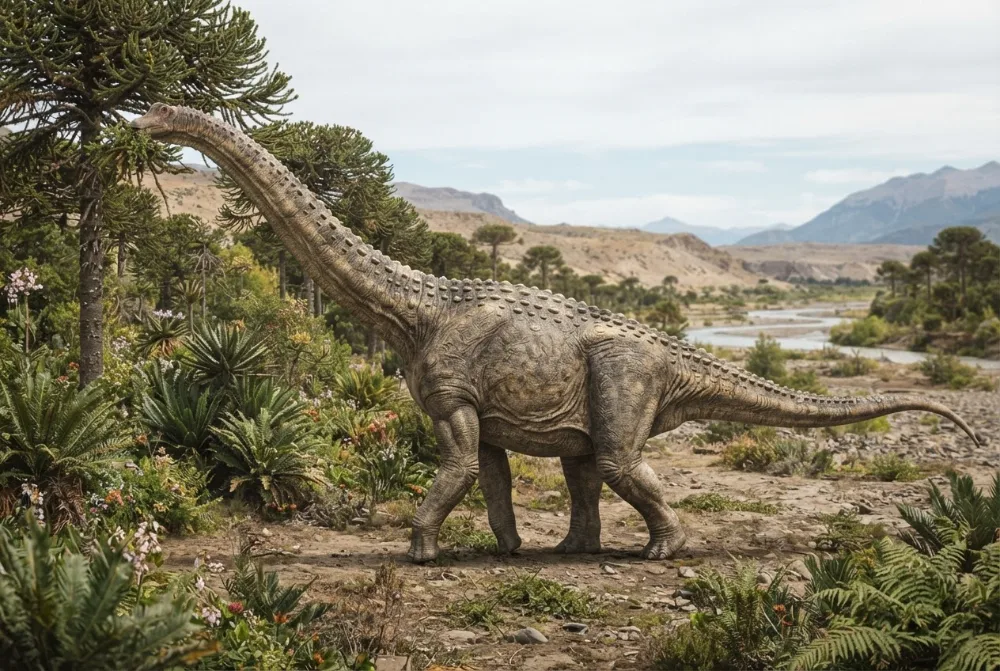
Aeolosaurus was a huge, long-necked plant eater that lived in South America near the end of the Age of Dinosaurs. It walked on four sturdy legs and probably used its long neck to reach leaves high in the trees.6
Yabeerawo ddi?
Yali munene atya?
Yali muwanvu kwenkana wa?
Yali mugulumivu kwenkana wa?
Yali muzito kwenkana wa?

 obuwanvu ng'emmotoka 22 ezisimbiddwa mu lunyiriri🍌obuwanvu ng'amenvu 560 nga gaddiriŋŋanaobuzito ng'obw'emmotoka 10🍉obuzito ng'obwa wotamerooni 2900🦒obugulumivu ng'entugga 18 nga ziyimiridde ku ndala🎒obuzito ng'obw'ebibiina 18 ebijjuvu eby'abaana b'essomero🐻❄️obuzito ng'obwa ddubu enjeru 33🏢mugulumivu ekimala okulingiza mu ddirisa ku mwaliiro 34🏃yandidduse mita 100 mu sikonda 24 (omuntu asinga embiro yeetaaga 9.6)
Aeolosaurus yali munene atya bw'ogeraageranya ku GGWE?
Kubala kwokka mu browser yo. Tewali kiterekebwa wadde okusindikibwa wonna.
Yali wa mbiro kwenkana wa?


Ebyewuunyisa
Aeolosaurus lived between about 83.6 and 66 million years ago, during the Campanian and Maastrichtian ages of the Late Cretaceous.2
It belonged to a group called Aeolosaurini, which is part of the larger titanosaur family. Its closest relatives include Baurutitan, Caieiria, Gondwanatitan, and Panamericansaurus.6
Scientists have named two species: Aeolosaurus rionegrinus, the type species, and Aeolosaurus colhuehuapensis.6
Aeolosaurus fossils have been found in rocks from the Turonian to Santonian ages in central Brazil, which is older than the Campanian-Maastrichtian fossils from Argentina. This shows the genus lived over a long time and a wide area.1
The discovery of Aeolosaurus in the Marilia Formation of Brazil shows that this dinosaur survived after a marine incursion flooded parts of northern Patagonia during the Campanian-Maastrichtian.1
Aeolosaurus had special bones in its tail: the prezygapophyses (joints) curved downward on the front tail vertebrae, and the haemal arches had double articular facets set in a concave surface. This unique combination helps scientists identify it.6
Ebibuuzo ebisinga okubuuzibwa ku Aeolosaurus
?How big was Aeolosaurus?
Estimates vary. Gregory S. Paul said Aeolosaurus rionegrinus was about 14 metres (46 ft) long and weighed 6 tonnes (6.6 short tons). In 2020, Molina-Pérez and Larramendi gave a larger estimate of 18.1 metres (60 ft) and 14.7 tonnes (16.2 short tons).45
?What did Aeolosaurus eat?
Aeolosaurus was a herbivore, meaning it ate plants. Like other sauropods, it used its long neck to reach leaves high in trees.45
Omumenyi w'enfumo
Enfumo: Some people think Aeolosaurus was a type of marine reptile because its name sounds like 'Aeolus' from the sea.
Amazima: Aeolosaurus was a land-dwelling dinosaur, a sauropod that lived on land and ate plants. It was not a marine reptile.6
Eri abakugu mu dayinoso
- Erinnya lya ssaayansi
- Aeolosaurus
- Yatuumibwa
- Powell 19876
- Ekibinja
- Ez'ensingo empanvu
- Ekika / ekibinja
- Aeolosaurini6
- Engabanya
- Sauropodomorpha > Sauropoda > Titanosauria > Macronaria6
- Emyaka gy'enjazi
- emyaka obukadde 84 okutuuka ku 66 (Campanian / Maastrichtian)6
- Ensengeka z'enjazi
- Allen, Lago Colhué Huapi, Angostura Colorada6
- Ensi
- Arigentina, Buraziiri, Urugwayi6
- Ebisigalira ebyazuulibwa
- 6 mu The Paleobiology Database6
- Okuzuulibwa
- Aeolosaurus was named by J. E. Powell in 1987. The name comes from the Late Cretaceous fauna of Los Alamitos in Patagonia, Argentina, where the first fossils were found.6
- Kikyakubaganyizibwako ebirowoozo
- Scientists debate whether Gondwanatitan faustoi is a separate valid genus or a junior synonym of Aeolosaurus. One study says it is valid, but other classifications have placed it as a sister taxon.16
Ebituufu gye biva
- Record of the genus Aeolosaurus (Sauropoda, Titanosauria) in the Late Cretaceous of South America: paleogeographic implications (Journal Article) | ETDEWEB (osti.gov)
- PBDB Taxon (paleobiodb.org)
- Aeolosaurus (en.wikipedia.org)
- Aeolosaurus - Wikipedia (en.wikipedia.org)
- Aeolosaurus (en.m.wikipedia.org)
- Aeolosaurus in The Paleobiology Database (CC BY 4.0): emyaka, ebifo, ensengeka z'enjazi, engabanya.
Buli kituufu ku lupapula luno kirina ennamba eraga ensibuko yaakyo. Bwe tuba nga tukoze ensobi, tusonyiwe, ffe tuli bawagizi ba dayinoso, so si magazini ya ssaayansi. Tubuulire ku [email protected] tujja kugitereeza.
 Rex alumwa enjala! Dino Wiki pulojekiti ya taata eri mutabani we ayagala ennyo dayinoso, ya bwereere, tewali bulango era tewali bikulondoola. Abakulu basobola okuwa Rex akantu ak'okulya okuyamba okugikuuma ku mutimbagano.Liisa Rex
 Brachiosaurus
 Diplodocus
 Brontosaurus
 Argentinosaurus
 Camarasaurus
 Morosaurus
 Tyrannosaurus
 Triceratops
 Velociraptor
 Spinosaurus
 Ankylosaurus
 Parasaurolophus