 Kwizi: Oli dayinoso ki?
 Olutalo lwa dayinoso
 Empaka z'emisinde gya dayinoso
 Emizannyo emitono egya dayinoso
 Alubaamu ya sitika
 Enkalala za dayinoso eza TOP
 Mpa ekyewuunyisa!
Amanzia
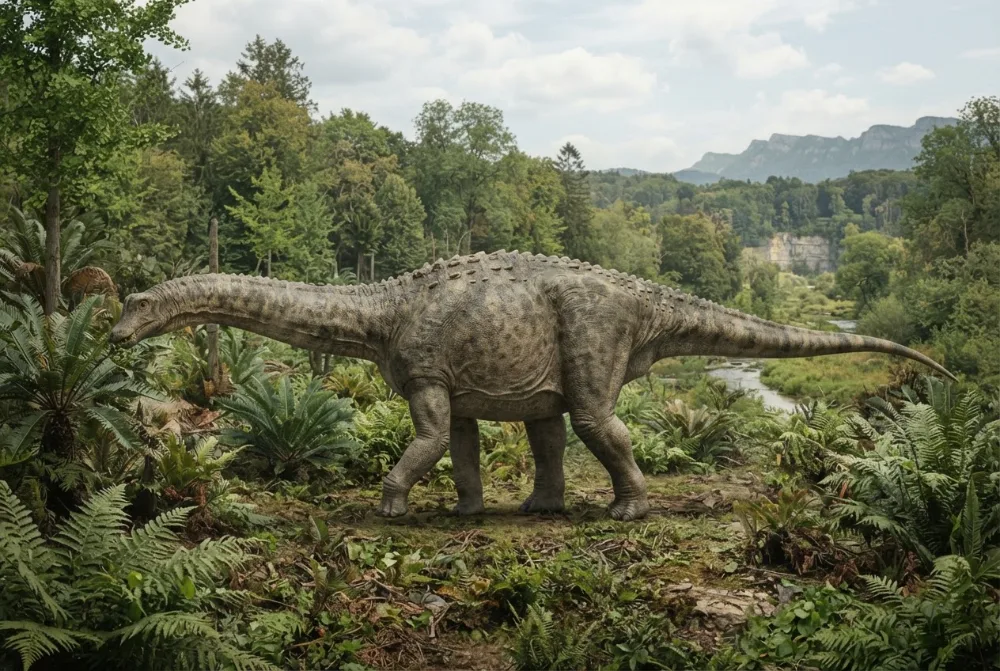
Amanzia was a long-necked plant-eater that lived in what is now Switzerland about 157 million years ago. It was a small sauropod, not much longer than a school bus, and it munched on leaves and ferns. Its bones were found in an old quarry near the town of Moutier.12
Yabeerawo ddi?
Yali munene atya?
Yali muwanvu kwenkana wa?
Yali mugulumivu kwenkana wa?
kuteebereza
 obuwanvu ng'emmotoka 2 ezisimbiddwa mu lunyiriri🍌obuwanvu ng'amenvu 56 nga gaddiriŋŋana🏃yandidduse mita 100 mu sikonda 16 (omuntu asinga embiro yeetaaga 9.6)
Amanzia yali munene atya bw'ogeraageranya ku GGWE?
Kubala kwokka mu browser yo. Tewali kiterekebwa wadde okusindikibwa wonna.
Yali wa mbiro kwenkana wa?


Ebyewuunyisa
Amanzia was first thought to be a different dinosaur called Ornithopsis, and later Cetiosauriscus, before scientists gave it its own name in 2020.12
The fossils include bones from at least four different individuals, some of which were different sizes.1
Amanzia had a special rough patch on the back of its upper arm bone that no other sauropod has.1
Its tail bones were long and had small holes for blood vessels.1
The bones were found in a greenish layer of marl and limestone, which was once a muddy seafloor.1
Amanzia is one of the few sauropods known from Switzerland, and its discovery helped scientists understand European dinosaurs better.1
Ebibuuzo ebisinga okubuuzibwa ku Amanzia
?How big was Amanzia?
Amanzia was a small sauropod, not more than 10 metres long. That is about as long as a school bus.12
?What did Amanzia eat?
Amanzia was a plant-eater. It munched on leaves and ferns, like other sauropods.2
Eri abakugu mu dayinoso
- Erinnya lya ssaayansi
- Amanzia
- Yatuumibwa
- Schwarz et al. 20203
- Ekibinja
- Ez'ensingo empanvu
- Ekika / ekibinja
- Turiasauria3
- Engabanya
- Sauropodomorpha > Sauropoda3
- Emyaka gy'enjazi
- emyaka obukadde 155 okutuuka ku 152 (Kimmeridgian)3
- Ensengeka z'enjazi
- Reuchenette3
- Ensi
- Swizirandi3
- Ebisigalira ebyazuulibwa
- 2 mu The Paleobiology Database3
- Okuzuulibwa
- The first bones were found in the 1860s in a quarry near Moutier, Switzerland. In 1922, German scientist Friedrich von Huene named them Ornithopsis greppini. In 2020, a new study gave them the new genus name Amanzia, after Swiss geologist Amanz Gressly.12
- Kikyakubaganyizibwako ebirowoozo
- Scientists are not sure whether Amanzia was a member of the group Turiasauria or just a close relative of all later sauropods.1
Ebituufu gye biva
- Re-description of the sauropod dinosaur Amanzia (“Ornithopsis/Cetiosauriscus”) greppini n. gen. and other vertebrate remains from the Kimmeridgian (Late Jurassic) Reuchenette Formation of Moutier, Switzerland | Swiss Journal of Geosciences | Springer Nature Link (link.springer.com)
- Amanzia (en.wikipedia.org)
- Amanzia in The Paleobiology Database (CC BY 4.0): emyaka, ebifo, ensengeka z'enjazi, engabanya.
Buli kituufu ku lupapula luno kirina ennamba eraga ensibuko yaakyo. Bwe tuba nga tukoze ensobi, tusonyiwe, ffe tuli bawagizi ba dayinoso, so si magazini ya ssaayansi. Tubuulire ku [email protected] tujja kugitereeza.
 Rex alumwa enjala! Dino Wiki pulojekiti ya taata eri mutabani we ayagala ennyo dayinoso, ya bwereere, tewali bulango era tewali bikulondoola. Abakulu basobola okuwa Rex akantu ak'okulya okuyamba okugikuuma ku mutimbagano.Liisa Rex
 Brachiosaurus
 Diplodocus
 Brontosaurus
 Argentinosaurus
 Camarasaurus
 Morosaurus
 Allosaurus
 Compsognathus
 Camptosaurus
 Nanosaurus
 Rhamphorhynchus
 Ceratosaurus