 Kwizi: Oli dayinoso ki?
 Olutalo lwa dayinoso
 Empaka z'emisinde gya dayinoso
 Emizannyo emitono egya dayinoso
 Alubaamu ya sitika
 Enkalala za dayinoso eza TOP
 Mpa ekyewuunyisa!
Amygdalodon
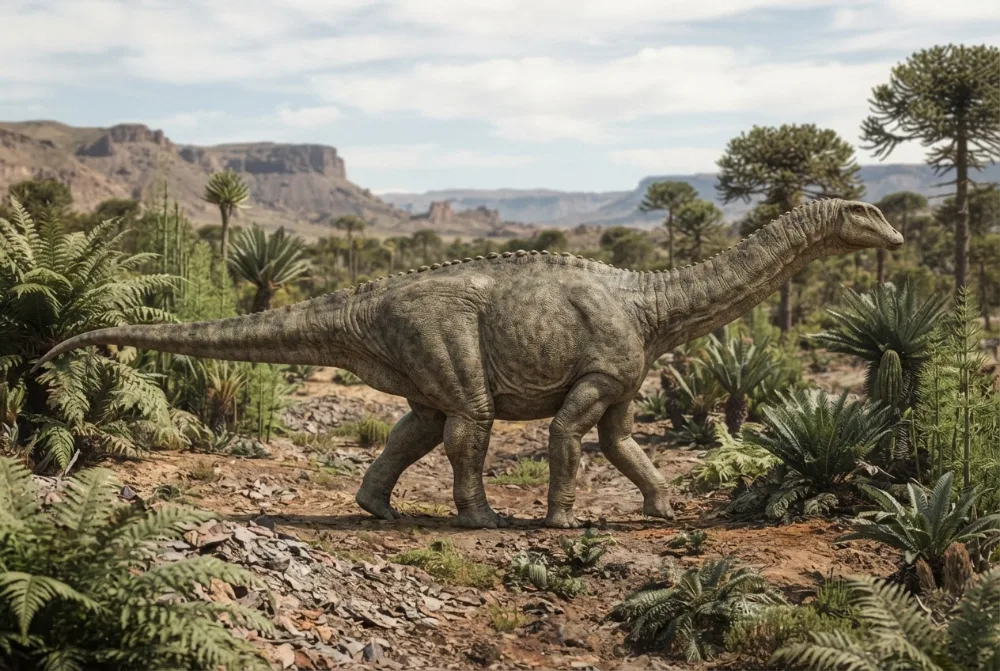
Amygdalodon was a huge, long-necked plant-eater that lived in Argentina during the Early Jurassic, about 180 million years ago. It was one of the very first sauropod dinosaurs ever found in South America, and scientists only know it from a single partial skeleton.12
Yabeerawo ddi?
Yali munene atya?
Yali muwanvu kwenkana wa?
Yali mugulumivu kwenkana wa?
Yali muzito kwenkana wa?
 obuwanvu ng'emmotoka 3 ezisimbiddwa mu lunyiriri🍌obuwanvu ng'amenvu 83 nga gaddiriŋŋana
 obuzito ng'obw'enjovu🍉obuzito ng'obwa wotamerooni 1000🎒obuzito ng'obw'ebibiina 6 ebijjuvu eby'abaana b'essomero🐻❄️obuzito ng'obwa ddubu enjeru 11🏃yandidduse mita 100 mu sikonda 19 (omuntu asinga embiro yeetaaga 9.6)
Amygdalodon yali munene atya bw'ogeraageranya ku GGWE?
Kubala kwokka mu browser yo. Tewali kiterekebwa wadde okusindikibwa wonna.
Yali wa mbiro kwenkana wa?


Ebyewuunyisa
It was discovered in 1936 after a local scientist mentioned finding bones of a large reptile, and Dr. Tomás Suero went to look for more.1
The only known fossils include some vertebrae, ribs, teeth, and parts of the pelvis and shoulder blade.1
Amygdalodon lived about 180 to 172 million years ago, during the Toarcian stage of the Jurassic.1
It was a quadruped, meaning it walked on all four legs, like other sauropods.1
Scientists think Amygdalodon was a basal sauropod, meaning it was an early relative of the giant long-necked dinosaurs that came later.1
Some studies suggest it might be closely related to the Asian dinosaur Gongxianosaurus.1
Ebibuuzo ebisinga okubuuzibwa ku Amygdalodon
?How big was Amygdalodon?
Amygdalodon was about 12 metres (39 feet) long and 4 metres (13 feet) tall, and weighed over 5 tonnes (5.5 short tons). Estimates vary, with some sources suggesting a length of 15 metres (49 feet).12
?What did Amygdalodon eat?
Amygdalodon was a plant-eater, or herbivore. Its almond-shaped teeth show early signs of adapting for bulk feeding, which later sauropods used to eat lots of plants.12
Eri abakugu mu dayinoso
- Erinnya lya ssaayansi
- Amygdalodon
- Yatuumibwa
- Cabrera 19473
- Ekibinja
- Ez'ensingo empanvu
- Ekika / ekibinja
- Gravisauria3
- Engabanya
- Sauropodomorpha > Sauropoda3
- Emyaka gy'enjazi
- emyaka obukadde 193 okutuuka ku 183 (Pliensbachian / Toarcian)3
- Ensengeka z'enjazi
- Cerro Carnerero3
- Ensi
- Arigentina3
- Ebisigalira ebyazuulibwa
- 1 mu The Paleobiology Database3
- Okuzuulibwa
- Amygdalodon was named by Argentine paleontologist Ángel Cabrera in 1947, based on fossils found in 1936 by Dr. Tomás Suero in Chubut, Argentina.12
- Kikyakubaganyizibwako ebirowoozo
- Scientists are still debating exactly where Amygdalodon fits in the sauropod family tree, with some placing it as a very early sauropod and others as a more advanced eusauropod.1
Ebituufu gye biva
- Amygdalodon (en.wikipedia.org)
- Amygdalodon | Natural History Museum (nhm.ac.uk)
- Amygdalodon in The Paleobiology Database (CC BY 4.0): emyaka, ebifo, ensengeka z'enjazi, engabanya.
Buli kituufu ku lupapula luno kirina ennamba eraga ensibuko yaakyo. Bwe tuba nga tukoze ensobi, tusonyiwe, ffe tuli bawagizi ba dayinoso, so si magazini ya ssaayansi. Tubuulire ku [email protected] tujja kugitereeza.
 Rex alumwa enjala! Dino Wiki pulojekiti ya taata eri mutabani we ayagala ennyo dayinoso, ya bwereere, tewali bulango era tewali bikulondoola. Abakulu basobola okuwa Rex akantu ak'okulya okuyamba okugikuuma ku mutimbagano.Liisa Rex
 Brachiosaurus
 Diplodocus
 Brontosaurus
 Argentinosaurus
 Camarasaurus
 Morosaurus
 Dilophosaurus
 Stenopterygius
 Dorygnathus
 Scutellosaurus
 Sinosaurus
 Temnodontosaurus