 Kwizi: Oli dayinoso ki?
 Olutalo lwa dayinoso
 Empaka z'emisinde gya dayinoso
 Emizannyo emitono egya dayinoso
 Alubaamu ya sitika
 Enkalala za dayinoso eza TOP
 Mpa ekyewuunyisa!
Yabeerawo ddi?

Yali wa mbiro kwenkana wa?


Ebyewuunyisa
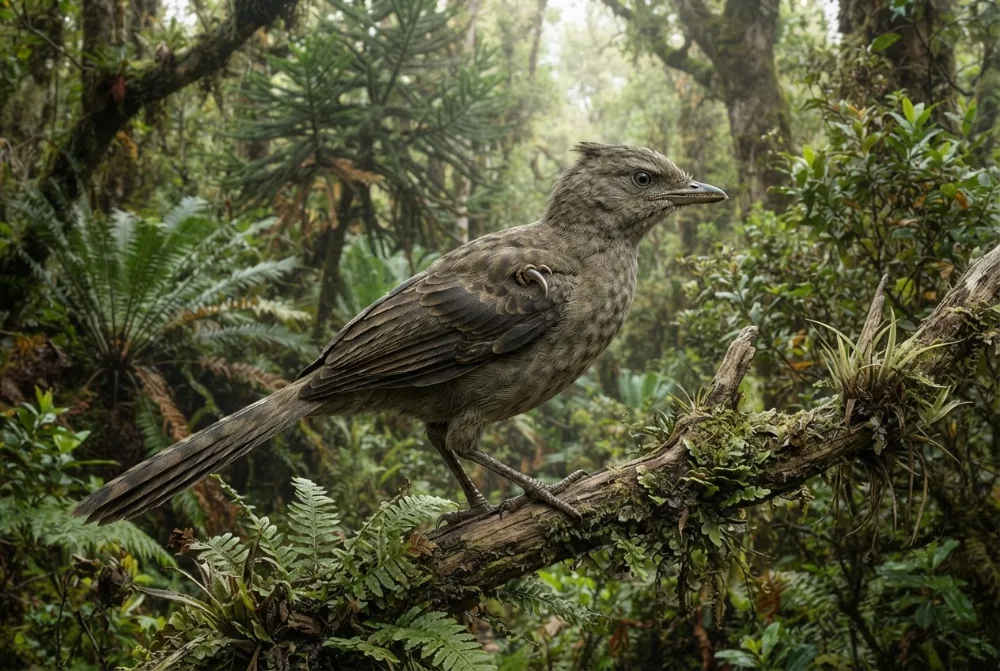
Apsaravis is one of the best-preserved fossil birds from the Mesozoic Era, with a nearly complete skeleton found.1
It lived about 83 to 72 million years ago, during the Campanian stage of the Late Cretaceous.5
The only known fossil of Apsaravis was discovered in the Djadokhta Formation of Mongolia, a famous area for dinosaur fossils.51
Apsaravis had a strong tubercle on its upper arm bone, which may have helped with powerful wing muscles for flight.2
This bird is important because it helps scientists understand how modern birds evolved from their dinosaur ancestors.1
Apsaravis is the only avialan (bird-like dinosaur) found at Ukhaa Tolgod besides the controversial alvarezsaurids.1
Ebibuuzo ebisinga okubuuzibwa ku Apsaravis
?Was Apsaravis a dinosaur?
Yes, Apsaravis was a dinosaur. It belongs to the group Avialae, which includes all birds.31
?How big was Apsaravis?
Apsaravis was about the size of a pigeon. Its nearly complete skeleton shows it was a small, flying bird.34
?What did Apsaravis eat?
Scientists think Apsaravis used its wings to hunt for food on the ground, but its exact diet is not known.3
Eri abakugu mu dayinoso
- Erinnya lya ssaayansi
- Apsaravis
- Yatuumibwa
- Norell and Clarke 20015
- Ekibinja
- Ebinyonyi eby'olubereberye
- Ekika / ekibinja
- Ornithuromorpha5
- Engabanya
- Theropoda > Avialae5
- Emyaka gy'enjazi
- emyaka obukadde 84 okutuuka ku 72 (Campanian)5
- Ensengeka z'enjazi
- Djadokhta5
- Ensi
- Mongoliya5
- Ebisigalira ebyazuulibwa
- 1 mu The Paleobiology Database5
- Okuzuulibwa
- Apsaravis was named by Mark Norell and Julia Clarke in 2001, based on a nearly complete skeleton found at Ukhaa Tolgod in Mongolia.51
- Kikyakubaganyizibwako ebirowoozo
- Scientists are still debating exactly where Apsaravis fits on the bird family tree, especially whether it is more closely related to modern birds or to ancient diving birds like Hesperornis.12
Ebituufu gye biva
- Fossil that fills a critical gap in avian evolution | Nature (nature.com)
- The morphology and phylogenetic position of Apsaravis ukhaana from the late Cretaceous of Mongolia. American Museum novitates ; no. 3387 (digitallibrary.amnh.org)
- Apsaravis (en.wikipedia.org)
- The Morphology and Phylogenetic Position of Apsaravis ukhaana from the Late Cretaceous of Mongolia (digitallibrary.amnh.org)
- Apsaravis in The Paleobiology Database (CC BY 4.0): emyaka, ebifo, ensengeka z'enjazi, engabanya.
Buli kituufu ku lupapula luno kirina ennamba eraga ensibuko yaakyo. Bwe tuba nga tukoze ensobi, tusonyiwe, ffe tuli bawagizi ba dayinoso, so si magazini ya ssaayansi. Tubuulire ku [email protected] tujja kugitereeza.
 Rex alumwa enjala! Dino Wiki pulojekiti ya taata eri mutabani we ayagala ennyo dayinoso, ya bwereere, tewali bulango era tewali bikulondoola. Abakulu basobola okuwa Rex akantu ak'okulya okuyamba okugikuuma ku mutimbagano.Liisa Rex
 Archaeopteryx
 Hesperornis
 Ichthyornis
 Baptornis
 Jurapteryx
 Gobipteryx
 Tyrannosaurus
 Triceratops
 Velociraptor
 Spinosaurus
 Ankylosaurus
 Parasaurolophus