 Kwizi: Oli dayinoso ki?
 Olutalo lwa dayinoso
 Empaka z'emisinde gya dayinoso
 Emizannyo emitono egya dayinoso
 Alubaamu ya sitika
 Enkalala za dayinoso eza TOP
 Mpa ekyewuunyisa!
Arrudatitan
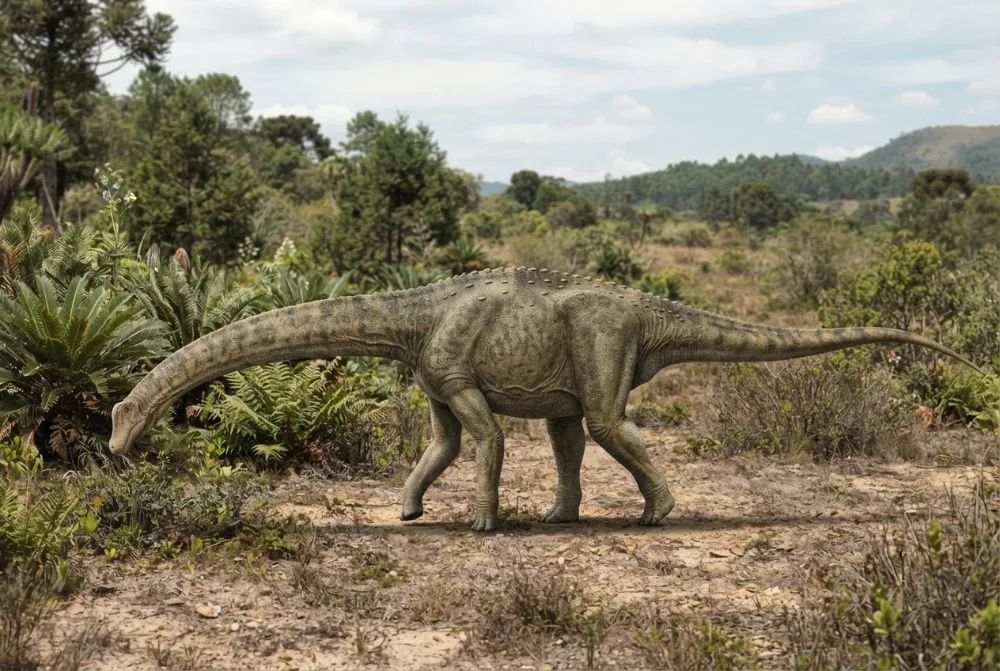
Arrudatitan was a huge, long-necked plant-eater that lived in Brazil during the Late Cretaceous. It was a titanosaur, a group of sauropods that included some of the biggest land animals ever. Even though it was giant, Arrudatitan was more slender and graceful than many of its relatives.1
Yabeerawo ddi?
Yali munene atya?
Yali muwanvu kwenkana wa?
Yali mugulumivu kwenkana wa?
kuteebereza
Yali muzito kwenkana wa?

 obuwanvu ng'emmotoka 3 ezisimbiddwa mu lunyiriri🍌obuwanvu ng'amenvu 83 nga gaddiriŋŋanaobuzito ng'obw'emmotoka 8🍉obuzito ng'obwa wotamerooni 2500🎒obuzito ng'obw'ebibiina 15 ebijjuvu eby'abaana b'essomero🐻❄️obuzito ng'obwa ddubu enjeru 27🏃yandidduse mita 100 mu sikonda 26 (omuntu asinga embiro yeetaaga 9.6)
Arrudatitan yali munene atya bw'ogeraageranya ku GGWE?
Kubala kwokka mu browser yo. Tewali kiterekebwa wadde okusindikibwa wonna.
Yali wa mbiro kwenkana wa?


Ebyewuunyisa
Arrudatitan was first thought to be a species of Aeolosaurus, but scientists later gave it its own genus name in 2021.12
The first fossils were found in 1997 by a farmer and his 12-year-old nephew in a field in Cândido Rodrigues, Brazil.1
Its femur (thigh bone) was 1.55 metres (5.1 feet) long, which helps scientists estimate its total length at about 15 metres (49 feet).1
Crocodylomorph and theropod teeth were found near the Arrudatitan skeleton, but there were no bite marks on the bones.1
Arrudatitan lived during the Campanian to Maastrichtian stages of the Late Cretaceous, about 72 to 68 million years ago.1
The name Arrudatitan honors Brazilian paleontologist Antônio Celso de Arruda Campos.1
Ebibuuzo ebisinga okubuuzibwa ku Arrudatitan
?How big was Arrudatitan?
Arrudatitan grew up to about 15 metres (49 feet) long, based on its fossils. Its thigh bone was 1.55 metres (5.1 feet) long.1
?What did Arrudatitan eat?
It was a plant-eater, or herbivore. As a titanosaur sauropod, it ate plants.4
?When did Arrudatitan live?
Arrudatitan lived during the Late Cretaceous, about 72 to 68 million years ago.1
?Where was Arrudatitan found?
Its fossils were found in the Adamantina Formation of Brazil, in a field near Cândido Rodrigues.1
Eri abakugu mu dayinoso
- Erinnya lya ssaayansi
- Arrudatitan
- Yatuumibwa
- Silva Junior et al. 20224
- Ekibinja
- Ez'ensingo empanvu
- Ekika / ekibinja
- Rinconsauria4
- Engabanya
- Sauropodomorpha > Sauropoda > Titanosauria > Macronaria4
- Emyaka gy'enjazi
- emyaka obukadde 84 okutuuka ku 66 (Campanian / Maastrichtian)4
- Ensengeka z'enjazi
- Adamantina4
- Ensi
- Buraziiri4
- Ebisigalira ebyazuulibwa
- 1 mu The Paleobiology Database4
- Okuzuulibwa
- The first fossils were found in 1997 by Ademir Frare and his 12-year-old nephew Luiz Augusto dos Santos Frare in a field in Cândido Rodrigues, Brazil. They told paleontologist Antônio Celso de Arruda Campos, and the bones were collected by staff of the Museu de Paleontologia de Monte Alto. The species was first named Aeolosaurus maximus in 2011, but moved to its own genus Arrudatitan in 2021.1
- Kikyakubaganyizibwako ebirowoozo
- Scientists are still debating exactly how Arrudatitan is related to other titanosaurs, and whether it belongs in the group Rinconsauria or is closer to other South American giants.14
Ebituufu gye biva
- Arrudatitan (en.wikipedia.org)
- Reassessment of Aeolosaurus maximus, a titanosaur dinosaur from the Late Cretaceous of Southeastern Brazil (exa.ai)
- Arrudatitan maximus | Dinosaur Database by DinoAnimals.com (dinoanimals.com)
- Arrudatitan in The Paleobiology Database (CC BY 4.0): emyaka, ebifo, ensengeka z'enjazi, engabanya.
Buli kituufu ku lupapula luno kirina ennamba eraga ensibuko yaakyo. Bwe tuba nga tukoze ensobi, tusonyiwe, ffe tuli bawagizi ba dayinoso, so si magazini ya ssaayansi. Tubuulire ku [email protected] tujja kugitereeza.
 Rex alumwa enjala! Dino Wiki pulojekiti ya taata eri mutabani we ayagala ennyo dayinoso, ya bwereere, tewali bulango era tewali bikulondoola. Abakulu basobola okuwa Rex akantu ak'okulya okuyamba okugikuuma ku mutimbagano.Liisa Rex
 Brachiosaurus
 Diplodocus
 Brontosaurus
 Argentinosaurus
 Camarasaurus
 Morosaurus
 Tyrannosaurus
 Triceratops
 Velociraptor
 Spinosaurus
 Ankylosaurus
 Parasaurolophus