 Kwizi: Oli dayinoso ki?
 Olutalo lwa dayinoso
 Empaka z'emisinde gya dayinoso
 Emizannyo emitono egya dayinoso
 Alubaamu ya sitika
 Enkalala za dayinoso eza TOP
 Mpa ekyewuunyisa!
Yabeerawo ddi?

Yali munene atya?
Yali muwanvu kwenkana wa?
Yali mugulumivu kwenkana wa?
kuteebereza
Yali muzito kwenkana wa?

 obuwanvu nga kkapa 4 ab'awaka, ennyindo ku mukira🍌obuwanvu ng'amenvu 11 nga gaddiriŋŋana🍉obuzito ng'obwa wotamerooni 50🧸obuzito ng'obw'abaana 13 ab'omu nnasale🎒obuzito ng'obw'abaana b'essomero 8🏃yandidduse mita 100 mu sikonda 9.5 (omuntu asinga embiro yeetaaga 9.6)
Asylosaurus yali munene atya bw'ogeraageranya ku GGWE?
Kubala kwokka mu browser yo. Tewali kiterekebwa wadde okusindikibwa wonna.
Yali wa mbiro kwenkana wa?


Ebyewuunyisa
The bones of Asylosaurus were discovered in 1834, but they were not recognized as a new dinosaur until 2007.1
Its bones were saved from destruction during World War II because they had been taken to Yale University in the USA.1
Asylosaurus had a different upper arm bone (humerus) compared to its relatives Thecodontosaurus and Pantydraco.1
Its hand had a reduced number of finger bones, with a formula of 2 to 3-4 to 2-?1.2
The name Asylosaurus means 'unharmed lizard', because its fossils escaped the bombing of Bristol in 1940.1
Ebibuuzo ebisinga okubuuzibwa ku Asylosaurus
?How big was Asylosaurus?
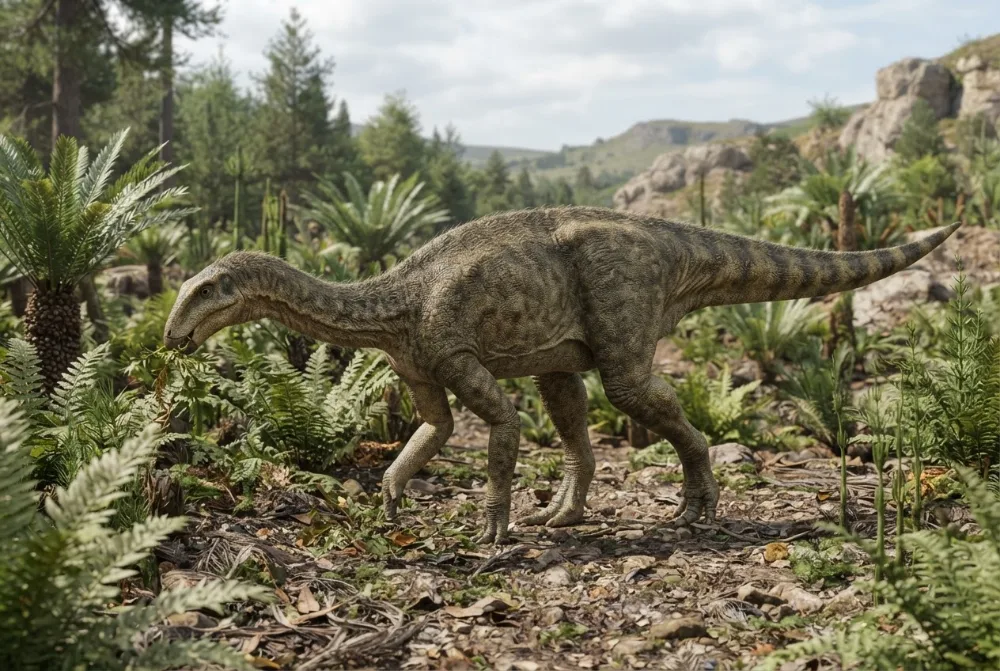
About 2 metres long and weighed roughly 250 kilograms.1
?What did Asylosaurus eat?
It was a plant-eater, but it may have also eaten some insects or small animals, since scientists are not sure if it was purely herbivorous or omnivorous.1
?Why is it called Asylosaurus?
The name means 'unharmed lizard' because its fossils were saved from a World War II bombing that destroyed the original Thecodontosaurus bones.1
?When did Asylosaurus live?
It lived during the Late Triassic period, about 200 million years ago.1
Omumenyi w'enfumo
Enfumo: Some people think Asylosaurus is the same as Thecodontosaurus.
Amazima: It was first thought to be Thecodontosaurus, but scientists now see it as its own genus because of differences in the upper arm bone.1
Eri abakugu mu dayinoso
- Erinnya lya ssaayansi
- Asylosaurus
- Yatuumibwa
- Galton 20073
- Ekibinja
- Ez'ensingo empanvu
- Ekika / ekibinja
- Sauropodomorpha3
- Engabanya
- Sauropodomorpha3
- Emyaka gy'enjazi
- emyaka obukadde 206 okutuuka ku 201 (Rhaetian)3
- Ensengeka z'enjazi
- Magnesian Conglomerate3
- Ensi
- Bungereza3
- Ebisigalira ebyazuulibwa
- 1 mu The Paleobiology Database3
- Okuzuulibwa
- The bones were found in 1834 by quarrymen in Bristol, England. They were described in 1836 as Thecodontosaurus, but Peter Galton named them Asylosaurus in 2007.1
- Kikyakubaganyizibwako ebirowoozo
- Scientists are not sure if some other bones from the same site belong to Asylosaurus or to another dinosaur.2
Ebituufu gye biva
- Asylosaurus (en.wikipedia.org)
- VOL. 26, N° 2, 2007 (dinochecker.com)
- Asylosaurus in The Paleobiology Database (CC BY 4.0): emyaka, ebifo, ensengeka z'enjazi, engabanya.
Buli kituufu ku lupapula luno kirina ennamba eraga ensibuko yaakyo. Bwe tuba nga tukoze ensobi, tusonyiwe, ffe tuli bawagizi ba dayinoso, so si magazini ya ssaayansi. Tubuulire ku [email protected] tujja kugitereeza.
 Rex alumwa enjala! Dino Wiki pulojekiti ya taata eri mutabani we ayagala ennyo dayinoso, ya bwereere, tewali bulango era tewali bikulondoola. Abakulu basobola okuwa Rex akantu ak'okulya okuyamba okugikuuma ku mutimbagano.Liisa Rex
 Brachiosaurus
 Diplodocus
 Brontosaurus
 Argentinosaurus
 Camarasaurus
 Morosaurus
 Nothosaurus
 Coelophysis
 Podokesaurus
 Simosaurus
 Eudimorphodon
 Herrerasaurus