 Kwizi: Oli dayinoso ki?
 Olutalo lwa dayinoso
 Empaka z'emisinde gya dayinoso
 Emizannyo emitono egya dayinoso
 Alubaamu ya sitika
 Enkalala za dayinoso eza TOP
 Mpa ekyewuunyisa!
Aymberedactylus
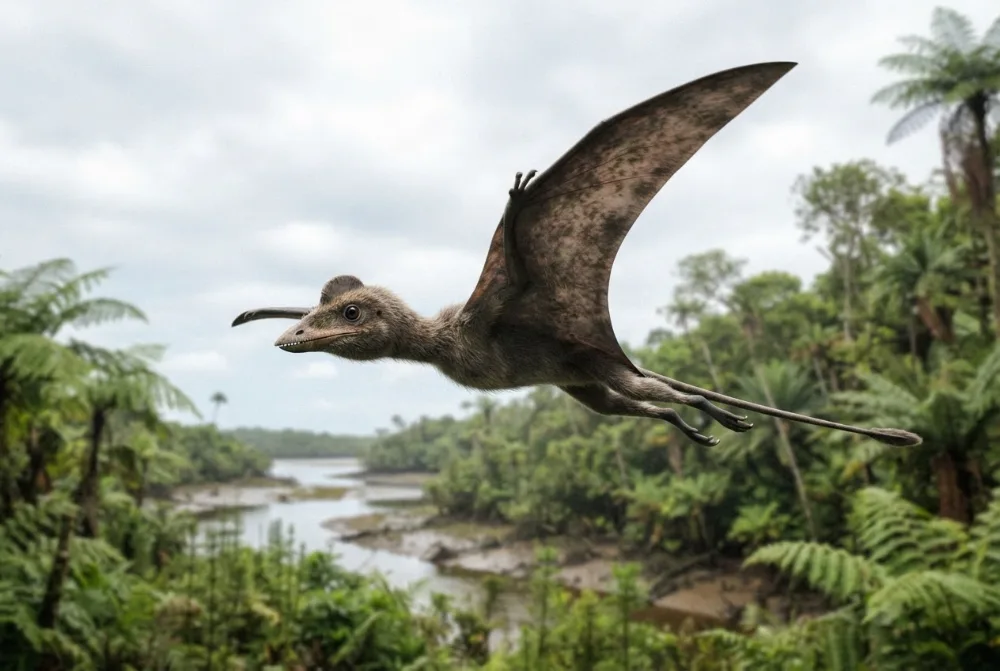
Aymberedactylus was a toothless flying reptile from the Early Cretaceous of Brazil. It had a short, downturned beak and probably ate fruits. Scientists think it was a small to medium-sized pterosaur with a wingspan of about 2 metres.1
Yabeerawo ddi?
Yali munene atya?
Ebiwaawaatiro bye byali bigazi kwenkana wa?
 obuwanvu nga kkapa 4 ab'awaka, ennyindo ku mukira⚽yandibuuse okusomoka ekisaawe ky'omupiira kyonna mu sikonda 7.9
Aymberedactylus yali munene atya bw'ogeraageranya ku GGWE?
Kubala kwokka mu browser yo. Tewali kiterekebwa wadde okusindikibwa wonna.
Yali wa mbiro kwenkana wa?


Ebyewuunyisa
Aymberedactylus is only known from one almost complete lower jaw (mandible). No other bones have been found.1
Its lower jaw is 27 centimetres long and is completely toothless.1
It had a very long retroarticular process (a part of the jaw joint) that was about 7% of the whole jaw length.1
The jaw had a shallow, rough-textured pit on the splenial bone that is unique to this species.1
Aymberedactylus belongs to the Tapejarinae group, which are toothless pterosaurs that often had big crests on their heads.1
It lived about 119 to 113 million years ago in a coastal lagoon environment.4
Ebibuuzo ebisinga okubuuzibwa ku Aymberedactylus
?What did Aymberedactylus eat?
It probably ate fruits. Scientists think it was a frugivore, like other tapejarine pterosaurs with downturned beaks.2
?How big was Aymberedactylus?
It had a wingspan of about 2 metres (6.5 feet), which is typical for tapejarid pterosaurs. The only known fossil is a 27 centimetre long lower jaw.32
?Was Aymberedactylus a dinosaur?
No, it was a pterosaur, a flying reptile that lived at the same time as dinosaurs but is not a dinosaur itself.3
Eri abakugu mu dayinoso
- Erinnya lya ssaayansi
- Aymberedactylus
- Yatuumibwa
- Pegas et al. 20164
- Ekibinja
- Ebyewalula ebibuuka
- Ekika / ekibinja
- Tapejaridae4
- Engabanya
- Pterosauria > Pterodactyloidea4
- Emyaka gy'enjazi
- emyaka obukadde 120 okutuuka ku 113 (Aptian)4
- Ensengeka z'enjazi
- Crato4
- Ensi
- Buraziiri4
- Ebisigalira ebyazuulibwa
- 1 mu The Paleobiology Database4
- Okuzuulibwa
- Aymberedactylus cearensis was named in 2016 by R.V. Pêgas, M.E.C. Leal and A.W.A. Kellner based on a lower jaw found near Nova Olinda, Brazil. Its name means 'small lizard finger' from the Tupi language, referring to its small size and pterosaur features.1
- Kikyakubaganyizibwako ebirowoozo
- Since only a lower jaw has been found, scientists are not sure about the exact shape of its head crest or its full body size.1
Ebituufu gye biva
- A Basal Tapejarine (Pterosauria; Pterodactyloidea; Tapejaridae) from the Crato Formation, Early Cretaceous of Brazil (web.archive.org)
- A Basal Tapejarine (Pterosauria; Pterodactyloidea; Tapejaridae) from the Crato Formation, Early Cretaceous of Brazil | PLOS One (journals.plos.org)
- Aymberedactylus (en.wikipedia.org)
- Aymberedactylus in The Paleobiology Database (CC BY 4.0): emyaka, ebifo, ensengeka z'enjazi, engabanya.
Buli kituufu ku lupapula luno kirina ennamba eraga ensibuko yaakyo. Bwe tuba nga tukoze ensobi, tusonyiwe, ffe tuli bawagizi ba dayinoso, so si magazini ya ssaayansi. Tubuulire ku [email protected] tujja kugitereeza.
 Rex alumwa enjala! Dino Wiki pulojekiti ya taata eri mutabani we ayagala ennyo dayinoso, ya bwereere, tewali bulango era tewali bikulondoola. Abakulu basobola okuwa Rex akantu ak'okulya okuyamba okugikuuma ku mutimbagano.Liisa Rex
 Pteranodon
 Quetzalcoatlus
 Dorygnathus
 Rhamphorhynchus
 Anhanguera
 Pterodactylus
 Stegosaurus
 Iguanodon
 Archaeopteryx
 Giganotosaurus
 Microraptor
 Deinonychus