 Kwizi: Oli dayinoso ki?
 Olutalo lwa dayinoso
 Empaka z'emisinde gya dayinoso
 Emizannyo emitono egya dayinoso
 Alubaamu ya sitika
 Enkalala za dayinoso eza TOP
 Mpa ekyewuunyisa!
Yabeerawo ddi?

Yali munene atya?
Yali muwanvu kwenkana wa?
Yali mugulumivu kwenkana wa?
Yali muzito kwenkana wa?

 obuwanvu ng'embwa 8, ennyindo ku mukira🍌obuwanvu ng'amenvu 42 nga gaddiriŋŋanaobuzito ng'obw'embwa 100🍉obuzito ng'obwa wotamerooni 400🎒obuzito ng'obw'ebibiina 2.5 ebijjuvu eby'abaana b'essomero🐻❄️obuzito ng'obwa ddubu enjeru 4🏃yandidduse mita 100 mu sikonda 12 (omuntu asinga embiro yeetaaga 9.6)
Beibeilong yali munene atya bw'ogeraageranya ku GGWE?
Kubala kwokka mu browser yo. Tewali kiterekebwa wadde okusindikibwa wonna.
Yali wa mbiro kwenkana wa?


Ebyewuunyisa
Beibeilong laid the largest known dinosaur eggs, each over 40 centimeters long.1
The baby skeleton is only 23 centimeters long, but it was probably an embryo that had just hatched.1
Its name means 'baby dragon' in Chinese, because the fossil was nicknamed 'Baby Louie'.1
Beibeilong is the first caenagnathid dinosaur known from both eggs and bones together.1
The eggs were so big that the baby would have fit inside with room to spare, taking up only about two-thirds of the egg's volume.1
Ebibuuzo ebisinga okubuuzibwa ku Beibeilong
?Was Beibeilong a dinosaur?
Yes, Beibeilong was a type of dinosaur called a caenagnathid, which is part of the oviraptorosaur group. It lived in China during the Late Cretaceous period, about 96 to 88 million years ago.2
?How big was Beibeilong?
Beibeilong was a huge dinosaur, about 7.5 metres long and weighed around 1.5 to 2 metric tons. That is as big as some of the largest oviraptorosaurs.21
?What did Beibeilong eat?
Beibeilong had a toothless beak like a bird, so it probably ate plants and small animals. Scientists think it used its beak to bite and crush food.2
?Did Beibeilong have feathers?
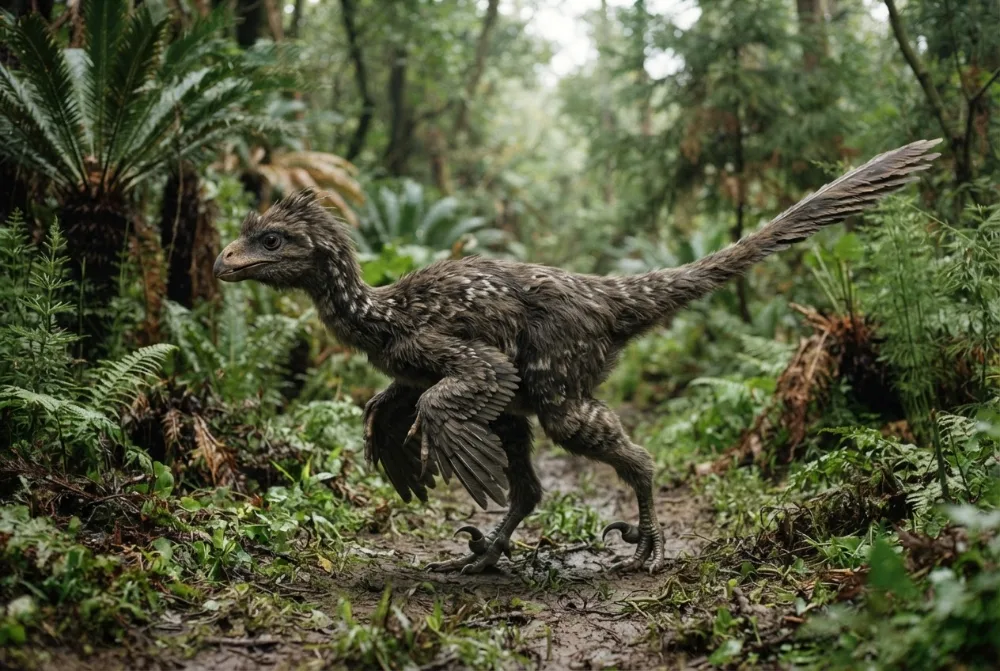
Yes, Beibeilong was a feathered dinosaur. It looked a bit like a giant bird, with feathers covering its body.4
Omumenyi w'enfumo
Enfumo: Some people think Beibeilong was a bird because it had feathers and a beak.
Amazima: Beibeilong was a dinosaur, not a bird, even though it is closely related to birds.1
Eri abakugu mu dayinoso
- Erinnya lya ssaayansi
- Beibeilong
- Yatuumibwa
- Pu et al. 20175
- Ekibinja
- Dayinoso ez'ebyoya ez'enjawulo
- Ekika / ekibinja
- Caenagnathidae5
- Engabanya
- Theropoda > Oviraptorosauria5
- Emyaka gy'enjazi
- emyaka obukadde 100 okutuuka ku 90 (Cenomanian / Turonian)5
- Ensengeka z'enjazi
- Gaogou5
- Ensi
- Cayina5
- Ebisigalira ebyazuulibwa
- 1 mu The Paleobiology Database5
- Okuzuulibwa
- The fossil was found in China, but it was illegally taken out of the country. It was brought back, and scientists named it Beibeilong sinensis in 2017.1
- Kikyakubaganyizibwako ebirowoozo
- Scientists are still not sure exactly how big an adult Beibeilong was, because only a baby skeleton has been found.1
Ebituufu gye biva
- Perinate and eggs of a giant caenagnathid dinosaur from the Late Cretaceous of central China | Nature Communications (nature.com)
- Beibeilong (en.wikipedia.org)
- Smuggled dino eggs gave birth to ‘baby dragons' (science.org)
- 'Baby Dragon' Dinosaur Found Inside Giant Egg | National Geographic (nationalgeographic.com)
- Beibeilong in The Paleobiology Database (CC BY 4.0): emyaka, ebifo, ensengeka z'enjazi, engabanya.
Buli kituufu ku lupapula luno kirina ennamba eraga ensibuko yaakyo. Bwe tuba nga tukoze ensobi, tusonyiwe, ffe tuli bawagizi ba dayinoso, so si magazini ya ssaayansi. Tubuulire ku [email protected] tujja kugitereeza.
 Rex alumwa enjala! Dino Wiki pulojekiti ya taata eri mutabani we ayagala ennyo dayinoso, ya bwereere, tewali bulango era tewali bikulondoola. Abakulu basobola okuwa Rex akantu ak'okulya okuyamba okugikuuma ku mutimbagano.Liisa Rex
 Therizinosaurus
 Oviraptor
 Chirostenotes
 Citipes
 Leptorhynchos
 Avimimus
 Tyrannosaurus
 Triceratops
 Velociraptor
 Spinosaurus
 Ankylosaurus
 Parasaurolophus