 Kwizi: Oli dayinoso ki?
 Olutalo lwa dayinoso
 Empaka z'emisinde gya dayinoso
 Emizannyo emitono egya dayinoso
 Alubaamu ya sitika
 Enkalala za dayinoso eza TOP
 Mpa ekyewuunyisa!
Yabeerawo ddi?

Yali munene atya?
Yali muwanvu kwenkana wa?
Yali mugulumivu kwenkana wa?
Yali muzito kwenkana wa?
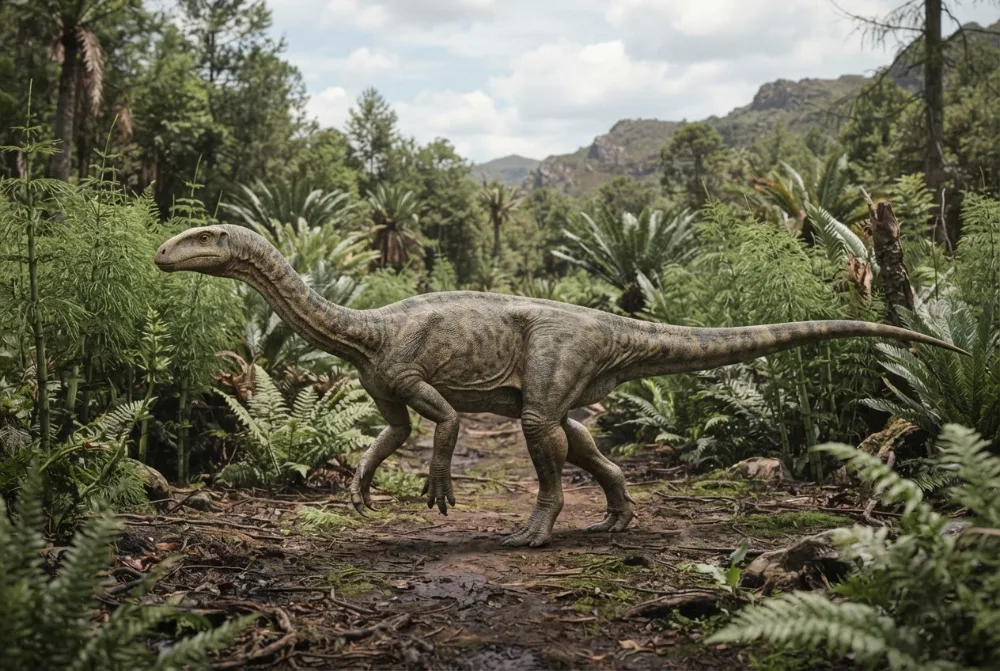
 obuwanvu nga kkapa 4 ab'awaka, ennyindo ku mukira🍌obuwanvu ng'amenvu 11 nga gaddiriŋŋana🍌obuzito ng'obw'amenvu 120🏃yandidduse mita 100 mu sikonda 12 (omuntu asinga embiro yeetaaga 9.6)
Buriolestes yali munene atya bw'ogeraageranya ku GGWE?
Kubala kwokka mu browser yo. Tewali kiterekebwa wadde okusindikibwa wonna.
Yali wa mbiro kwenkana wa?


Ebyewuunyisa
Buriolestes is one of the oldest known dinosaurs, living about 233 million years ago during the Late Triassic.13
Even though Buriolestes was a meat-eater, it belonged to the sauropodomorph group, which later gave rise to giant plant-eaters like Diplodocus.12
Its fossils were found right next to a lagerpetid called Ixalerpeton, showing that early dinosaurs lived alongside their dinosaur-like cousins.12
Buriolestes had a downturned jaw tip and a long crest on its upper arm bone, traits that later sauropodomorphs also had.1
The name Buriolestes means 'Buriol robber', after the Buriol family who owned the land where it was found.1
Ebibuuzo ebisinga okubuuzibwa ku Buriolestes
?What did Buriolestes eat?
Buriolestes was a carnivore, likely preying on small vertebrates and soft invertebrates. Its curved, serrated teeth were well-suited for slicing meat.12
?How big was Buriolestes?
Buriolestes was small, with one robust individual weighing over 7 kg (15.4 lb) and others weighing between 6.4 and 7.2 kg (14 to 16 lb). Its femur was about 135 mm long.2
?When did Buriolestes live?
Buriolestes lived about 233 million years ago during the Late Triassic, in the Carnian epoch. It is one of the oldest known dinosaurs.1
?Was Buriolestes a dinosaur?
Yes, Buriolestes was a dinosaur, specifically an early sauropodomorph. It was a meat-eater but belonged to the group that later gave rise to giant plant-eaters like Diplodocus.1
?Where was Buriolestes found?
Buriolestes was found in the Buriol ravine in São João do Polêsine, Brazil, in the Santa Maria Formation. The holotype was discovered in 2009.1
Eri abakugu mu dayinoso
- Erinnya lya ssaayansi
- Buriolestes
- Yatuumibwa
- Cabreira et al. 20164
- Ekibinja
- Ez'ensingo empanvu
- Ekika / ekibinja
- Sauropodomorpha4
- Engabanya
- Sauropodomorpha4
- Emyaka gy'enjazi
- emyaka obukadde 237 okutuuka ku 227 (Carnian)4
- Ensengeka z'enjazi
- Santa Maria4
- Ensi
- Buraziiri4
- Ebisigalira ebyazuulibwa
- 1 mu The Paleobiology Database4
- Okuzuulibwa
- Buriolestes was discovered in 2009 in a ravine in Brazil and named in 2016 by paleontologist Cabreira and his team. The species name honors paleontologist Cesar Schultz.1
- Kikyakubaganyizibwako ebirowoozo
- Scientists are still debating whether the smaller bones found with the main Buriolestes skeleton belong to a juvenile or a different dinosaur.1
Ebituufu gye biva
- Buriolestes (en.wikipedia.org)
- A Unique Late Triassic Dinosauromorph Assemblage Reveals Dinosaur Ancestral Anatomy and Diet: Current Biology (cell.com)
- PBDB Taxon (paleobiodb.org)
- Buriolestes in The Paleobiology Database (CC BY 4.0): emyaka, ebifo, ensengeka z'enjazi, engabanya.
Buli kituufu ku lupapula luno kirina ennamba eraga ensibuko yaakyo. Bwe tuba nga tukoze ensobi, tusonyiwe, ffe tuli bawagizi ba dayinoso, so si magazini ya ssaayansi. Tubuulire ku [email protected] tujja kugitereeza.
 Rex alumwa enjala! Dino Wiki pulojekiti ya taata eri mutabani we ayagala ennyo dayinoso, ya bwereere, tewali bulango era tewali bikulondoola. Abakulu basobola okuwa Rex akantu ak'okulya okuyamba okugikuuma ku mutimbagano.Liisa Rex
 Brachiosaurus
 Diplodocus
 Brontosaurus
 Argentinosaurus
 Camarasaurus
 Morosaurus
 Nothosaurus
 Coelophysis
 Podokesaurus
 Simosaurus
 Eudimorphodon
 Herrerasaurus