 Kwizi: Oli dayinoso ki?
 Olutalo lwa dayinoso
 Empaka z'emisinde gya dayinoso
 Emizannyo emitono egya dayinoso
 Alubaamu ya sitika
 Enkalala za dayinoso eza TOP
 Mpa ekyewuunyisa!
Caulkicephalus
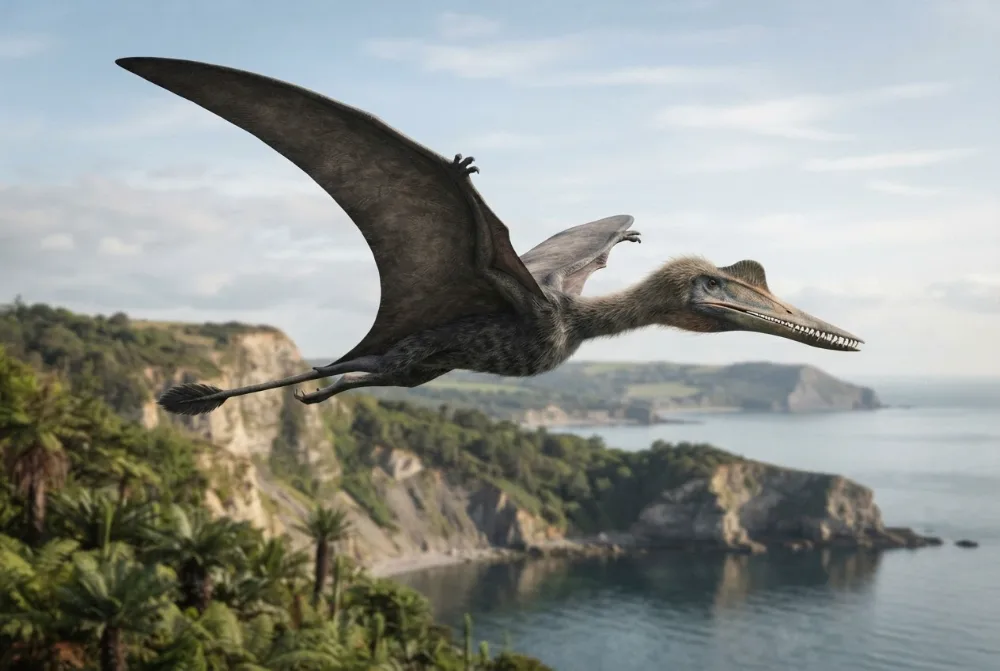
Caulkicephalus was a flying reptile that soared over the Isle of Wight in England about 125 million years ago. It had a long, pointed beak and sharp teeth for catching fish. It was a pterosaur, not a dinosaur.41
Yabeerawo ddi?
Yali munene atya?
Ebiwaawaatiro bye byali bigazi kwenkana wa?
 ebiwaawaatiro bigazi ng'obugaali 3 mu lunyiriri⚽yandibuuse okusomoka ekisaawe ky'omupiira kyonna mu sikonda 5.5
Caulkicephalus yali munene atya bw'ogeraageranya ku GGWE?
Kubala kwokka mu browser yo. Tewali kiterekebwa wadde okusindikibwa wonna.
Yali wa mbiro kwenkana wa?


Ebyewuunyisa
Its name means 'caulk head', because the first part of its skull was found in a rock that looked like caulk, a kind of sealant.1
Caulkicephalus had a special crest on its snout and another on top of its head, and these crests did not join together.1
It had different-sized teeth: the fifth, sixth and seventh teeth were smaller than the others.1
This pterosaur lived during the Early Cretaceous period, about 125 to 121 million years ago.4
Only a partial skull and some other bones have been found, so scientists are still learning about it.1
It was the second species of pterosaur ever discovered from the Wealden Group rocks of the Wessex Basin in England.1
Ebibuuzo ebisinga okubuuzibwa ku Caulkicephalus
?How big was Caulkicephalus?
It had a wingspan of about 5 metres (16.5 feet). That's as wide as a small car is long.2
?What did Caulkicephalus eat?
It ate fish. Its sharp teeth and the narrow part of its snout helped it catch slippery prey.2
?Did Caulkicephalus have a crest?
Yes, it had a crest on its snout and another on top of its head. These two crests did not join together.23
?Is Caulkicephalus a dinosaur?
No, it is a pterosaur, a flying reptile that lived at the same time as dinosaurs. It is not a dinosaur.2
Eri abakugu mu dayinoso
- Erinnya lya ssaayansi
- Caulkicephalus
- Yatuumibwa
- Steel et al. 20054
- Ekibinja
- Ebyewalula ebibuuka
- Ekika / ekibinja
- Ornithocheiridae4
- Engabanya
- Pterosauria > Pterodactyloidea4
- Emyaka gy'enjazi
- emyaka obukadde 126 okutuuka ku 121 (Barremian)4
- Ensengeka z'enjazi
- Wessex4
- Ensi
- Bungereza4
- Ebisigalira ebyazuulibwa
- 2 mu The Paleobiology Database4
- Okuzuulibwa
- Caulkicephalus was named in 2005 by Lorna Steel, David Martill, David Unwin and John Winch. The fossils were found in the Wessex Formation on the Isle of Wight, England.41
- Kikyakubaganyizibwako ebirowoozo
- Scientists are not sure how big Caulkicephalus was, because only a partial skull and a few other bones have been found.1
Ebituufu gye biva
- Caulkicephalus trimicrodon (dml.reptilis.net)
- Caulkicephalus (Wikipedia) (Wikipedia)
- Caulkicephalus, an Ornithocheirid pterosaur from the Isle of Wight - DinoWight (dinowight.org.uk)
- Caulkicephalus in The Paleobiology Database (CC BY 4.0): emyaka, ebifo, ensengeka z'enjazi, engabanya.
Buli kituufu ku lupapula luno kirina ennamba eraga ensibuko yaakyo. Bwe tuba nga tukoze ensobi, tusonyiwe, ffe tuli bawagizi ba dayinoso, so si magazini ya ssaayansi. Tubuulire ku [email protected] tujja kugitereeza.
 Rex alumwa enjala! Dino Wiki pulojekiti ya taata eri mutabani we ayagala ennyo dayinoso, ya bwereere, tewali bulango era tewali bikulondoola. Abakulu basobola okuwa Rex akantu ak'okulya okuyamba okugikuuma ku mutimbagano.Liisa Rex
 Pteranodon
 Quetzalcoatlus
 Dorygnathus
 Rhamphorhynchus
 Anhanguera
 Pterodactylus
 Stegosaurus
 Iguanodon
 Archaeopteryx
 Giganotosaurus
 Microraptor
 Deinonychus