 Kwizi: Oli dayinoso ki?
 Olutalo lwa dayinoso
 Empaka z'emisinde gya dayinoso
 Emizannyo emitono egya dayinoso
 Alubaamu ya sitika
 Enkalala za dayinoso eza TOP
 Mpa ekyewuunyisa!
Yabeerawo ddi?

Yali munene atya?
Yali muwanvu kwenkana wa?
Yali mugulumivu kwenkana wa?
kuteebereza
Yali muzito kwenkana wa?
 obuwanvu nga kkapa 3 ab'awaka, ennyindo ku mukira🍌obuwanvu ng'amenvu 8 nga gaddiriŋŋanaobuzito ng'obwa kkapa ow'awaka🍌obuzito ng'obw'amenvu 17🏃yandidduse mita 100 mu sikonda 16 (omuntu asinga embiro yeetaaga 9.6)
Daurosaurus yali munene atya bw'ogeraageranya ku GGWE?
Kubala kwokka mu browser yo. Tewali kiterekebwa wadde okusindikibwa wonna.
Yali wa mbiro kwenkana wa?


Ebyewuunyisa
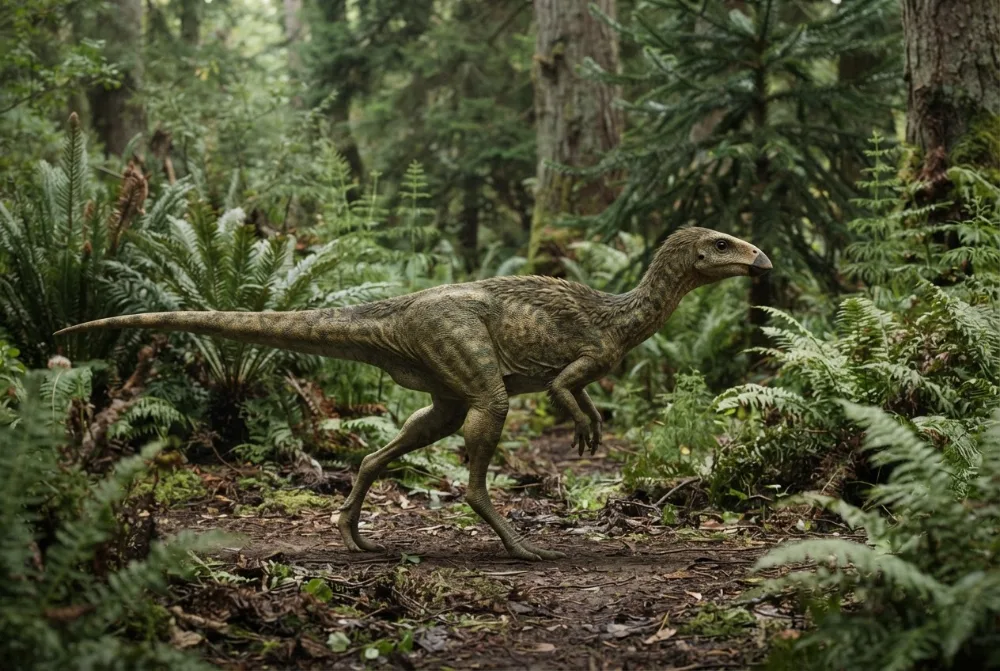
Daurosaurus is known from a partial skeleton that includes preserved soft parts, which is very rare for dinosaurs.1
It had skin scales that split into bristles, a feature that scientists think may be an early step toward feathers.2
The fossil site was once a lake, and the dinosaur lived in a landscape with lakes and changing plant life.2
Scientists think Daurosaurus may have lived in groups, because the fossil record suggests it was gregarious.1
The age of the rocks where Daurosaurus was found was first thought to be Late Jurassic, but later studies showed it is actually Middle Jurassic, about 168 to 165 million years old.2
Daurosaurus is one of several small plant-eating dinosaurs found at the same site, along with Kulindapteryx and Kulindadromeus.2
Ebibuuzo ebisinga okubuuzibwa ku Daurosaurus
?How big was Daurosaurus?
Daurosaurus was a small dinosaur. Its adult length is estimated at 1 metre, so it was quite small.4
?What did Daurosaurus eat?
Daurosaurus was a herbivore, meaning it ate plants. It had a beak for cropping plant material.4
?Did Daurosaurus have feathers?
Daurosaurus had skin scales that split into bristles, which scientists think may be an early step toward feathers. This is similar to the feather-like structures found on its relative Kulindadromeus.34
?When did Daurosaurus live?
Daurosaurus lived during the Late Bathonian stage of the Middle Jurassic, about 168 to 165 million years ago.4
?Where was Daurosaurus found?
Daurosaurus was found in the Ukureyskaya Formation in Zabaykal'ye, Russia. Its fossil was discovered at a site called Kulinda.4
?Did Daurosaurus live in groups?
Yes, the fossil record suggests Daurosaurus was gregarious, meaning it likely lived in groups.4
Omumenyi w'enfumo
Enfumo: Some people think all dinosaurs with bristles or filaments were birds or ancestors of birds.
Amazima: Daurosaurus was a plant-eating dinosaur, not a bird, but its bristle-like scales show that such features appeared in many dinosaur groups, not just bird relatives.2
Eri abakugu mu dayinoso
- Erinnya lya ssaayansi
- Daurosaurus
- Yatuumibwa
- Alifanov and Saveliev 20144
- Ekibinja
- Ezirya ebimera ez'omumwa ng'ogw'ekinyonyi
- Ekika / ekibinja
- Hypsilophodontidae4
- Engabanya
- Ornithischia > Ornithopoda4
- Emyaka gy'enjazi
- emyaka obukadde 168 okutuuka ku 165 (Bathonian)4
- Ensengeka z'enjazi
- Ukureyskaya4
- Ensi
- Rwasha4
- Ebisigalira ebyazuulibwa
- 1 mu The Paleobiology Database4
- Okuzuulibwa
- Daurosaurus was named by Russian scientists Vladimir Alifanov and Sergei Saveliev in 2014, based on a partial skeleton found at the Kulinda site in Transbaikalia, Russia.12
- Kikyakubaganyizibwako ebirowoozo
- Scientists debate whether Daurosaurus is a valid species, because some researchers think the name is doubtful (a nomen dubium) due to incomplete remains.1
Ebituufu gye biva
- PBDB Taxon (paleobiodb.org)
- Two new ornithischian dinosaurs (Hypsilophodontia, Ornithopoda) from the Late Jurassic of Russia (researchgate.net)
- Kulindadromeus (Wikipedia) (Wikipedia)
- Daurosaurus in The Paleobiology Database (CC BY 4.0): emyaka, ebifo, ensengeka z'enjazi, engabanya.
Buli kituufu ku lupapula luno kirina ennamba eraga ensibuko yaakyo. Bwe tuba nga tukoze ensobi, tusonyiwe, ffe tuli bawagizi ba dayinoso, so si magazini ya ssaayansi. Tubuulire ku [email protected] tujja kugitereeza.
 Rex alumwa enjala! Dino Wiki pulojekiti ya taata eri mutabani we ayagala ennyo dayinoso, ya bwereere, tewali bulango era tewali bikulondoola. Abakulu basobola okuwa Rex akantu ak'okulya okuyamba okugikuuma ku mutimbagano.Liisa Rex
Endala okuva mu kibinja kye kimu: Ezirya ebimera ez'omumwa ng'ogw'ekinyonyi
 IguanodonEzirya ebimera ez'omumwa ng'ogw'ekinyonyi
 TenontosaurusEzirya ebimera ez'omumwa ng'ogw'ekinyonyi
 ThescelosaurusEzirya ebimera ez'omumwa ng'ogw'ekinyonyi
 ZalmoxesEzirya ebimera ez'omumwa ng'ogw'ekinyonyi
 CamptosaurusEzirya ebimera ez'omumwa ng'ogw'ekinyonyi
 RhabdodonEzirya ebimera ez'omumwa ng'ogw'ekinyonyi
 Ichthyosaurus
 Khudiakovia
 Ophthalmosaurus
 Pterodactylus
 Peloneustes
 Rhamphocephalus