 Kwizi: Oli dayinoso ki?
 Olutalo lwa dayinoso
 Empaka z'emisinde gya dayinoso
 Emizannyo emitono egya dayinoso
 Alubaamu ya sitika
 Enkalala za dayinoso eza TOP
 Mpa ekyewuunyisa!
Dyslocosaurus
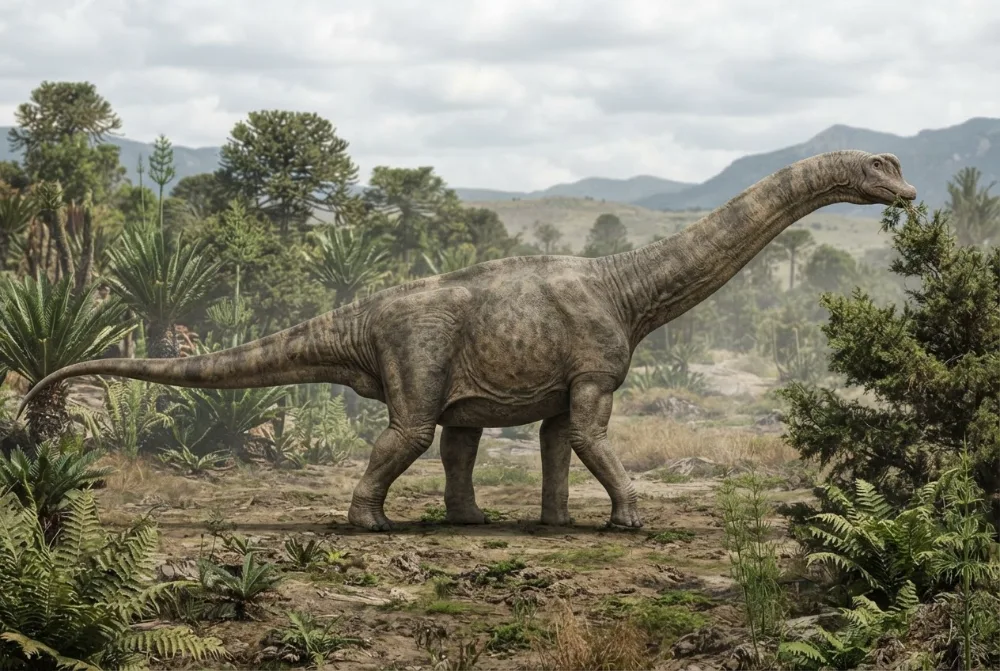
Dyslocosaurus was a long-necked sauropod that lived during the Late Jurassic Period. It had many claws on its feet, maybe four or five, which is unusual for a sauropod. Its name means 'hard-to-place lizard' because scientists were not sure where it came from.1
Yabeerawo ddi?
Yali munene atya?
Yali muwanvu kwenkana wa?
Yali mugulumivu kwenkana wa?
Yali muzito kwenkana wa?
 obuwanvu ng'emmotoka 22 ezisimbiddwa mu lunyiriri🍌obuwanvu ng'amenvu 560 nga gaddiriŋŋana
 obuzito ng'obw'enjovu🍉obuzito ng'obwa wotamerooni 1500🦒obugulumivu ng'entugga 18 nga ziyimiridde ku ndala🎒obuzito ng'obw'ebibiina 9 ebijjuvu eby'abaana b'essomero🐻❄️obuzito ng'obwa ddubu enjeru 17🏢mugulumivu ekimala okulingiza mu ddirisa ku mwaliiro 34🏃yandidduse mita 100 mu sikonda 22 (omuntu asinga embiro yeetaaga 9.6)
Dyslocosaurus yali munene atya bw'ogeraageranya ku GGWE?
Kubala kwokka mu browser yo. Tewali kiterekebwa wadde okusindikibwa wonna.
Yali wa mbiro kwenkana wa?


Ebyewuunyisa
Dyslocosaurus may have had four or five claws on each foot, while most other diplodocid sauropods had only three.1
The only known fossil of Dyslocosaurus is a set of limb bones kept at the Amherst College Museum of Natural History.1
Scientists are not sure how old the Dyslocosaurus fossils are. They might be from the Late Jurassic or possibly from the Late Cretaceous.1
Some scientists think the foot bones with many claws might not belong to the same animal as the leg bones, so Dyslocosaurus might not have had extra claws after all.1
Dyslocosaurus was named in 1992 by John Stanton McIntosh, William Coombs, and Dale Russell.1
The species name polyonychius means 'many claws' in Greek.1
Ebibuuzo ebisinga okubuuzibwa ku Dyslocosaurus
?What did Dyslocosaurus eat?
Dyslocosaurus was a herbivore, meaning it ate plants. It lived on the ground and was actively mobile.5
?How big was Dyslocosaurus?
Scientists estimate it was between 10 and 20 metres long, but they do not know the exact size. It was a sauropod, so it had a long neck and tail.5
?When did Dyslocosaurus live?
It lived during the Late Jurassic Period, about 154 to 143 million years ago. Some scientists think the fossils might be from the Late Cretaceous instead.51
?Where was Dyslocosaurus found?
The only fossil was found in Wyoming, North America. It was collected by professor Frederic Brewster Loomis and is kept at the Amherst College Museum of Natural History.1
Omumenyi w'enfumo
Enfumo: Dyslocosaurus definitely had four or five claws on its feet.
Amazima: The foot bone with many claws may belong to a different animal, so scientists are not sure if Dyslocosaurus really had extra claws.1
Eri abakugu mu dayinoso
- Erinnya lya ssaayansi
- Dyslocosaurus
- Yatuumibwa
- Mcintosh et al. 19925
- Ekibinja
- Ez'ensingo empanvu
- Ekika / ekibinja
- Dicraeosauridae5
- Engabanya
- Sauropodomorpha > Sauropoda > Diplodocoidea5
- Emyaka gy'enjazi
- emyaka obukadde 155 okutuuka ku 143 (Kimmeridgian / Tithonian)5
- Ensengeka z'enjazi
- Morrison5
- Ensi
- Amerika5
- Ebisigalira ebyazuulibwa
- 1 mu The Paleobiology Database5
- Okuzuulibwa
- The only known Dyslocosaurus fossil was collected by professor Frederic Brewster Loomis, but its exact location is unknown. In 1992, John Stanton McIntosh, William Coombs, and Dale Russell named it Dyslocosaurus polyonychius.1
- Kikyakubaganyizibwako ebirowoozo
- Scientists debate whether Dyslocosaurus lived in the Late Jurassic or the Late Cretaceous, and whether it really had more than three claws on its feet.1
Ebituufu gye biva
- Dyslocosaurus (en.wikipedia.org)
- PBDB Taxon (paleobiodb.org)
- Dyslocosaurus Mcintosh et al. 1992 - Encyclopedia of Life (eol.org)
- Dyslocosaurus polyonychius | Dinosaur Database by DinoAnimals.com (dinoanimals.com)
- Dyslocosaurus in The Paleobiology Database (CC BY 4.0): emyaka, ebifo, ensengeka z'enjazi, engabanya.
Buli kituufu ku lupapula luno kirina ennamba eraga ensibuko yaakyo. Bwe tuba nga tukoze ensobi, tusonyiwe, ffe tuli bawagizi ba dayinoso, so si magazini ya ssaayansi. Tubuulire ku [email protected] tujja kugitereeza.
 Rex alumwa enjala! Dino Wiki pulojekiti ya taata eri mutabani we ayagala ennyo dayinoso, ya bwereere, tewali bulango era tewali bikulondoola. Abakulu basobola okuwa Rex akantu ak'okulya okuyamba okugikuuma ku mutimbagano.Liisa Rex
 Brachiosaurus
 Diplodocus
 Brontosaurus
 Argentinosaurus
 Camarasaurus
 Morosaurus
 Allosaurus
 Compsognathus
 Camptosaurus
 Nanosaurus
 Rhamphorhynchus
 Ceratosaurus