 Kwizi: Oli dayinoso ki?
 Olutalo lwa dayinoso
 Empaka z'emisinde gya dayinoso
 Emizannyo emitono egya dayinoso
 Alubaamu ya sitika
 Enkalala za dayinoso eza TOP
 Mpa ekyewuunyisa!
Efraasia
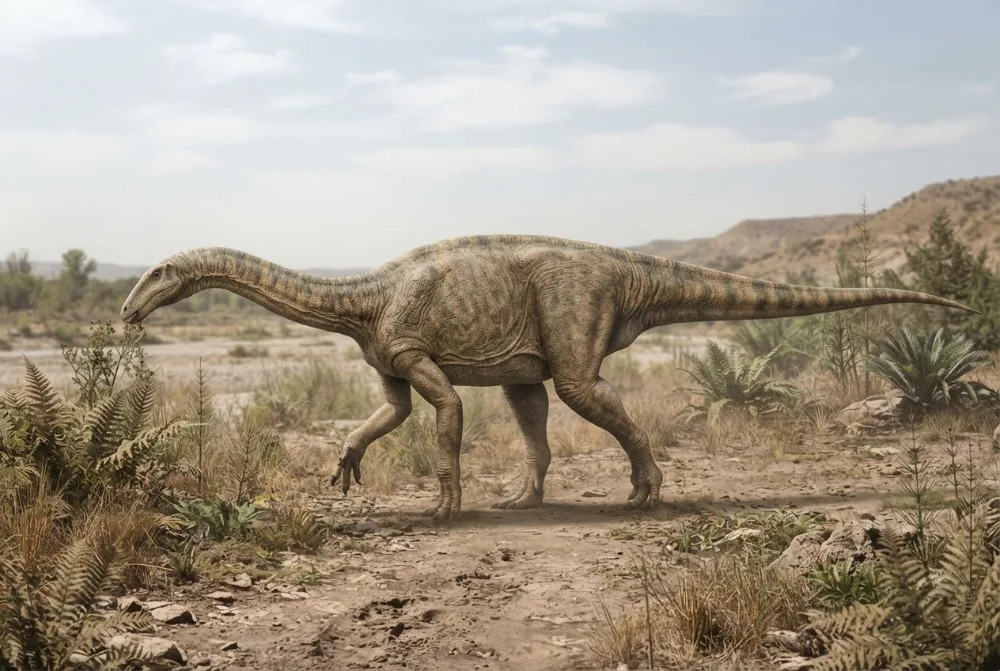
Efraasia was a long-necked plant-eater that lived in what is now Germany about 210 million years ago. It was a medium-sized dinosaur, about 6 to 7 metres long, and could walk on two or four legs. Its name honors the scientist Eberhard Fraas, who collected the first fossils.1
Yabeerawo ddi?
Yali munene atya?
Yali muwanvu kwenkana wa?
Yali mugulumivu kwenkana wa?
kuteebereza
 obuwanvu ng'embwa 7, ennyindo ku mukira🍌obuwanvu ng'amenvu 39 nga gaddiriŋŋana🏃yandidduse mita 100 mu sikonda 12 (omuntu asinga embiro yeetaaga 9.6)
Efraasia yali munene atya bw'ogeraageranya ku GGWE?
Kubala kwokka mu browser yo. Tewali kiterekebwa wadde okusindikibwa wonna.
Yali wa mbiro kwenkana wa?


Ebyewuunyisa
Efraasia was once thought to be a small dinosaur only 2 to 3 metres long, but scientists later realized those fossils were from juveniles. Adults grew to about 6.5 metres.1
Its fossils were first mistaken for three different dinosaur species: Teratosaurus minor, Sellosaurus fraasi, and Paleosaurus diagnosticus. In 2003, scientists combined them into one species: Efraasia minor.1
Efraasia had long fingers and a flexible thumb, which it may have used to grasp food. Its wrists were shaped so it could walk on all fours easily.1
The first Efraasia fossils were discovered by a stonemason named Albert Burrer in a quarry near Pfaffenhofen, Germany, between 1906 and 1914.1
Efraasia is a basal sauropodomorph, meaning it is an early relative of the giant long-necked sauropods like Brachiosaurus and Diplodocus.1
Some scientists think Efraasia was an obligate biped, meaning it could only walk on two legs, because its lower arm could not rotate to point its hands downward.1
Ebibuuzo ebisinga okubuuzibwa ku Efraasia
?What did Efraasia eat?
Efraasia was a herbivore, meaning it ate plants. It thrived on the lush vegetation of its time.12
?How big was Efraasia?
Efraasia was a medium sized dinosaur, about 6 to 7 metres long. It weighed between 300 and 600 kilograms.12
Omumenyi w'enfumo
Enfumo: Efraasia was a meat-eating dinosaur.
Amazima: Early researchers thought it was a predator, but in 1965 scientists proved it was a plant-eating sauropodomorph.1
Eri abakugu mu dayinoso
- Erinnya lya ssaayansi
- Efraasia
- Yatuumibwa
- Galton 19733
- Ekibinja
- Ez'ensingo empanvu
- Ekika / ekibinja
- Sauropodomorpha3
- Engabanya
- Sauropodomorpha3
- Emyaka gy'enjazi
- emyaka obukadde 227 okutuuka ku 206 (Norian)3
- Ensengeka z'enjazi
- Löwenstein3
- Ensi
- Bugirimaani3
- Ebisigalira ebyazuulibwa
- 5 mu The Paleobiology Database3
- Okuzuulibwa
- The first fossils were found by Albert Burrer in a quarry near Pfaffenhofen, Germany, starting in 1906. They were later studied by Friedrich von Huene and Eberhard Fraas. The genus Efraasia was named by Peter Galton in 1973 in honor of Fraas.1
- Kikyakubaganyizibwako ebirowoozo
- Scientists still debate whether Efraasia walked on two legs or four. Some think its wrists allowed it to walk on all fours, while others argue it was an obligate biped.1
Ebituufu gye biva
- Efraasia (en.wikipedia.org)
- Efraasia | Exploring the Late Triassic Herbivorous Giant (thedinosaurs.org)
- Efraasia in The Paleobiology Database (CC BY 4.0): emyaka, ebifo, ensengeka z'enjazi, engabanya.
Buli kituufu ku lupapula luno kirina ennamba eraga ensibuko yaakyo. Bwe tuba nga tukoze ensobi, tusonyiwe, ffe tuli bawagizi ba dayinoso, so si magazini ya ssaayansi. Tubuulire ku [email protected] tujja kugitereeza.
 Rex alumwa enjala! Dino Wiki pulojekiti ya taata eri mutabani we ayagala ennyo dayinoso, ya bwereere, tewali bulango era tewali bikulondoola. Abakulu basobola okuwa Rex akantu ak'okulya okuyamba okugikuuma ku mutimbagano.Liisa Rex
 Brachiosaurus
 Diplodocus
 Brontosaurus
 Argentinosaurus
 Camarasaurus
 Morosaurus
 Nothosaurus
 Coelophysis
 Podokesaurus
 Simosaurus
 Eudimorphodon
 Herrerasaurus