 Kwizi: Oli dayinoso ki?
 Olutalo lwa dayinoso
 Empaka z'emisinde gya dayinoso
 Emizannyo emitono egya dayinoso
 Alubaamu ya sitika
 Enkalala za dayinoso eza TOP
 Mpa ekyewuunyisa!
Europasaurus
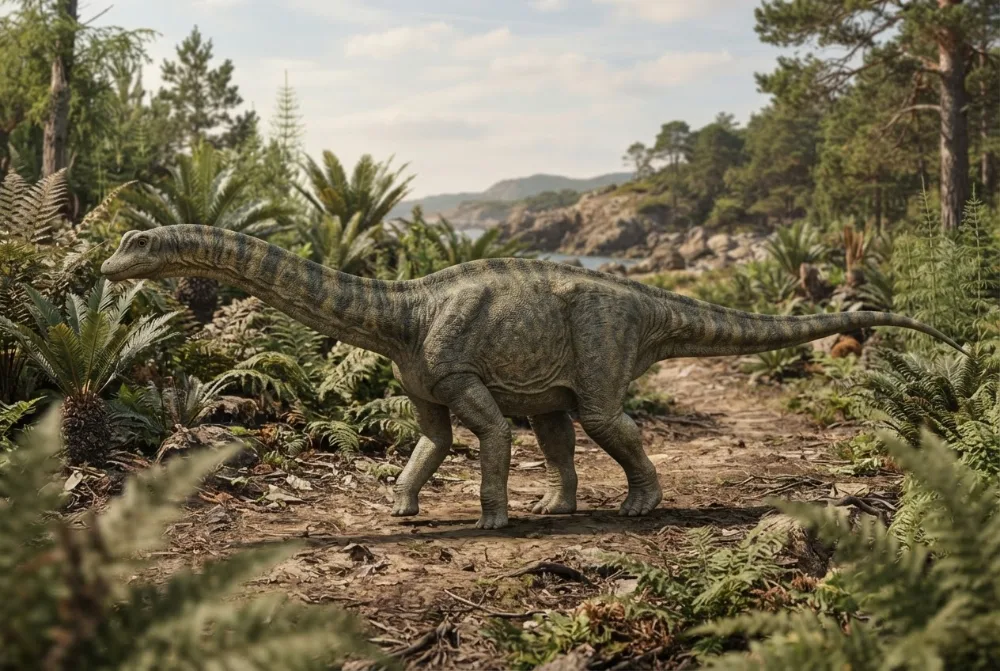
Europasaurus was a tiny sauropod dinosaur that lived on an island in what is now Germany. It was a dwarf, much smaller than its giant relatives like Brachiosaurus. Scientists think it shrank because food was limited on its island home.21
Yabeerawo ddi?
Yali munene atya?
Yali muwanvu kwenkana wa?
Yali mugulumivu kwenkana wa?
kuteebereza
Yali muzito kwenkana wa?

 obuwanvu ng'embwa 6, ennyindo ku mukira🍌obuwanvu ng'amenvu 34 nga gaddiriŋŋanaobuzito ng'obw'embwa 100🍉obuzito ng'obwa wotamerooni 420🎒obuzito ng'obw'ebibiina 2.5 ebijjuvu eby'abaana b'essomero🐻❄️obuzito ng'obwa ddubu enjeru 5🏃yandidduse mita 100 mu sikonda 13 (omuntu asinga embiro yeetaaga 9.6)
Europasaurus yali munene atya bw'ogeraageranya ku GGWE?
Kubala kwokka mu browser yo. Tewali kiterekebwa wadde okusindikibwa wonna.
Yali wa mbiro kwenkana wa?


Ebyewuunyisa
Europasaurus is one of the smallest known sauropods, only about as long as a car.1
It lived during the Late Jurassic, about 154 to 151 million years ago.1
The first fossil was a single tooth found by a private collector named Holger Lüdtke in 1998.1
Bone studies show that Europasaurus grew more slowly than its giant relatives, a sign of island dwarfism.2
About one third of the Europasaurus bones found have tooth marks, probably from fish or crocodile-like scavengers.1
Young Europasaurus had well-developed inner ears, meaning they could probably hear well and may have stayed close to adults for protection.1
Ebibuuzo ebisinga okubuuzibwa ku Europasaurus
?How big was Europasaurus?
About 5.7 to 6.2 metres long, weighing 750 to 2,100 kilograms as an adult. That is roughly as long as a car.13
?Why was Europasaurus so small?
It was a dwarf species due to insular dwarfism, meaning it shrank because it lived on an island with limited food. Bone studies show it grew more slowly than its giant relatives.21
?What did Europasaurus eat?
It was herbivorous, meaning it ate plants. Conifer cones and twigs from araucarian trees (like modern monkey puzzle trees) have been found at its fossil site.31
?Did Europasaurus live in herds?
Yes, fossils of at least 11 individuals were found together, suggesting they lived in groups. Scientists think a herd might have drowned while crossing a tidal zone.1
?When did Europasaurus live?
It lived during the Late Jurassic Period, about 154 to 151 million years ago.13
?Where was Europasaurus found?
Its fossils were found in a quarry at Langenberg Mountain in northern Germany. It lived on an island in the Lower Saxony basin.1
Eri abakugu mu dayinoso
- Erinnya lya ssaayansi
- Europasaurus
- Yatuumibwa
- Sander et al. 20064
- Ekibinja
- Ez'ensingo empanvu
- Ekika / ekibinja
- Camarasauromorpha4
- Engabanya
- Sauropodomorpha > Sauropoda > Macronaria4
- Emyaka gy'enjazi
- emyaka obukadde 152 okutuuka ku 149 (Kimmeridgian)4
- Ensengeka z'enjazi
- Süntel4
- Ensi
- Bugirimaani4
- Ebisigalira ebyazuulibwa
- 1 mu The Paleobiology Database4
- Okuzuulibwa
- The first fossils were found in 1998 by Holger Lüdtke in a quarry in Germany. After more bones were found, the species was named Europasaurus holgeri in 2006 by Sander and colleagues.1
- Kikyakubaganyizibwako ebirowoozo
- Scientists are not sure exactly why Europasaurus became so small, but they think it was because it lived on an island with limited food.2
Ebituufu gye biva
- Europasaurus (en.wikipedia.org)
- nature.com (nature.com)
- Europasaurus | Natural History Museum (nhm.ac.uk)
- Europasaurus in The Paleobiology Database (CC BY 4.0): emyaka, ebifo, ensengeka z'enjazi, engabanya.
Buli kituufu ku lupapula luno kirina ennamba eraga ensibuko yaakyo. Bwe tuba nga tukoze ensobi, tusonyiwe, ffe tuli bawagizi ba dayinoso, so si magazini ya ssaayansi. Tubuulire ku [email protected] tujja kugitereeza.
 Rex alumwa enjala! Dino Wiki pulojekiti ya taata eri mutabani we ayagala ennyo dayinoso, ya bwereere, tewali bulango era tewali bikulondoola. Abakulu basobola okuwa Rex akantu ak'okulya okuyamba okugikuuma ku mutimbagano.Liisa Rex
 Brachiosaurus
 Diplodocus
 Brontosaurus
 Argentinosaurus
 Camarasaurus
 Morosaurus
 Allosaurus
 Compsognathus
 Camptosaurus
 Nanosaurus
 Rhamphorhynchus
 Ceratosaurus