 Kwizi: Oli dayinoso ki?
 Olutalo lwa dayinoso
 Empaka z'emisinde gya dayinoso
 Emizannyo emitono egya dayinoso
 Alubaamu ya sitika
 Enkalala za dayinoso eza TOP
 Mpa ekyewuunyisa!
Yabeerawo ddi?

Yali munene atya?
Yali muwanvu kwenkana wa?
Yali mugulumivu kwenkana wa?
kuteebereza
Yali muzito kwenkana wa?
 obuwanvu ng'embwa 4, ennyindo ku mukira🍌obuwanvu ng'amenvu 23 nga gaddiriŋŋana🍉obuzito ng'obwa wotamerooni 72🧸obuzito ng'obw'abaana 19 ab'omu nnasale🎒obuzito ng'obw'abaana b'essomero 11🏃yandidduse mita 100 mu sikonda 9 (omuntu asinga embiro yeetaaga 9.6)
Fylax yali munene atya bw'ogeraageranya ku GGWE?
Kubala kwokka mu browser yo. Tewali kiterekebwa wadde okusindikibwa wonna.
Yali wa mbiro kwenkana wa?


Ebyewuunyisa
Fylax lived on a chain of islands called the Late Cretaceous European Archipelago, which stretched between the Atlantic and Tethys oceans.2
Its name means 'keeper of the gates of hell' because it lived extremely close to the time of the big extinction that ended the age of dinosaurs.12
Fylax is known from just one nearly complete left jawbone, called a dentary, which was found in the early 1990s.12
Its teeth were tall and narrow, about 2.8 to 3.3 times taller than wide, and had no tiny bumps (denticles) along the edges.2
Fylax was a close relative of hadrosaurids, the duck-billed dinosaurs, but it was not a true hadrosaurid itself.42
Scientists think Fylax's ancestors may have come from Asia and traveled across islands to reach Europe and North America.2
Ebibuuzo ebisinga okubuuzibwa ku Fylax
?How big was Fylax?
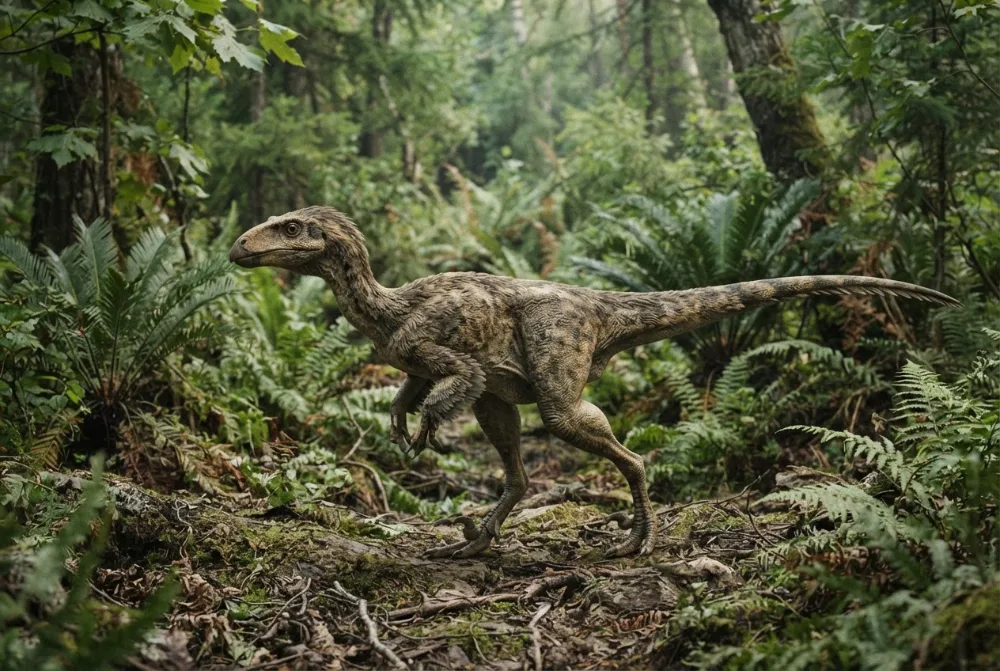
Scientists do not know the exact size because only a jawbone has been found. The jawbone is 276 mm long, so it was probably a small dinosaur, maybe 1 to 2 metres long.12
?What did Fylax eat?
Fylax was a plant-eater. Its tall, narrow teeth and flat, steeply angled chewing surface suggest it sliced through tough plants.12
?When did Fylax live?
Fylax lived at the very end of the Cretaceous Period, just before the big extinction that killed the dinosaurs. Its fossils were found in rocks that are about 66 million years old.1
?Is Fylax a dinosaur?
Yes, Fylax is a dinosaur. It is a hadrosauroid ornithopod, a type of duck-billed plant-eating dinosaur.1
Eri abakugu mu dayinoso
- Erinnya lya ssaayansi
- Fylax
- Yatuumibwa
- Prieto-Márquez and Carrera Farias 20214
- Ekibinja
- Ezirya ebimera ez'omumwa ng'ogw'ekinyonyi
- Ekika / ekibinja
- Hadrosauroidea4
- Engabanya
- Ornithischia > Ornithopoda > Iguanodontia4
- Emyaka gy'enjazi
- emyaka obukadde 72 okutuuka ku 66 (Maastrichtian)4
- Ensengeka z'enjazi
- Figuerola4
- Ensi
- Sipeyini4
- Ebisigalira ebyazuulibwa
- 1 mu The Paleobiology Database4
- Okuzuulibwa
- Fylax was named in 2021 by Albert Prieto-Márquez and Miguel Ángel Carrera Farias based on a jawbone found in the 1990s in northeastern Spain.42
- Kikyakubaganyizibwako ebirowoozo
- Scientists are not sure exactly where the ancestors of Fylax came from, whether from Asia, Europe, or North America.2
Ebituufu gye biva
- Fylax (en.wikipedia.org)
- app008212020 (app.pan.pl)
- Fylax thyrakolasus | Dinosaur Database by DinoAnimals.com (dinoanimals.com)
- Fylax in The Paleobiology Database (CC BY 4.0): emyaka, ebifo, ensengeka z'enjazi, engabanya.
Buli kituufu ku lupapula luno kirina ennamba eraga ensibuko yaakyo. Bwe tuba nga tukoze ensobi, tusonyiwe, ffe tuli bawagizi ba dayinoso, so si magazini ya ssaayansi. Tubuulire ku [email protected] tujja kugitereeza.
 Rex alumwa enjala! Dino Wiki pulojekiti ya taata eri mutabani we ayagala ennyo dayinoso, ya bwereere, tewali bulango era tewali bikulondoola. Abakulu basobola okuwa Rex akantu ak'okulya okuyamba okugikuuma ku mutimbagano.Liisa Rex
Endala okuva mu kibinja kye kimu: Ezirya ebimera ez'omumwa ng'ogw'ekinyonyi
 IguanodonEzirya ebimera ez'omumwa ng'ogw'ekinyonyi
 TenontosaurusEzirya ebimera ez'omumwa ng'ogw'ekinyonyi
 ThescelosaurusEzirya ebimera ez'omumwa ng'ogw'ekinyonyi
 ZalmoxesEzirya ebimera ez'omumwa ng'ogw'ekinyonyi
 CamptosaurusEzirya ebimera ez'omumwa ng'ogw'ekinyonyi
 RhabdodonEzirya ebimera ez'omumwa ng'ogw'ekinyonyi
 Tyrannosaurus
 Triceratops
 Velociraptor
 Spinosaurus
 Ankylosaurus
 Parasaurolophus