 Kwizi: Oli dayinoso ki?
 Olutalo lwa dayinoso
 Empaka z'emisinde gya dayinoso
 Emizannyo emitono egya dayinoso
 Alubaamu ya sitika
 Enkalala za dayinoso eza TOP
 Mpa ekyewuunyisa!
Yabeerawo ddi?

Yali munene atya?
Yali muwanvu kwenkana wa?
Yali muzito kwenkana wa?
 obuwanvu nga kkapa 3 ab'awaka, ennyindo ku mukira🍌obuwanvu ng'amenvu 8 nga gaddiriŋŋana🍉obuzito ng'obwa wotamerooni 4🏃yandidduse mita 100 mu sikonda 10 (omuntu asinga embiro yeetaaga 9.6)
Ignavusaurus yali munene atya bw'ogeraageranya ku GGWE?
Kubala kwokka mu browser yo. Tewali kiterekebwa wadde okusindikibwa wonna.
Yali wa mbiro kwenkana wa?


Ebyewuunyisa
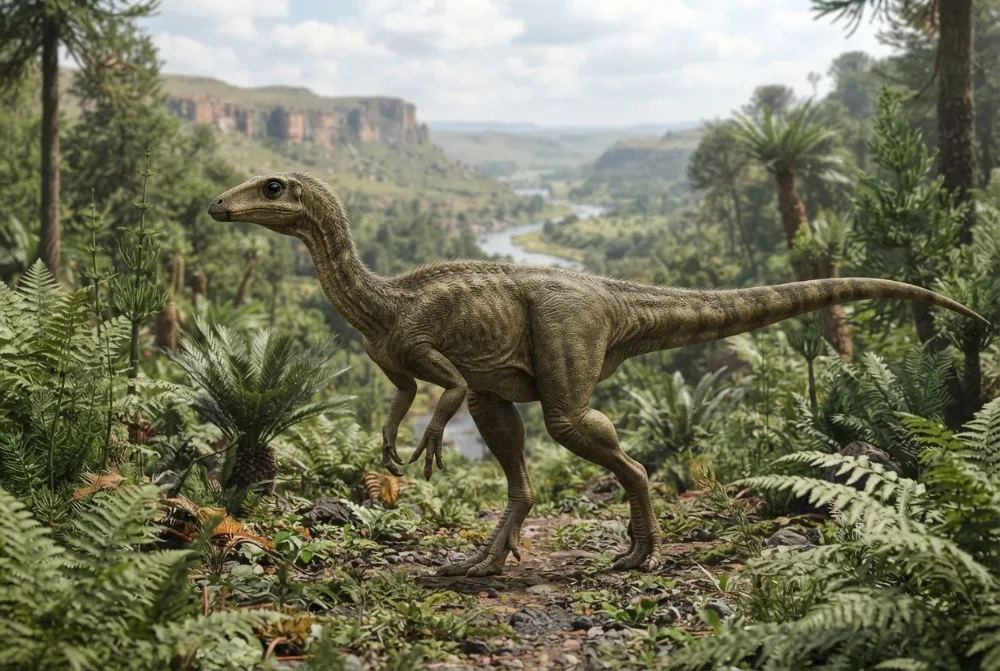
The name Ignavusaurus comes from the Latin word for 'coward' because it was found at a place called Ha Ralekoala, which means 'the place of the father of the coward'.1
The only known fossil of Ignavusaurus is a nearly complete skeleton of a baby that was less than one year old when it died.1
Its skull was broken into more than 120 pieces, but scientists were able to put it back together.1
Ignavusaurus had a long, slender neck and a long tail, just like its relatives Massospondylus and Melanorosaurus.1
Some scientists think Ignavusaurus might actually be a baby Massospondylus, because the two look very similar.1
Ebibuuzo ebisinga okubuuzibwa ku Ignavusaurus
?How big was Ignavusaurus?
About 1.5 metres (4.9 ft) long and weighed about 22.5 kilograms (50 lb). That is roughly the size of a large dog.1
?What did Ignavusaurus eat?
It was a plant-eater, or herbivore. It had a long neck to reach leaves and other plants.1
?Is Ignavusaurus a dinosaur?
Yes, it is a dinosaur. It was a basal sauropodomorph, a type of long-necked, plant-eating dinosaur.1
?Could Ignavusaurus be a baby Massospondylus?
Some scientists think so. They say the only known fossil looks very similar to a young Massospondylus, so Ignavusaurus might be the same dinosaur.1
Eri abakugu mu dayinoso
- Erinnya lya ssaayansi
- Ignavusaurus
- Yatuumibwa
- Knoll 20102
- Ekibinja
- Ez'ensingo empanvu
- Ekika / ekibinja
- Massospondylidae2
- Engabanya
- Sauropodomorpha2
- Emyaka gy'enjazi
- emyaka obukadde 201 okutuuka ku 193 (Hettangian / Sinemurian)2
- Ensengeka z'enjazi
- Elliot2
- Ensi
- Lesoto2
- Ebisigalira ebyazuulibwa
- 2 mu The Paleobiology Database2
- Okuzuulibwa
- The fossils were found in Lesotho and described in 2010 by Spanish paleontologist F. Knoll. The skeleton was brought to the National Museum of Natural History in Paris for study.1
- Kikyakubaganyizibwako ebirowoozo
- Scientists are not sure if Ignavusaurus is a separate species or just a young Massospondylus.1
Ebituufu gye biva
- Ignavusaurus (en.wikipedia.org)
- Ignavusaurus in The Paleobiology Database (CC BY 4.0): emyaka, ebifo, ensengeka z'enjazi, engabanya.
Buli kituufu ku lupapula luno kirina ennamba eraga ensibuko yaakyo. Bwe tuba nga tukoze ensobi, tusonyiwe, ffe tuli bawagizi ba dayinoso, so si magazini ya ssaayansi. Tubuulire ku [email protected] tujja kugitereeza.
 Rex alumwa enjala! Dino Wiki pulojekiti ya taata eri mutabani we ayagala ennyo dayinoso, ya bwereere, tewali bulango era tewali bikulondoola. Abakulu basobola okuwa Rex akantu ak'okulya okuyamba okugikuuma ku mutimbagano.Liisa Rex
 Brachiosaurus
 Diplodocus
 Brontosaurus
 Argentinosaurus
 Camarasaurus
 Morosaurus
 Dilophosaurus
 Stenopterygius
 Dorygnathus
 Scutellosaurus
 Sinosaurus
 Temnodontosaurus