 Kwizi: Oli dayinoso ki?
 Olutalo lwa dayinoso
 Empaka z'emisinde gya dayinoso
 Emizannyo emitono egya dayinoso
 Alubaamu ya sitika
 Enkalala za dayinoso eza TOP
 Mpa ekyewuunyisa!
Kaatedocus
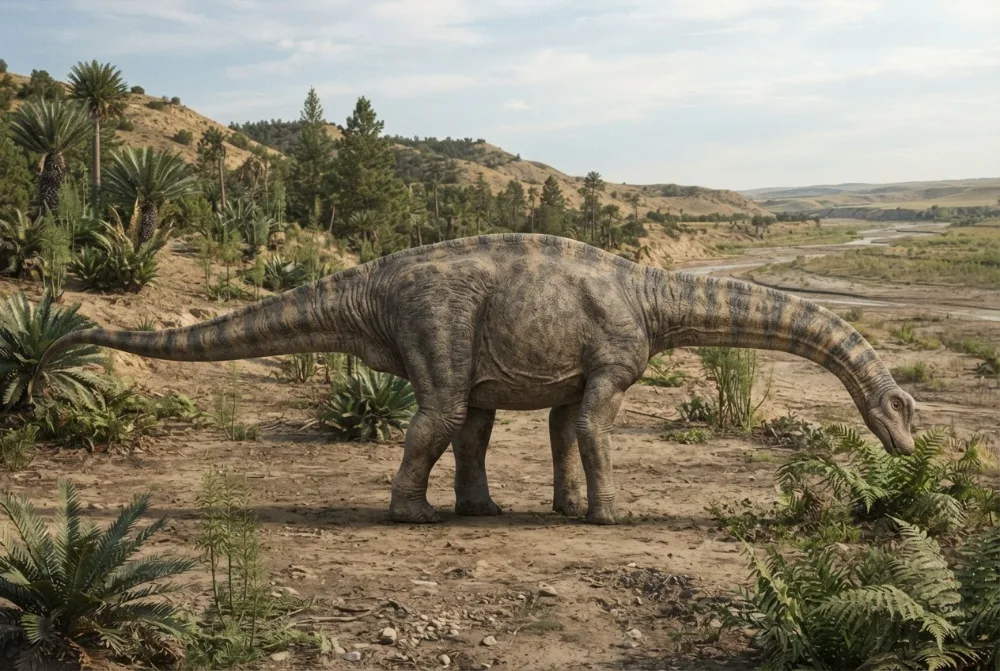
Kaatedocus was a long-necked sauropod that lived in what is now Wyoming during the Late Jurassic. It was smaller than many of its relatives, only about 14 metres long. Its well-preserved skull and neck helped scientists learn how sauropods held their heads.12
Yabeerawo ddi?
Yali munene atya?
Yali muwanvu kwenkana wa?
Yali mugulumivu kwenkana wa?
kuteebereza
 obuwanvu ng'emmotoka 3 ezisimbiddwa mu lunyiriri🍌obuwanvu ng'amenvu 78 nga gaddiriŋŋana🏃yandidduse mita 100 mu sikonda 21 (omuntu asinga embiro yeetaaga 9.6)
Kaatedocus yali munene atya bw'ogeraageranya ku GGWE?
Kubala kwokka mu browser yo. Tewali kiterekebwa wadde okusindikibwa wonna.
Yali wa mbiro kwenkana wa?


Ebyewuunyisa
Kaatedocus was named in 2012 by paleontologists Emanuel Tschopp and Octávio Mateus.1
Its name comes from the Crow Indian word 'kaate' meaning 'small' and 'docus' from Diplodocus, so 'small beam'.1
The only known specimen includes a nearly complete skull and a neck made of at least 14 vertebrae.1
The skull and neck together measured about 3.8 metres (12 feet) long.1
The fossils were originally thought to belong to Barosaurus or Diplodocus before being recognized as a new dinosaur.2
Scientists used CT scans and 3D printing to study Kaatedocus's neck vertebrae and learn how sauropods held their necks upright.1
Ebibuuzo ebisinga okubuuzibwa ku Kaatedocus
?How big was Kaatedocus?
About 14 metres (46 feet) long. That is smaller than many of its relatives like Diplodocus.12
?What did Kaatedocus eat?
Plants. It was a sauropod with peg-like teeth at the front of its mouth, good for stripping leaves.2
?When did Kaatedocus live?
It lived during the Late Jurassic, about 155 million years ago.1
?Why is it called Kaatedocus?
Its name comes from the Crow Indian word 'kaate' meaning 'small' and 'docus' from Diplodocus, so 'small beam'.1
Omumenyi w'enfumo
Enfumo: Some scientists thought Kaatedocus was just a young Barosaurus or Diplodocus.
Amazima: Kaatedocus is now considered a distinct genus based on unique features in its skull and vertebrae.2
Eri abakugu mu dayinoso
- Erinnya lya ssaayansi
- Kaatedocus
- Yatuumibwa
- Tschopp and Mateus 20134
- Ekibinja
- Ez'ensingo empanvu
- Ekika / ekibinja
- Dicraeosauridae4
- Engabanya
- Sauropodomorpha > Sauropoda > Diplodocoidea4
- Emyaka gy'enjazi
- emyaka obukadde 155 okutuuka ku 149 (Kimmeridgian)4
- Ensengeka z'enjazi
- Morrison4
- Ensi
- Amerika4
- Ebisigalira ebyazuulibwa
- 1 mu The Paleobiology Database4
- Okuzuulibwa
- Fossils were first excavated in 1934 by Barnum Brown's team at Howe Quarry in Wyoming. The dinosaur was named Kaatedocus siberi in 2012 by Emanuel Tschopp and Octávio Mateus.1
- Kikyakubaganyizibwako ebirowoozo
- Scientists are not sure if Kaatedocus is a distinct genus or a juvenile of another sauropod like Barosaurus.2
Ebituufu gye biva
- Kaatedocus (en.wikipedia.org)
- Jurassic Boneyard Yields Hidden Dinosaur | National Geographic (nationalgeographic.com)
- PBDB Taxon (paleobiodb.org)
- Kaatedocus in The Paleobiology Database (CC BY 4.0): emyaka, ebifo, ensengeka z'enjazi, engabanya.
Buli kituufu ku lupapula luno kirina ennamba eraga ensibuko yaakyo. Bwe tuba nga tukoze ensobi, tusonyiwe, ffe tuli bawagizi ba dayinoso, so si magazini ya ssaayansi. Tubuulire ku [email protected] tujja kugitereeza.
 Rex alumwa enjala! Dino Wiki pulojekiti ya taata eri mutabani we ayagala ennyo dayinoso, ya bwereere, tewali bulango era tewali bikulondoola. Abakulu basobola okuwa Rex akantu ak'okulya okuyamba okugikuuma ku mutimbagano.Liisa Rex
 Brachiosaurus
 Diplodocus
 Brontosaurus
 Argentinosaurus
 Camarasaurus
 Morosaurus
 Allosaurus
 Compsognathus
 Camptosaurus
 Nanosaurus
 Rhamphorhynchus
 Ceratosaurus