 Kwizi: Oli dayinoso ki?
 Olutalo lwa dayinoso
 Empaka z'emisinde gya dayinoso
 Emizannyo emitono egya dayinoso
 Alubaamu ya sitika
 Enkalala za dayinoso eza TOP
 Mpa ekyewuunyisa!
Yabeerawo ddi?

Yali munene atya?
Yali muwanvu kwenkana wa?
Yali mugulumivu kwenkana wa?
kuteebereza
Yali muzito kwenkana wa?

 obuwanvu ng'emmotoka 6 ezisimbiddwa mu lunyiriri🍌obuwanvu ng'amenvu 140 nga gaddiriŋŋana🍉obuzito ng'obwa wotamerooni 9400🎒obuzito ng'obw'ebibiina 59 ebijjuvu eby'abaana b'essomero🐻❄️obuzito ng'obwa ddubu enjeru 100🏢mugulumivu ekimala okulingiza mu ddirisa ku mwaliiro 2🏃yandidduse mita 100 mu sikonda 33 (omuntu asinga embiro yeetaaga 9.6)
Losillasaurus yali munene atya bw'ogeraageranya ku GGWE?
Kubala kwokka mu browser yo. Tewali kiterekebwa wadde okusindikibwa wonna.
Yali wa mbiro kwenkana wa?


Ebyewuunyisa
Losillasaurus had a very long humerus (upper arm bone) that measured 143 centimetres (56 inches) long, even though the specimen was not fully grown.1
The neural spines on its tail vertebrae were shaped like cutlasses, a unique feature that helps scientists identify this dinosaur.2
Losillasaurus lived during the Late Jurassic and possibly into the Early Cretaceous, about 157 to 145 million years ago.1
The largest Losillasaurus individuals may have weighed as much as 47 tonnes (52 short tons), similar to several elephants combined.1
Losillasaurus belongs to a group of sauropods called Turiasauria, which includes other giants like Turiasaurus.3
The first fossils of Losillasaurus were discovered near the village of Losilla in Valencia, Spain, by a local teacher who was also an amateur archaeologist.2
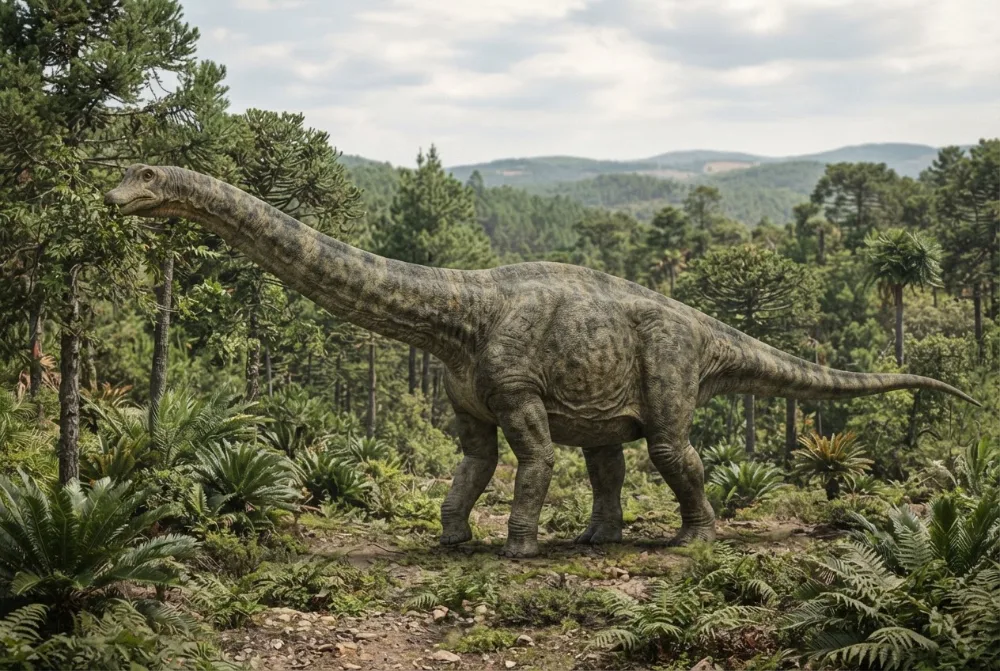
Ebibuuzo ebisinga okubuuzibwa ku Losillasaurus
?How big was Losillasaurus?
Estimates vary. One study suggests 15 to 18 metres (49 to 59 ft) long and 12 to 15 tonnes (13 to 17 short tons). But the largest adults may have reached 25 metres (82 ft) and weighed about 47 tonnes (52 short tons).1
?What did Losillasaurus eat?
It was a plant-eater. Its heart-shaped teeth helped it eat tough plants.1
?When did Losillasaurus live?
It lived during the Late Jurassic and possibly into the Early Cretaceous, about 157 to 145 million years ago.1
?Where was Losillasaurus found?
Its fossils were discovered near the village of Losilla in Valencia, Spain, and also in the Lourinhã Formation of Portugal.1
Eri abakugu mu dayinoso
- Erinnya lya ssaayansi
- Losillasaurus
- Yatuumibwa
- Casanovas et al. 20013
- Ekibinja
- Ez'ensingo empanvu
- Ekika / ekibinja
- Turiasauria3
- Engabanya
- Sauropodomorpha > Sauropoda3
- Emyaka gy'enjazi
- emyaka obukadde 155 okutuuka ku 143 (Kimmeridgian / Tithonian)3
- Ensengeka z'enjazi
- Villar del Arzobispo, Praia da Amoreira-Porto Novo3
- Ensi
- Sipeyini, Potugaali3
- Ebisigalira ebyazuulibwa
- 3 mu The Paleobiology Database3
- Okuzuulibwa
- Losillasaurus was named in 2001 by Casanovas, Santafé, and Sanz based on fossils found near Losilla, Spain. The fossils were excavated between 1989 and 1995.12
- Kikyakubaganyizibwako ebirowoozo
- Scientists are not sure exactly how big adult Losillasaurus could grow, because the best-known specimen is a subadult.1
Ebituufu gye biva
- Losillasaurus (en.wikipedia.org)
- Losillasaurus giganteus, a new sauropod from the transitional Jurassic Cretaceous of the Los Serranos basin (Valencia, Spain) (naturalhistory.si.edu)
- Losillasaurus in The Paleobiology Database (CC BY 4.0): emyaka, ebifo, ensengeka z'enjazi, engabanya.
Buli kituufu ku lupapula luno kirina ennamba eraga ensibuko yaakyo. Bwe tuba nga tukoze ensobi, tusonyiwe, ffe tuli bawagizi ba dayinoso, so si magazini ya ssaayansi. Tubuulire ku [email protected] tujja kugitereeza.
 Rex alumwa enjala! Dino Wiki pulojekiti ya taata eri mutabani we ayagala ennyo dayinoso, ya bwereere, tewali bulango era tewali bikulondoola. Abakulu basobola okuwa Rex akantu ak'okulya okuyamba okugikuuma ku mutimbagano.Liisa Rex
 Brachiosaurus
 Diplodocus
 Brontosaurus
 Argentinosaurus
 Camarasaurus
 Morosaurus
 Allosaurus
 Compsognathus
 Camptosaurus
 Nanosaurus
 Rhamphorhynchus
 Ceratosaurus