 Kwizi: Oli dayinoso ki?
 Olutalo lwa dayinoso
 Empaka z'emisinde gya dayinoso
 Emizannyo emitono egya dayinoso
 Alubaamu ya sitika
 Enkalala za dayinoso eza TOP
 Mpa ekyewuunyisa!
Macrogryphosaurus
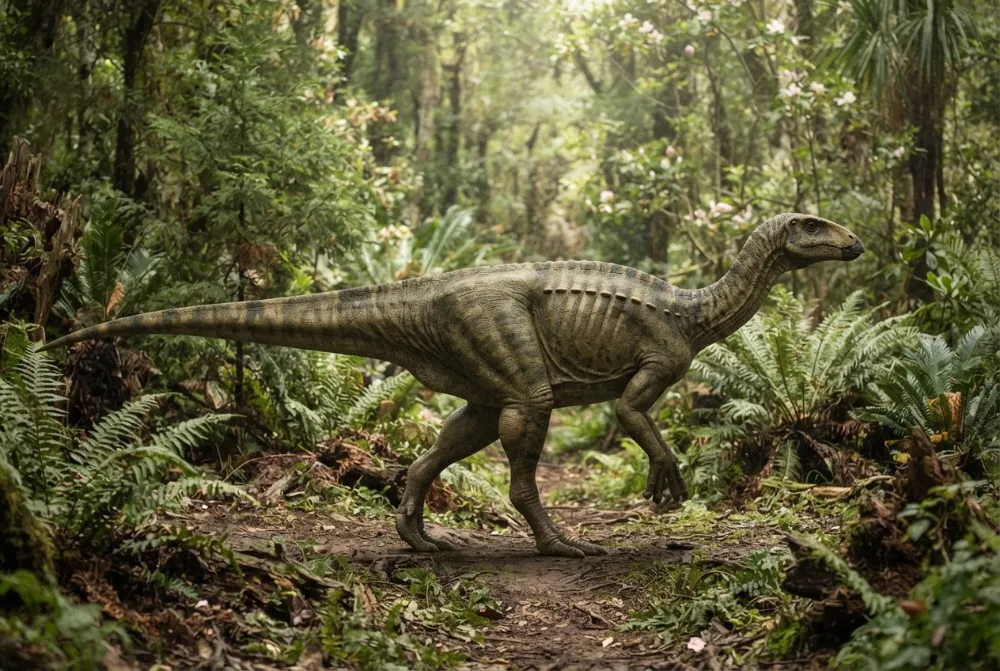
Macrogryphosaurus was a big, gentle plant-eater that wandered the forests of ancient Argentina. It had a long neck and tail, and bony plates along its ribs that might have helped it breathe or stayed stiff. This dinosaur is the largest known member of its group, the elasmarian ornithopods.1
Yabeerawo ddi?
Yali munene atya?
Yali muwanvu kwenkana wa?
Yali mugulumivu kwenkana wa?
kuteebereza
Yali muzito kwenkana wa?
 obuwanvu ng'embwa 6, ennyindo ku mukira🍌obuwanvu ng'amenvu 33 nga gaddiriŋŋana🍉obuzito ng'obwa wotamerooni 60🧸obuzito ng'obw'abaana 16 ab'omu nnasale🎒obuzito ng'obw'abaana b'essomero 9🏃yandidduse mita 100 mu sikonda 8.8 (omuntu asinga embiro yeetaaga 9.6)
Macrogryphosaurus yali munene atya bw'ogeraageranya ku GGWE?
Kubala kwokka mu browser yo. Tewali kiterekebwa wadde okusindikibwa wonna.
Yali wa mbiro kwenkana wa?


Ebyewuunyisa
Macrogryphosaurus had bony plates along its ribs, called intercostal plates, which made its torso stiff and bird-like.1
It is the largest known elasmarian dinosaur, reaching about 6 metres (20 feet) long.1
Its name means 'big enigmatic lizard', because scientists were puzzled by its features.1
Macrogryphosaurus had a long neck and a tail similar to a coelurosaur, a group of theropod dinosaurs, which is unusual for an ornithopod.1
Fossils of Macrogryphosaurus were discovered by a young boy named Rafael Moyano in 1999 near Lake Mari Menuco in Argentina.1
Only one nearly complete skeleton of Macrogryphosaurus has been found, so scientists are still learning about it.1
Ebibuuzo ebisinga okubuuzibwa ku Macrogryphosaurus
?How big was Macrogryphosaurus?
It was about 6 metres (20 feet) long, though one estimate says 5 metres (16 feet) and 300 kg (660 lb). It is the largest known elasmarian dinosaur.1
?What did Macrogryphosaurus eat?
It was a plant-eater, so it ate plants. The Paleobiology Database lists it as a ground-dwelling herbivore.3
?When did Macrogryphosaurus live?
It lived about 89 million years ago, during the Late Cretaceous Period, in what is now Argentina.1
?Why did Macrogryphosaurus have plates on its ribs?
Scientists are not sure. The plates, called intercostal plates, made its torso stiff and bird-like, but their exact purpose is still a mystery.1
Omumenyi w'enfumo
Enfumo: Some people think Macrogryphosaurus was a slow, heavy dinosaur.
Amazima: Actually, it was lightly built and graceful, with a slender body compared to many other big ornithopods.1
Eri abakugu mu dayinoso
- Erinnya lya ssaayansi
- Macrogryphosaurus
- Yatuumibwa
- Calvo et al. 20073
- Ekibinja
- Ezirya ebimera ez'omumwa ng'ogw'ekinyonyi
- Ekika / ekibinja
- Elasmaria3
- Engabanya
- Ornithischia > Ornithopoda > Iguanodontia3
- Emyaka gy'enjazi
- emyaka obukadde 90 okutuuka ku 86 (Coniacian)3
- Ensengeka z'enjazi
- Sierra Barrosa3
- Ensi
- Arigentina3
- Ebisigalira ebyazuulibwa
- 1 mu The Paleobiology Database3
- Okuzuulibwa
- Macrogryphosaurus was discovered in 1999 by a boy named Rafael Moyano near Lake Mari Menuco in Argentina. Scientists Jorge Calvo, Juan Porfiri, and Fernando Novas named it in 2007.1
- Kikyakubaganyizibwako ebirowoozo
- Scientists are still debating how many species of Macrogryphosaurus existed, and whether some other ornithopod fossils belong to this genus.1
Ebituufu gye biva
- Macrogryphosaurus (en.wikipedia.org)
- Macrogryphosaurus Calvo et al. 2007 - Encyclopedia of Life (eol.org)
- Macrogryphosaurus in The Paleobiology Database (CC BY 4.0): emyaka, ebifo, ensengeka z'enjazi, engabanya.
Buli kituufu ku lupapula luno kirina ennamba eraga ensibuko yaakyo. Bwe tuba nga tukoze ensobi, tusonyiwe, ffe tuli bawagizi ba dayinoso, so si magazini ya ssaayansi. Tubuulire ku [email protected] tujja kugitereeza.
 Rex alumwa enjala! Dino Wiki pulojekiti ya taata eri mutabani we ayagala ennyo dayinoso, ya bwereere, tewali bulango era tewali bikulondoola. Abakulu basobola okuwa Rex akantu ak'okulya okuyamba okugikuuma ku mutimbagano.Liisa Rex
Endala okuva mu kibinja kye kimu: Ezirya ebimera ez'omumwa ng'ogw'ekinyonyi
 IguanodonEzirya ebimera ez'omumwa ng'ogw'ekinyonyi
 TenontosaurusEzirya ebimera ez'omumwa ng'ogw'ekinyonyi
 ThescelosaurusEzirya ebimera ez'omumwa ng'ogw'ekinyonyi
 ZalmoxesEzirya ebimera ez'omumwa ng'ogw'ekinyonyi
 CamptosaurusEzirya ebimera ez'omumwa ng'ogw'ekinyonyi
 RhabdodonEzirya ebimera ez'omumwa ng'ogw'ekinyonyi
 Tyrannosaurus
 Triceratops
 Velociraptor
 Spinosaurus
 Ankylosaurus
 Parasaurolophus