 Kwizi: Oli dayinoso ki?
 Olutalo lwa dayinoso
 Empaka z'emisinde gya dayinoso
 Emizannyo emitono egya dayinoso
 Alubaamu ya sitika
 Enkalala za dayinoso eza TOP
 Mpa ekyewuunyisa!
Microcleidus
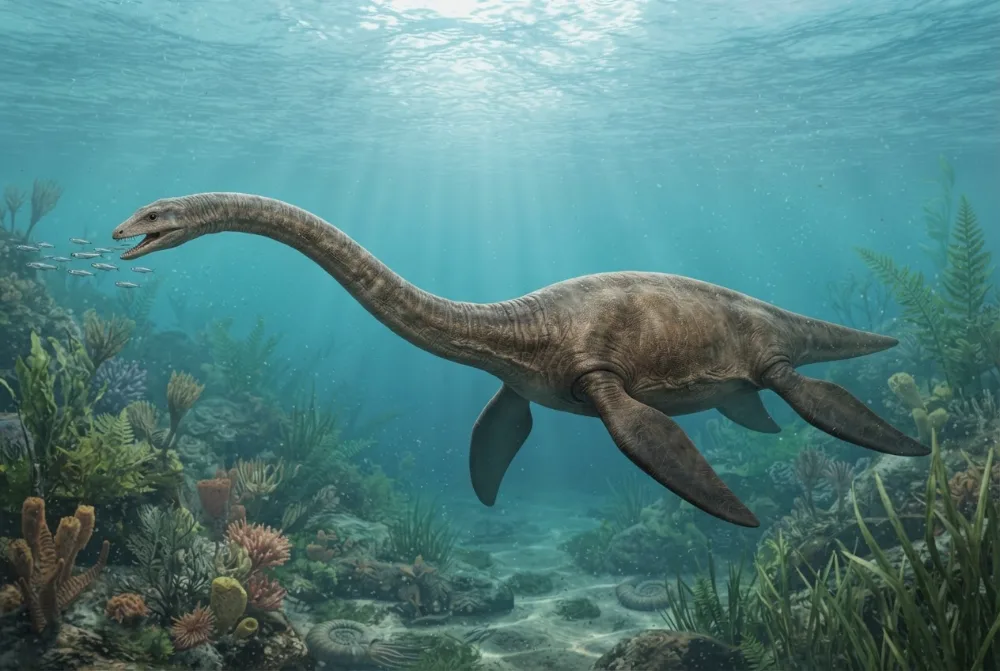
Microcleidus was a long-necked marine reptile that swam in the warm Jurassic seas. It had a small head and a very long neck with 38 to 39 bones. It used its flippers to paddle through the water and catch fish.1
Yabeerawo ddi?
Yali munene atya?
Yali muwanvu kwenkana wa?
Yali muzito kwenkana wa?
 obuwanvu ng'embwa 5, ennyindo ku mukira🍌obuwanvu ng'amenvu 28 nga gaddiriŋŋana🍉obuzito ng'obwa wotamerooni 130🧸obuzito ng'obw'abaana 34 ab'omu nnasale🎒obuzito ng'obw'abaana b'essomero 20🏊yandiwuze obuwanvu bw'ekidiba ekinene (50 m) mu sikonda 6.2
Microcleidus yali munene atya bw'ogeraageranya ku GGWE?
Kubala kwokka mu browser yo. Tewali kiterekebwa wadde okusindikibwa wonna.
Yali wa mbiro kwenkana wa?


Ebyewuunyisa
Microcleidus had a small head only about 23 centimetres (9 inches) long, even though its body could reach over 5 metres.1
Its neck contained 38 to 39 vertebrae, making it a very long-necked plesiosaur.1
Scientists have named at least five species of Microcleidus, including M. homalospondylus and M. macropterus.1
One species, Microcleidus tournemirensis, was once thought to belong to a different genus called Occitanosaurus.5
Microcleidus lived during the Toarcian age of the Jurassic Period, about 184 to 175 million years ago.2
Its fossils have been found in the Alum Shale of England and the Posidonia Shale of Germany.5
The first Microcleidus fossils were originally described as Plesiosaurus homalospondylus by Richard Owen in 1865.1
Ebibuuzo ebisinga okubuuzibwa ku Microcleidus
?How big was Microcleidus?
The largest species, Microcleidus homalospondylus, measured about 5.1 metres (17 feet) long and weighed around 650 kilograms (1,430 pounds). Other species were smaller, like M. tournemirensis at about 4 metres (13 feet) and 300 kilograms (660 pounds).3
?What did Microcleidus eat?
Microcleidus was a carnivore that likely ate fish and other small sea creatures. It used its long neck and small head to snap up prey while swimming.5
Eri abakugu mu dayinoso
- Erinnya lya ssaayansi
- Microcleidus
- Yatuumibwa
- Watson 19095
- Ekibinja
- Pulesiyosawulu
- Ekika / ekibinja
- Microcleididae5
- Engabanya
- Plesiosauria > Sauropterygia5
- Emyaka gy'enjazi
- emyaka obukadde 184 okutuuka ku 175 (Toarcian)5
- Ensengeka z'enjazi
- Alum Shale, Posidonia Shale5
- Ensi
- Bungereza, Bugirimaani, Bufalansa, Lukusembaagi5
- Ebisigalira ebyazuulibwa
- 9 mu The Paleobiology Database5
- Era emanyiddwa nga
- Occitanosaurus (amannya ag'edda kati gabalibwa ng'ekisolo kye kimu)5
- Okuzuulibwa
- The name Microcleidus was given by D. M. S. Watson in 1909 for fossils that had earlier been called Plesiosaurus. The first species, M. homalospondylus, was originally described by Richard Owen in 1865.51
- Kikyakubaganyizibwako ebirowoozo
- Scientists are not sure whether some species, like Hydrorion brachypterygius, should really be placed in Microcleidus.1
Ebituufu gye biva
- Microcleidus, Plesiosaur Directory (plesiosauria.com)
- PBDB Taxon (paleobiodb.org)
- Microcleidus (en.wikipedia.org)
- Microcleidus (en.wikipedia.org)
- Microcleidus in The Paleobiology Database (CC BY 4.0): emyaka, ebifo, ensengeka z'enjazi, engabanya.
Buli kituufu ku lupapula luno kirina ennamba eraga ensibuko yaakyo. Bwe tuba nga tukoze ensobi, tusonyiwe, ffe tuli bawagizi ba dayinoso, so si magazini ya ssaayansi. Tubuulire ku [email protected] tujja kugitereeza.
 Rex alumwa enjala! Dino Wiki pulojekiti ya taata eri mutabani we ayagala ennyo dayinoso, ya bwereere, tewali bulango era tewali bikulondoola. Abakulu basobola okuwa Rex akantu ak'okulya okuyamba okugikuuma ku mutimbagano.Liisa Rex
 Elasmosaurus
 Pliosaurus
 Plesiosaurus
 Cimoliasaurus
 Colymbosaurus
 Trinacromerum
 Dilophosaurus
 Stenopterygius
 Dorygnathus
 Lufengosaurus
 Scutellosaurus
 Yunnanosaurus